Accounting might not be a favorite topic, but it’s essential for your team and business. The days of relying on spreadsheets are behind us, and many small to medium-sized companies use QuickBooks, a popular accounting program. However, as your business grows, you may outgrow QuickBooks. When should you switch to a more robust solution like Enterprise Resource Planning (ERP) software? This ERP vs. QuickBooks comparison will help you understand the best option to keep your business moving forward.

What is QuickBooks?

QuickBooks is a widely used accounting solution ideal for sole proprietors and small to medium-sized companies, including some manufacturing operations. It offers invoicing, payroll, financial reporting, and basic accounting capabilities. However, it focuses solely on accounting. If you need software for other functions, such as production planning, you’ll need separate solutions that may not integrate well.

QuickBooks works well for small companies with a user limit of 40. It helps businesses keep track of finances, handle taxes, and plan for the future.

What is ERP Software?

Enterprise Resource Planning (ERP) software, like Epicor, is a comprehensive solution that, although more expensive, becomes cost-effective as your company grows. It is designed for larger teams and complex operations, scaling with your success. ERP software handles multiple locations, currencies, and extensive customization options, and integrates various business functions, including manufacturing processes, supply chain, and customer relationship management.

ERP systems manage all your complex operations, reducing errors and redundancy compared to using multiple systems.

When Should You Consider Switching?

QuickBooks is a good solution for smaller businesses, but as you grow, you might need more robust support. Here are signs that indicate it’s time to consider switching to ERP software:

  • You are approaching or have hit the 40-user cap, and scaling QuickBooks further becomes expensive.
  • You use multiple software platforms to manage different parts of your business, leading to mounting errors and inefficiencies.
  • QuickBooks inventory management can no longer keep up with your needs.
  • Employees spend too much time transferring and re-entering data.
  • Data tracking issues arise because information is scattered across different systems.
  • Inventory problems lead to customer service issues.
  • Demand forecasting relies heavily on guesswork.
  • You engage in made-to-order and discrete manufacturing.

Outgrowing QuickBooks can be subtle, but addressing these issues early saves money and boosts employee morale.

What Does ERP Software Offer?

ERP software is customizable to meet your team’s needs, with modular functionality allowing you to add or remove features as necessary. An ERP consultant, like Encompass Solutions, can help navigate your specific needs and implement a tailored solution. ERP software offers:

  • Accounting in multiple currencies, languages, and locations.
  • Cloud-based solutions for accessible business data.
  • Integration of finance, supply chain, and customer relationship management.
  • Real-time data visibility across your organization.
  • Advanced tools for production planning and scheduling.
  • Real-time inventory management for raw materials, works-in-progress, and finished goods.
  • Demand forecasting without guesswork.

ERP software consolidates multiple functions into one platform, simplifying IT management and reducing the need for multiple integrations.

Will You Outgrow Your ERP?

No, ERP platforms are scalable. You can add features and users as needed, with costs increasing reasonably. A consultant can help future-proof your ERP, ensuring it evolves with your company.

ERP systems are tailored to your needs, whether managing international contractors, supply chains, or peak production periods. They allow for growth without losing data, minimizing the risk of human error during migrations.

Can an ERP Integrate with Existing Systems?

Yes, ERPs can integrate with your existing software, allowing smooth data transfer. They are often cloud-based, compatible with various devices, and support remote work.

What If I Like QuickBooks?

In regards to ERP vs. QuickBooks, QuickBooks is excellent for smaller businesses and is user-friendly. If your business remains small, it might suffice. However, growing businesses with expanding teams and formal manufacturing processes may need more comprehensive features.

How to Choose the Right ERP System?

Choosing the right ERP involves assessing your needs, evaluating vendors, and considering your budget. Encompass Solutions can help with ERP solutions designed to streamline manufacturing processes, support growth, and integrate cross-functional teams.

We assist in selecting, negotiating, and supporting the right ERP system for your team. Our custom development services ensure your ERP system is a perfect match, keeping you ahead in your industry.

If QuickBooks no longer meets your growing business needs, contact Encompass Solutions. As an Epicor partner, we provide ERP solutions tailored to made-to-order and mixed-mode manufacturing companies, ensuring your business thrives with advanced support and integration.

Ready to take the next step? Contact us today to schedule a consultation by filling out a form and discovering how our ERP solutions can transform your business. Understanding ERP vs. QuickBooks is crucial for making the right decision for your company’s future.


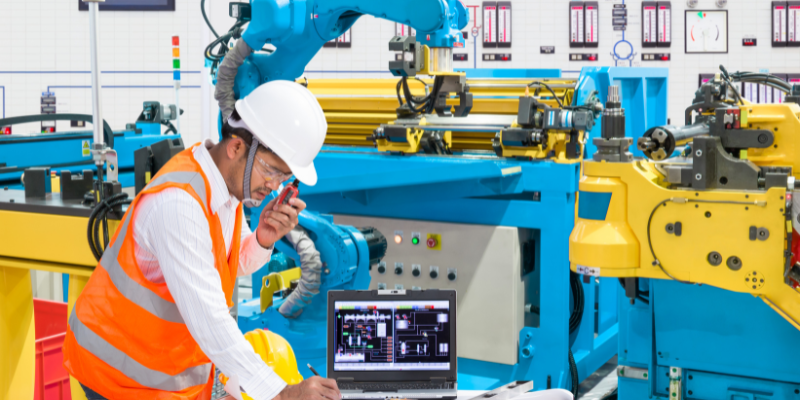
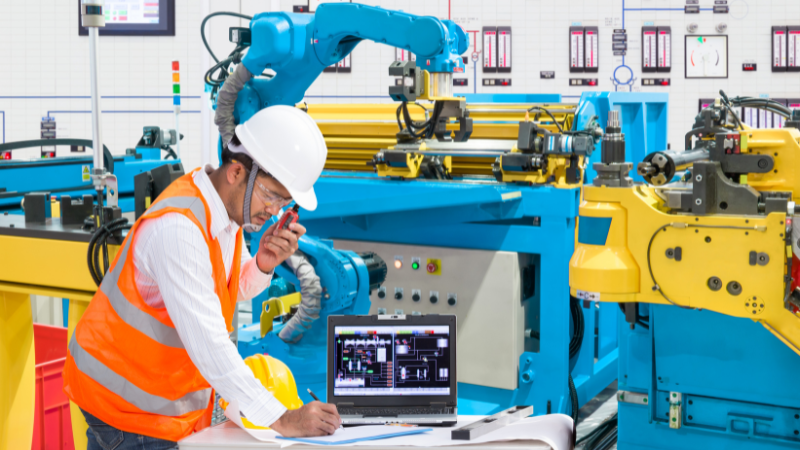
Industrial machinery manufacturing is an ever-growing billion-dollar industry. And it’s easy to see why; it has experienced a digital transformation in recent years, driven by technological advances, increased competition, and demand for higher quality products. As a result, many companies have adopted Enterprise Resource Planning (ERP) for industrial machinery manufacturing to manage their operations better and increase efficiency.

An ERP system is a set of integrated software applications that allow for the automation and integration of data, processes, and resources across an organization. This provides an end-to-end view of business operations, from production to finance. And in the industrial machinery manufacturing sector, ERP systems can bring numerous benefits.

How ERP Offsets Various Industrial Machinery Manufacturing Challenges

The industrial machinery manufacturing sector has various challenges, including maintaining high-quality standards, adhering to regulatory requirements, and keeping up with customer demands. ERP systems can help address these issues by providing real-time visibility into operations, enabling companies to identify potential problems before they become costly mistakes.

Here’s a more in-depth look at the challenges and how ERP software can help offset them:

  • Complex supply chain management. Supply chain complexities like planning, forecasting, and inventory management can be challenging in an industrial machinery manufacturing environment. ERP systems can help streamline these processes and provide accurate, up-to-date information on production and deliveries.
  • Multi-site operations. Gaining real-time visibility into operations across multiple sites can be challenging without the right tools. ERP systems provide centralized access to data and allow manufacturers to get an integrated view of their operations.
  • Customization and engineer-to-order services. The need to customize products and provide engineer-to-order services is a common concern for industrial machinery manufacturers. ERP systems can help streamline the customization process by providing timely information on production progress and customer requirements.
  • Inventory management. Accurately managing inventory levels is essential for industrial machinery manufacturers. ERP systems allow for accurate tracking of materials and components, enabling the organization to identify potential issues before they become costly mistakes.
  • Resource utilization and capacity planning. ERP systems can help industrial machinery manufacturers optimize their resources and plan for capacity needs by providing real-time visibility into utilization rates and production schedules.
  • Inefficient data flow and communication. ERP systems eliminate silos of information and provide a single source of truth for all users. This makes accessing, sharing, and analyzing data across different departments easier.

Other threats that ERP solutions for industrial machinery manufacturing can help address include financial management, quality assurance, data security, regulatory compliance, etc. For instance, ERP software can help improve financial management by providing insights into cash flow, overhead costs, and profitability. On the flip side, it can also help ensure compliance with quality and safety standards, as well as control data access.

Industrial Machinery Manufacturing Scope and Products that May Benefit from ERP Systems

It’s a world of endless possibilities, from printing presses, automotive equipment, machine tools, and robots to aircraft, ships, and industrial machinery. ERP systems can help these companies manage their operations more efficiently while ensuring compliance with regulations.

Other products that may benefit from ERP systems include:

  • Machine tools (latches, milling, CNC). ERP software can help streamline the maintenance process and reduce downtime by providing accurate data on parts, repair schedules, and usage.
  • Construction equipment (cranes, bulldozers, excavators). You need your equipment in perfect condition to complete your projects on time and within budget. ERP software can help you manage maintenance schedules, track parts, and check for defects.
  • Packaging machinery and materials. ERP software can help you manage your inventory more efficiently and reduce costs by providing real-time visibility into stock levels, usage rates, and delivery times.
  • Material handling equipment (forklifts, conveyors). Nothing interrupts production like faulty machinery. ERP systems can help reduce downtime by providing timely information on maintenance schedules, parts availability, and repair costs.
  • Agricultural machinery (tractors, combines). Don’t let preventable breakdowns slow down your operations. ERP software can provide accurate data on parts, maintenance schedules, and usage rates to keep your equipment running smoothly.
  • Industrial robots and automation equipment. As robotics and automation become more complex, proper maintenance and operation are essential for optimal performance. ERP software can provide real-time tracking of machine health to identify potential issues before they cause costly downtime.

Other industries, such as medical device manufacturers, mining equipment, printing & paper, and food processing companies, can also benefit from ERP systems.

Benefits of ERP Solutions for Industrial Machinery Manufacturing

ERP systems can help industrial machinery manufacturers reduce operational costs by streamlining processes, improving efficiency, and automating repetitive tasks. Furthermore, they can help companies better manage their inventory by providing real-time data on stock levels, usage rates, and delivery times.

Below is a quick review of the top ERP benefits:

  • Improved manufacturing processes. ERP systems can help improve production speed, reduce waste, and lower costs by eliminating manual processes and errors.
  • Better customer service. ERP software can provide real-time visibility into orders, stock levels, and delivery times, helping you meet customer expectations and increase satisfaction.
  • Reduced labor costs. By automating tedious processes, such as inventory tracking and order processing, ERP systems can help you reduce labor costs and maximize productivity.
  • Increased precision. ERP software can help you manage and track tasks more accurately, ensuring the right tasks are done at the right times. This can help reduce errors and increase efficiency.
  • Enhanced safety. ERP systems can provide comprehensive tracking of safety protocols and procedures, reducing the risk of accidents and keeping your workers safe.
  • Boosted overall productivity. By streamlining processes and automating tasks, ERP systems can help increase overall productivity and help you stay competitive.

ERP Tech Trends and Innovations that Will Revolutionize Industrial Machinery Manufacturing

As industries seek efficiency gain, the demand for innovative machinery and equipment remains strong. Here are a few ERP tech trends and innovations tipped to keep the fire burning:

  • Cloud ERPCloud ERP systems are revolutionizing how industrial machinery manufacturers manage their operations. By using cloud-based solutions, companies can reduce costs, increase efficiency, and gain real-time visibility into their data.
  • Industry 4.0The fourth industrial revolution is upon us, and with it comes a new era of connected technologies and digitalization. To stay competitive in today’s market, industrial machinery manufacturers must embrace the latest Industry 4.0 technologies, such as AI, big data analytics, and the Internet of Things (IoT).
  • Integrated systems: As companies increasingly rely on connected systems, ERP solutions must be able to integrate with existing systems and processes to provide a comprehensive view of operations. Through integration, companies can gain a more accurate picture of their data, allowing them to make faster, smarter decisions.
  • Data-driven decision-making: Thanks to advances in analytics, companies can now use data-driven insights to make more informed decisions. By leveraging predictive analytics and AI, industrial machinery manufacturers can identify potential problems before they occur and take proactive action to prevent downtime.
  • Sustainability: Sustainability is becoming increasingly essential, and industrial machinery manufacturers must ensure their processes are optimized for efficiency and sustainability. ERP systems can help companies track and manage resources more effectively, reducing emissions and improving their overall environmental impact.

Ready to Upgrade to a Premier ERP Solution? Encompass Can Help!

ERP systems are essential for industrial machinery manufacturers, helping them streamline processes, reduce costs, and stay competitive. By leveraging the latest advancements in ERP technology and embracing Industry 4.0 solutions, companies can benefit from improved efficiency, increased precision, enhanced safety, customer service, and sustainability. As innovative machinery and equipment demand remains strong, investing in a comprehensive ERP system is essential for success.

At Encompass Solutions, we’re a certified Epicor partner and value-added reseller (VAR) committed to helping manufacturers find the right ERP solution for their needs. We offer a range of ERP solutions, including best-in-class ERP software solutions and custom development services to help you get the most out of your ERP system. 

Ready to learn more? Contact us today to talk to one of our experienced consultants. Better yet, download our guide, 7 Ways ERP Can Transform Your Manufacturing Business, today.


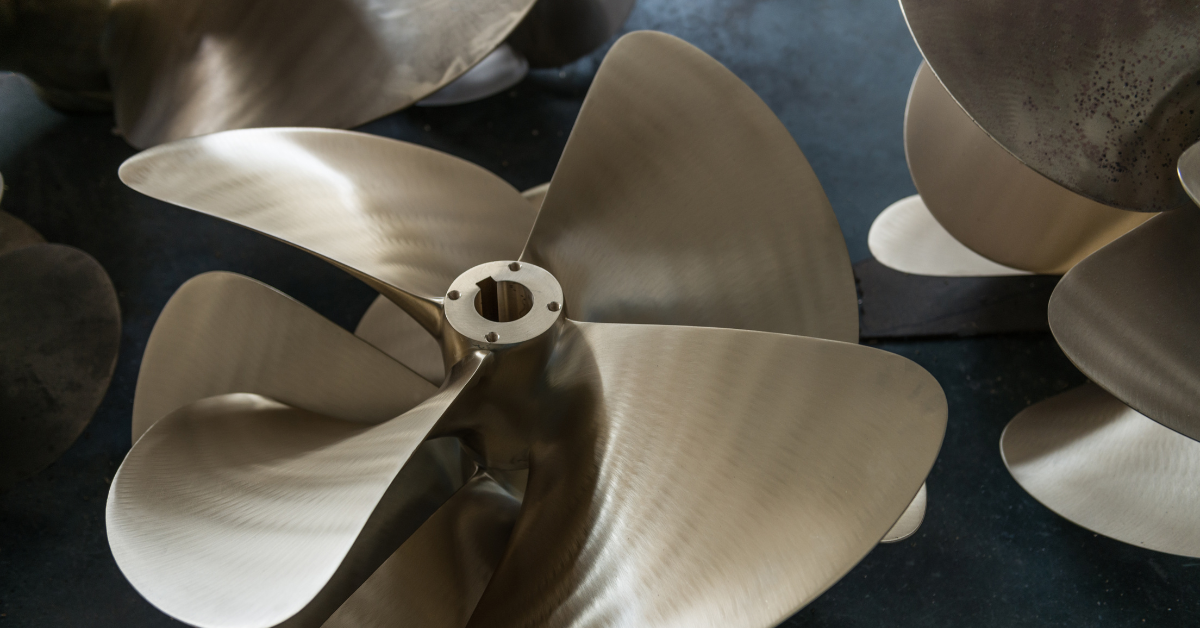
In the competitive world of the boat manufacturing industry, there are numerous challenges to overcome, from sourcing raw materials to efficiently assembling boats. To navigate these complexities, boat manufacturers require a reliable and comprehensive enterprise resource planning (ERP) system. This integrated platform streamlines operations, enhances collaboration, and facilitates better decision-making. By integrating various processes involved in boat manufacturing, an ERP system optimizes production scheduling, inventory control, cost tracking, and customer relationship management. With the scalability of ERP, custom boat manufacturers can outperform their competitors, adapt to evolving needs, and achieve their goals of improving quality control, optimizing resource utilization, and enhancing client satisfaction.

Boat Manufacturing Challenges and How ERP Helps Offset Them

The boat manufacturing industry faces challenges, from global competition to rising customer expectations. ERP solutions for boat manufacturing can address these challenges in innovative ways:

1. Inventory Management: An ERP system can help manage inventory and optimize stock levels, helping you reduce costs and increase efficiency. It can also help manage parts requirements to ensure the right parts are ordered at the right time.

2. Quality Control: ERP can help you automate quality control processes and track data from suppliers, giving you visibility across the entire supply chain. With this information, you can make better decisions to improve customer satisfaction and maintain high-quality standards.

3. Production Planning: ERP helps you streamline production planning by providing real-time updates on material availability, labor costs, and other key elements. This helps you optimize production cycles and ensure orders are completed on time and budget.

4. Cost Optimization: ERP helps reduce costs by providing visibility into the production process. It can track costs associated with materials, labor, and suppliers to help you identify areas where savings can be made.

5. Changing Consumer Preferences: Today, most boat lovers prefer sustainable, innovative, and technologically advanced boats. ERP systems can allow boat manufacturers to design, test, and produce new models quickly and cost-effectively.

6. Seasonal Demand Fluctuations: ERP can help you manage seasonal fluctuations in demand by providing real-time visibility into inventory levels and customer orders. This helps you adjust production schedules to meet customer demands.

7. Supply Chain Disruptions: ERP systems provide visibility into the entire supply chain, allowing you to detect and address potential disruptions before they impact production. For example, you can quickly identify and source an alternative if a supplier is delayed.

8. Global Economic Uncertainty: ERP can help you track global economic trends and make better decisions to protect your business from potential risks. With access to data from multiple sources, you can make sound business decisions and ensure profitability.

ERP and the Boat Manufacturing Process

The boat manufacturing process is complex and often involves numerous steps, from design to production. An ERP system can help streamline this process in several ways:

  • Design and Engineering

The first step in the boat manufacturing process is design and engineering. It involves creating accurate drawings and designs that meet customer specifications for safety, performance, and aesthetics. It also involves engineering calculations to ensure the structural integrity of the boat.

ERP systems can help manage this process by providing visibility into all design and engineering stages, from concept to final product. Moreover, ERP provides manufacturers access to real-time data on materials, labor costs, and other components. This helps you design boats quickly and cost-effectively. It also helps ensure quality across all stages of production.

  • Material Selection

From fiberglass and aluminum to polyethylene, material selection is critical for boat manufacturers. It helps ensure the finished product’s performance, durability, and aesthetic appeal. 

ERP systems can help manage the procurement process by automating it and providing visibility into the entire supply chain. This helps you identify potential disruptions in the supply chain. ERP also allows you to track orders and ensure parts are delivered on time and within budget.

  • Fabrication

The next manufacturing step is to fabricate the parts. This involves cutting, bending, welding, and prefabricating the components before being integrated into the boat’s structure.

ERP software for shipyard management can help manage the fabrication process by providing access to accurate drawings and designs. This helps reduce errors and ensure quality in each stage of production. Further, ERP systems provide detailed information on materials, labor costs, and other components.

  • Assembly

Now, onto the interesting part: assembly! This is where all the individual parts combine to create the hull, deck, and other parts, transforming it into a functional boat.

Thanks to ERP, you can streamline the assembly process by enjoying real-time visibility into the entire production line. This helps reduce errors and ensure quality control throughout the process. Moreover, ERP systems provide detailed information on parts, labor costs, and other components. This enables you to make better business decisions to optimize production schedules and maximize profits.

  • Finishing

The final step is finishing, which involves priming, painting, and outfitting the boat with features such as seats, controls, and other components.

ERP systems can take this process to the next level. They allow you to track and monitor every step of the finishing process, ensuring quality and accuracy. This helps you keep costs down while creating a superior product.

ERP Helps You Keep Up with Industry Trends

From sustainability to digitalization, the boat manufacturing industry is undergoing drastic changes. ERP innovates boat manufacturing and helps you stay ahead of the curve by providing real-time data and insights into these trends. Here’s a closer look:

●      Sustainability – Environmental sustainability is becoming increasingly essential in the boat manufacturing industry. ERP systems can provide valuable insights into the carbon footprint of your production processes and help you identify areas for improvement.

●      Automation and Technology – Gone are the days of manual manufacturing processes. Today, luxury boat manufacturers leverage advanced technologies like computer-aided design (CAD), robotics, and digital manufacturing to create superior products. ERP systems can provide visibility into the latest technology trends and help you stay ahead of the competition.

●      Electric and Hybrid Propulsion – Traditional combustion engines are becoming less popular due to their environmental impact. As a result, electric and hybrid propulsion systems are gaining traction in the boat manufacturing industry. ERP systems can help you identify potential areas for improvement and capitalize on this growing trend.

●      Connectivity – Connected boats are also becoming more popular due to their convenience and safety. Consumers want a seamless experience, and ERP systems can help you stay up-to-date with the latest technologies to meet their expectations.

Boat Manufacturing Industry Regulations and Standards

Like any other industry, boat manufacturing is subject to various regulations and standards. For example:

●      The International Maritime Organization (IMO) sets safety, maritime security, and pollution prevention standards.

●      The United States Coast Guard (USCG) is responsible for setting safety regulations about boat design and construction.

ERP systems can help you ensure that all components adhere to the latest industry regulations and standards. This helps ensure quality products while reducing costs associated with non-compliance.

Market and Competition

The boat manufacturing industry is highly competitive. New technologies, changing consumer preferences, and emerging markets are all factors that can influence the success of a boat manufacturer.

ERP systems can provide real-time insights into market trends and customer behavior to help you stay ahead of the competition. You can use this information to develop better marketing campaigns and improve production processes.

Final Remarks

ERP systems are revolutionizing the boat manufacturing industry. By providing real-time visibility into production processes, they can reduce costs and improve efficiency. They also make it easier to stay up-to-date with industry regulations and standards while helping you stay ahead of the competition. Ultimately, ERP systems are the perfect tool for any boat manufacturer looking to streamline their operations and maximize profits.

At Encompass Solutions, we’re a premiere ERP software consulting firm passionate about helping our clients achieve their business goals. We specialize in implementing and optimizing ERP systems for boat manufacturers to ensure their operations run smoothly and efficiently. 

Curious to learn more? Download our guide – 7 Ways ERP Can Transform Your Manufacturing Business.


To succeed in Make-to-Order (MTO) and Engineer-to-Order (MTO) manufacturing, you must meet your clients’ diverse needs efficiently and quickly. Today’s customers are increasingly sophisticated, demanding more personalized and configurable products. Consequently, every savvy manufacturer strives to implement innovative processes that beat the obstacles of mass customization. The right technologies can help you address your business and client’s needs and gain a competitive edge. In this pursuit for excellence, an aggressively proficient tool can come in handy. You need a production scheduling solution that can handle special job requirements, visibility, and inventory control. This is where Enterprise Resource Planning (ERP) software comes in.

This detailed guide will take you through the basics of this revolutionary software, including how it works and how manufacturers can use it to enhance their MTO and ETO robotics components.

The Need for ERP for Robotic Manufacturers

In the current era of the human-centric Industry 5.0, manufacturers are getting the most out of automation to drive efficiency. Companies nowadays make even more significant productivity gains by combining manufacturing automation with advanced technologies like robotics.

Generally, every modern manufacturer strives to achieve sustained business growth and increased revenue. Common strategies include:

  • Producing high-value products.
  • Establishing a loyal clientele.
  • Navigating the disruptions typical of today’s dynamic global markets.

But juggling all these simultaneously isn’t as cut and dried. The solution lies in acquiring basic comprehension of the most accessible and potentially impactful automation aspects. Fortunately, you can seek refuge in a reliable ERP solution.

The Benefits of ERP Solutions

At its core, Enterprise Resource Planning or ERP tools comprise integrated business management processes and tools you can use to oversee your company’s data.

The tool manages your daily operations like procurement, supply chain operations, accounting, compliance and risk management, and project management. Moreover, you can connect it to your machines for better insight into your worker’s and equipment’s performance.

This purpose-built manufacturing tool offers numerous capabilities and features geared towards a competitive advantage. Companies already getting the most out of these tools report the following benefits.

Visibility And Projection Flexibility

These tools offer around-the-clock visibility into your entire manufacturing process and product scope. They save each project’s data, enabling product prediction while allowing you to make appropriate adjustments to your strategy and on-the-fly changes to the company’s supply chain.

Improved Lead Times And Less Waste

This human-centered technology ensures optimal productivity by simplifying processes. The ability to leverage data from previous projects can significantly reduce waste as you’ll be implementing lean strategies.

It Aids In Project Management

ERP’s integrated project management facilitates phase planning and budget creation, storing your data in one location. This includes variance chance orders, task management, invoices, sales orders, purchasing, project-based scheduling, and manufacturing job views.

Advanced Analytics

These tools offer around-the-clock access to real-time production data. They record and review your product’s entire lifecycle, including project purchase records and audit trails. So you can always be sure of backed metrics to aid your decision-making – even if you have to decide on the go.

Aids Scheduling And Planning

ERP solutions inform you of each order’s real-time status, providing superior operational oversights to help you address problems, meet deadlines, tweak workflows, track capabilities, and boost collaboration using the social networking tool. By including manufacturing-focused tools in scheduling and planning, you’ll streamline your process to ensure clients receive the highest quality products on time.

Compliance

By automating your compliance process, you can be sure that you’re always on the right side of the law. The software also provides a comprehensive compliance standards trail for delivery, sourcing, production, and design stages.

Seamless Communication

Besides being a proven streamlining framework for business processes, this tool enables seamless product information communication with complete workflows. This includes client sign-off at all the vital stages, from concept design to provide the final estimate.

Serialization 

Most tools fail to address the crucial aspect of manufacturing: serializing finished products and their components. But an ERP tool will keep you ahead by taking care of serialization, returns, and warranties.

How ERP Software Works

In the most basic sense, Enterprise Resource Planning software simplifies business processes by decentralizing your information database and automating routine tasks. It meets complex needs by supplying the right tools to refine operations, obtain actionable insights, and maintain great partner and client relationships.

ERP streamlines processes to meet demand without increasing costs or sacrificing quality, improving your business performance.

Typically, small and medium-sized entities aren’t self-sufficient. So they rely on external suppliers to support operations. But what happens if your sole source of manufacturing components goes belly up or fails to deliver the vital parts? Your operations will probably come to a halt, and you’ll fail to yield on your orders.

Managing your supplier relationships and maintaining a network of reliable collaborations is crucial. This is your best way to maintain the consistency and quality your client depends on. ERP software provides great supplier relationship tools for this job. It automates vast supply chain processes and empowers manufacturers to make informed decisions and get an edge in the competitive landscape.

The system can serve as your single source of truth or repository for all records, helping you preserve accuracy, fix redundant data entry, and streamline workflows. It supersedes supplier relationship management capabilities to offer a complete suite of supply chain management tools, including the following:

  • Purchase Management
  • Manifesting and Freight Management
  • Advanced Material Management
  • Warehouse Management
  • Supplier Relationship Management
  • Supplier Connect
  • Shipping and Receiving
  • Inventory Management
  • Handhelds

Enhance Your Supplier Relationships and Supply Chain Management

At Encompass Solutions, we understand the role of automation and robotics in manufacturing. Thus, we provide the right solutions to help you excel and scale your processes to meet the demands of today’s growing market.

With years of experience serving manufacturing companies, we understand the industry and all underlying factors that drive Automation tooling and robotics. Moreover, we know how an ERP solution can address your labor and supply chain issues to drive efficiency and enable growth. So you can count on us for valuable insights.

All that said, don’t hesitate to download our Epicor Kinetic Catalogue for Manufacturing. It’s absolutely free!


Once upon a time, ERP systems were reserved for companies with hundreds and often thousands of employees, multiple locations, and even global points of operation. Who ever thought of evaluating ERP For start-ups?

Those days are gone, ERP has been re-imagined and redesigned to fit the build for companies of just about any size. These powerful and affordable software solutions can streamline your daily operations and make your start-ups success much easier to achieve.

While you may still think your start-up, small or medium business isn’t ready for ERP, you may be missing out on some essential tools that will set you up for positive outcomes and scale as you grow. You may be small now, but that won’t be the case for long. You may already have more business than you can handle.

In any case, you need to be able to manage the company operations and responsibilities to your stakeholders, staff, and customers. Evaluating ERP for start-ups is the first step into satisfying those responsibilities and making good on your obligations.

ERP will make your start-up run more efficiently, drive consistent outcomes, and deliver the data you need to inform business decisions.

This data comes from all the departments of your organization, including finance, sales, operations, inventory, and more. It delivers your staff a single source of truth they can rely on to improve their performance and deliver on the expectations your start-up must satisfy to succeed.

Here are just a few ways to begin evaluating ERP for start-ups.

When to Begin Evaluating ERP For Start-Ups

While each unique situation will dictate the process of evaluating ERP for start-ups, these indicators will reinforce the idea that it’s time to start looking. The more these examples crop up in your day to day, the stronger a candidate you are for implementation.

Waste Is Plentiful – Whether it’s time or capital, waste is one of the biggest contributing factors to a start-up’s success. Whether you are building widgets or delivering a service, processes that produce waste leave room for improvement. This is one of the areas of business management that ERP shines most.

Consolidating software and housing all your data in one central location is perhaps one of the most valuable moves your start-up can make. It cuts out the time spent searching for reports and invoices or delays when production materials can’t be found in the warehouse or worse, were never ordered when safety stock ran low.

Demand Is Outpacing Delivery – Not entirely a bad problem to have, right? Think again. If you get a reputation for missing deadlines and leaving customers with a sour taste in their mouth after doing business with you, know your competitors are waiting to step in and deliver.

Customer Relationship Management, production planning, scheduling, and Sales Management tools provided by ERP solutions ensure you have the tools you need to manage volume with a lean staff, budgets, and space.

Erroneous and Duplicate Data Is Abundant – Multiple points of data entry between disparate systems slow down your operations. It also leaves room for errors and errors can end up costing your critical customer accounts.

ERP ensures you only need to enter data once. That data can easily be verified within that same system. Add to that the risk of human error at the point of entry is kept to a minimum and your business does not suffer.

This means data used downstream is more likely to be accurate and ensure your orders, supply chain, and analytics give a true picture of your start-up’s performance.

You’re Missing the Forest For The Trees – the metaphor may seem obscure, but it’s about as apt as can be when we’re talking about access to the bigger picture of your business’ performance.

ERP will give your start-up the visibility it needs to see how you’re delivering on KPIs, grant access to analytics that illustrate where investments need to be made or scaled back, and superior reporting tools that show everyone you’re on the right track.

What to look for when Evaluating ERP For Start-Ups

By now, it should be clear that ERP can be a real boon to businesses at any size. However, for the start-up environment, there are specific qualities that make some ERP solutions better suited than others. Here are the most basic qualities you can evaluate in your search.

Cost vs. Price – while the two words may seem interchangeable, when it comes to ERP they most certainly are not. The true cost of not implementing an ERP system can easily be higher than shouldering the price of purchase.

Price is also not about what you can afford right here, right now. Keep in mind that sticker shock is just as real for enterprise-wise software. However, we have to remember that these are powerful systems that take a lot of time and engineering to develop. Not to mention save resources immensely but cutting down errors and non-revenue generating tasks. Fortunately, grants, tax write-offs, and financing are available to make the lessen the impact of the purchasing process on your overall business operations.

That said, the price of your system should be in line not only for the tools you need now but also those necessary to facilitate easy expansion as you grow. Which leads to the next characteristic to consider when Evaluating ERP for start-ups, scalability.

Scalability – Often, businesses evaluate ERP software vendors and decide what they have to offer is too rich and expansive for what they need here and now. That may be true. Instead, they may opt for a static product that is meant for small-scale operations that don’t expand capability or functionality as a business grows.

You also need to consider the future development of the product. Patches, updates, and versions that build on the ERP’s current state are essential to keep up with Industry as a whole.

It’s important to understand where your ERP vendor’s vision for their product will lead. Does that vision for the future include the functionality your business will need to remain competitive? Are they developing tools to enhance UI, automate manual processes, and facilitate superior eCommerce or self-service portal interactions?

Scalability is also a consideration for those evaluating open-source ERP solutions. Open source ERP vendors might only develop a product up to a certain point, package it, and sell it. Further development may cost significantly, fall on your shoulders directly, or be left up to the user community at large.

Accessibilitythink about who is going to use this system. Will they find it intuitive? How much training will they need before they can use the ERP system to its full potential? What about ongoing maintenance and customization to your unique business components?

Accessibility also means permission. Can you easily segment who gets to see what in the system or is it a free for all with the data available?

When evaluating ERP for start-ups, make sure to get plenty of demos that include your company workflow. If possible, get an NDA in place so you can see that workflow in real-time with your own data. This will give you the best picture of what is possible and how transactions, projects, and reporting progress within any given ERP solution.

Who to consider as a partner when Evaluating ERP for Start-Ups

If you’re currently Evaluating ERP for a start-up, this information is probably quite intimidating. Fortunately, you don’t have to go through the process alone. Vendors, consultants, value-added resellers, industry peers, investors and stakeholders all have a vested interest in your success.

Consider what it means to partner with an experienced implementer and reap the benefits of streamlined project methodology, knowing where to avoid pitfalls, achieve quantifiable milestones, and lead to Go-Live success.

Encompass Solutions here to help, let’s talk about where you’re going next.

About Encompass Solutions

Encompass Solutions is a business and software consulting firm that specializes in ERP systems, EDI, and Managed Services support for Manufacturers. Serving small and medium-sized businesses since 2001, Encompass modernizes operations and automates processes for hundreds of customers across the globe. Whether undertaking full-scale implementation, integration, and renovation of existing systems, Encompass provides a specialized approach to every client’s needs. By identifying customer requirements and addressing them with the right solutions, we ensure our clients are equipped to match the pace of Industry.


Bezlio Interface Enhancements For Epicor ERP

With 6 facilities and over 300 manufacturing employees, the sheer cost of licensing and hardware, as well as the volume of transactions recorded on the shop floor, presented a challenge for Mickey Truck Bodies (Mickey), but Encompass had the perfect solution to enhance their Epicor system: Bezlio! The unique Bezlio interface offers a flexible enhancement to Epicor using “Bezls” that provide the ability to add key features without significant expense. In addition, they are able to use the Bezls from anywhere in their shop, even where WiFi may be spotty.

Bezlio Interface enhancements classify as killer tools when coupled with Epicor ERP

Mickey manufactures all-aluminum beverage bodies and beverage trailers, dry freight, and refrigerated van bodies, emergency vehicles and specially engineered equipment for customers throughout the U.S. and more than 50 other countries. The company operates a national network of full-service Reconditioning/Service Centers and a complete Parts Shop with genuine Mickey Parts as well as parts for most competitive makes and models.

Bezlio Interface: Real-Time Inventory Transfer App

To increase efficiency, Mickey desired an inventory transfer solution to enable users to issue multiple materials to a job from mobile devices. The user begins the process by entering their employee ID, and then inputs the job and optionally the assembly/operation. A list of buttons is presented per the material requirements. Inventory on hand is displayed, and the user can tap or scan the barcode of the warehouse/bin they wish to pull from, indicate the quantity, and move on to the next material. When all inventory selections are specified, the user clicks the ‘Issue Materials’ button, and all transactions are processed in real time.   

Bezlio Interface: Production Labor Transactions On Mobile Devices

The design of the Bezlio interface provides the ability to track production transactions from mobile devices. Users can clock in, clock out, start/stop production activities, and start/stop indirect activities. The end activity screen for production activities allows for the input of completed quantities as well as scrap. When clocked into a production activity with attachments defined at the job level, such as an Assembly Guide, they are presented as buttons that can be tapped to display in a built-in PDF viewer.

Bezlio is a cost-effective solution for using mobile devices to efficiently capture and record shop floor data in real-time. Because Mickey has multiple facilities utilizing Epicor, there is a huge saving on MES user licenses and workstation hardware costs, estimating between $80,000 – $90,000. In addition, transactions from all locations are streamlined and controlled, making data entry and collection easier while simultaneously enforcing critical business rules.

Ready for your business to run with a killer toolset?

About Encompass Solutions

Encompass Solutions is a business and software consulting firm that specializes in ERP systems, EDI, and Managed Services support for Manufacturers and Distributors. Serving small and medium-sized businesses since 2001, Encompass modernizes operations and automates processes for hundreds of customers across the globe. Whether undertaking full-scale implementation, integration, and renovation of existing systems, Encompass provides a specialized approach to every client’s needs. By identifying customer requirements and addressing them with the right solutions, we ensure our clients are equipped to match the pace of Industry.


What does it take to run a marathon? Beyond the shoes designed to perfect a runner’s stride, the clothing that frees movement and creates comfort, a diet of both quick and long-lasting energy, and mental preparation, there’s hours and hours of training, exercise, form drills, cardio, weights and more. All these months and months of hard work build towards an event that lasts just hours. An ERP system can be compared to a marathon runner in many ways.

The ERP System Marathon

Your ERP system is going to be running for more than just hours, yet the marathon runner comparison is worth considering. This is because an Epicor / Encompass ERP system can take things even further. Imagine a runner not only being perfectly trained and prepared for the run ahead but also having the ability to upgrade or change their shoes midstride. Not only this but also clothing that adapts to the weather to protect from rain or temperature. Add the benefit of nourishment to instantaneously energize their body and invigorate their muscles when the miles become tiring.

Planning is just one half of a system built for longevity; adaptation is the other.

Maybe you’re already starting to experience longevity problems with your existing ERP system. Do any of these sound familiar?

  • Your system is no longer supported. The tech is outdated, there are no more upgrades, and IT support is nonexistent.
  • Your company has expanded, grown, merged, or acquired, and your current system can’t scale.
  • Changing costs, goals, or structures necessitate moving funds away from IT systems and into other areas of the business.
  • An inflexible system is not allowing you to offer more or enhanced services or keeps your company from being agile and responsive.

These, in running terms, would be the twisted ankles, the worn-out shoes, the insufficient training, or the bad weather that slows you down. All these detriments can eat away at your personal best time or, even worse, cause you to drop out of the race altogether.

An ERP System To Go The Distance

The tools we create support the business and drive it forward; they don’t serve as a hurdle to be cleared. A solid ERP system with expert implementation will improve your company’s performance across the board with access to accurate data and seamless integration of all of your business’ systems. Combined with flexibility, scalability, and customized solutions, you will be in it for the long haul.

An Epicor / Encompass system is built with both decades worth of experience, bringing the training you need to run the marathon, and the latest technology, pushing you ahead of the competition, over the ever-changing landscape of your business, and across the finish line.

About Encompass Solutions

Encompass Solutions is a business and software consulting firm that specializes in ERP systems, EDI, and Managed Services support for Manufacturers and Distributors. Serving small and medium-sized businesses since 2001, Encompass modernizes operations and automates processes for hundreds of customers across the globe. Whether undertaking full-scale implementation, integration, and renovation of existing systems, Encompass provides a specialized approach to every client’s needs. By identifying customer requirements and addressing them with the right solutions, we ensure our clients are equipped to match the pace of Industry.


ERP has been around for almost as long as the internet, pagers and bag phones helping businesses standardize processes, increase efficiency and sales through access to data. Epicor ERP has been able to keep pace with the changing needs of businesses (that bag phone was a little clunky) and has incorporated social business functionality reflecting the way employees are incorporating technology into their personal lives. According to Nick Castellina of Aberdeen Group “organizations that have implemented this approach to ERP saw over twice the improvement in profit margins over the past two years of organizations that have not implemented social ERP.”

The key benefit of Social ERP is collaboration. This goes for organizations that are housed in one building or across the globe. As we all know, Al Gore single-handedly invented the internet but in most cases, collaboration is extremely beneficial to a business. Allowing employees access to data with the necessary tools and infrastructure is the first step to this collaboration. Once employees have the data the next step is to analyze the data (independently and collaboratively) and create a pathway to turn this robust information into a plan that can benefit your business.

Social ERP in Epicor can take many forms including the ability to tag conversations, products, projects, customers, equipment, etc. This collaboration creates a central location where all stakeholders can easily access current information and over time you create a database allowing you to avoid previous mistakes and learn and continuously improve with more efficient processes, higher quality products, and services, better profit margins.

Get-Collaborative-Image

The Benefits Of Social ERP

Here are a few stats compiled by Aberdeen Group regarding businesses that have incorporated Social ERP:

  • A decrease in decision-making time of 28% versus 21% for those without social ERP.
  • A decreasein business processes time of 11% versus 9% for those without social ERP.
  • Met internal schedules 95% of the time versus 90% for those without social ERP.
  • Had employees that exceeded performance metrics 58% versus only 36% for those without social ERP.
  • Over the 2 years these statistics have been gathered, Businesses improved profit margins 19% versus 9% for those without social ERP.

The stats are clear (bag phones were good but smartphones are better). Social ERP increases collaboration, efficiency, and profits. Contact us today about implementing a social ERP solution for your business.

About Encompass Solutions

Encompass Solutions is a business and software consulting firm that specializes in ERP systems, EDI, and Managed Services support for Manufacturers and Distributors. Serving small and medium-sized businesses since 2001, Encompass modernizes operations and automates processes for hundreds of customers across the globe. Whether undertaking full-scale implementation, integration, and renovation of existing systems, Encompass provides a specialized approach to every client’s needs. By identifying customer requirements and addressing them with the right solutions, we ensure our clients are equipped to match the pace of Industry.