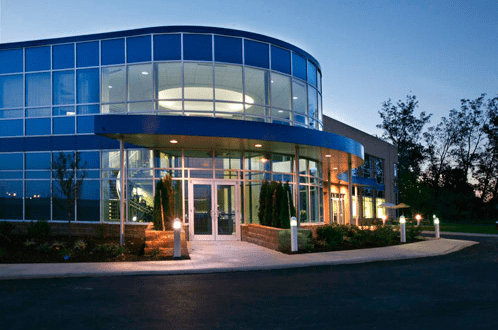
SHL Group (Scandinavian Health Ltd.) is currently the world’s largest privately-owned designer, developer, and manufacturer of advanced drug delivery devices. The organization was established in 1989 by Swedish entrepreneurs Roger Samuelsson, to combine world-class manufacturing in Asia with the strengths of Western Management practices. SHL manufactures medical devices that include pen injectors, auto-injectors, and inhaler systems. SHL also makes a range of other products, including pressure mattress systems, patient lifting slings, medical soft goods, beds, neurosurgical devices, catheters, and industrial equipment.
Success Highlights
Challenges
To successfully unite the global development teams with manufacturing in Asia, and promote precise data integration across the entire enterprise, as well as efficient, informed communication and decision making across the entire group structure, in three languages, in three countries, and in three continents
Solution
Epicor ERP
Benefits
Facilitates speedy cross-regional communication and data integration
Increased business efficiency
The ability for management to make informed decisions faster
Encompass Solutions is a business and software consulting firm that specializes in ERP systems, EDI, and Managed Services support for Manufacturers and Distributors. Serving small and medium-sized businesses since 2001, Encompass modernizes operations and automates processes for hundreds of customers across the globe. Whether undertaking full-scale implementation, integration, and renovation of existing systems, Encompass provides a specialized approach to every client’s needs. By identifying customer requirements and addressing them with the right solutions, we ensure our clients are equipped to match the pace of the Industry.
Established in 1988, Techcomp manufactures and distributes scientific analytical instruments and laboratory equipment. The company ships products to mainland China, Hong Kong, Macau, Southeast Asia, Europe, and the USA (North America). Their customers include universities and research institutions, government agencies, industrial enterprises, and medical groups.
Techcomp has an excellent reputation amongst its customers for manufacturing precise and accurate equipment and for outstanding service delivery. It is these differentiators which have led to a rapid expansion of the business. Through organic growth and several mergers and acquisitions over the last ten years, the enterprise has expanded internationally, and it now has branches and factories in more than 15 countries worldwide
Success Highlights
Challenges
Managing business growth effectively and efficiently
Disparate operating systems working in silos
Operating in different countries, languages, exchange rates, and time zones
Solution
Epicor® ERP
Benefits
Easy-to-use interface enhancing the operational speed
Business transparency leads to better decision-making for growth
Employees accessing the system via mobile devices for ease of use
More accurate stock control leads to improved cost controls
The business is now fit for growth and ready to adopt Industry 4.0 technologies
Encompass Solutions is a business and software consulting firm that specializes in ERP systems, EDI, and Managed Services support for Manufacturers and Distributors. Serving small and medium-sized businesses since 2001, Encompass modernizes operations and automates processes for hundreds of customers across the globe. Whether undertaking full-scale implementation, integration, and renovation of existing systems, Encompass provides a specialized approach to every client’s needs. By identifying customer requirements and addressing them with the right solutions, we ensure our clients are equipped to match the pace of the Industry.
Founded in 1970, Maxweld and Braze is the wholesale division of the Weldamax Group. It began as a wholesale supplier of safety wear for the welding industry. But gradually expanded to include a full range of welding equipment and consumables backed by warranties, a local service center, and customer training.
High production costs in the USA and Europe meant new suppliers had to be found in the East. However, this brought further challenges in managing procurement, stock, and production, whilst ensuring optimum customer service.
Success Highlights
Challenges
Required standardized data management throughout the Weldamax group
Old systems were not integrated and lacked transparency
Needed more control over inventory
The inability to forecast sales and manage to purchase accurately resulted in incorrect inventory purchasing and holding
Fluctuating Rand v. US Dollar exchange rate
Solution
Epicor ERP
Benefits
Streamlines operations by integrating internal processes
Ensures all areas of the business are transparent
Helps to establish processes and systems within the group
Encompass Solutions is a business and software consulting firm that specializes in ERP systems, EDI, and Managed Services support for Manufacturers and Distributors. Serving small and medium-sized businesses since 2001, Encompass modernizes operations and automates processes for hundreds of customers across the globe. Whether undertaking full-scale implementation, integration, and renovation of existing systems, Encompass provides a specialized approach to every client’s needs. By identifying customer requirements and addressing them with the right solutions, we ensure our clients are equipped to match the pace of the Industry.
When it comes to running a business, everyone has a business management system. Such a system can be as simple as a whiteboard on a breakroom wall but more often will take the form of spreadsheets and emails. These systems may even fall into the category of Enterprise Resource Planning software, even if users don’t know it by that name.
Businesses need to know the point at which they’re outgrowing a homegrown or siloed business management system. Here, we’ll detail What an ERP system is, the benefits derived from those systems, and how to evaluate an ERP system for your business.
What Is Enterprise Resource Planning Software?
ERP software is a means of communicating processes and resources to a business’ personnel. This information is then used by personnel to complete tasks such as how many parts to build for a purchase order or how many orders to fulfill by specified deadlines. The level of depth ERP software provides is virtually limitless.
Why Do Businesses Use ERP Software?
Unfortunately, businesses relying on spreadsheets miss out on putting a lot of their valuable data to use. Not only this, but they divide their teams into siloed departments that leave them working less efficiently. ERP software bridges gaps in communicating processes and resources with personnel. The result is accurate and relevant data delivered to those who need it, in real-time and across departments. Businesses will find ERP applications that enable better communication, increased efficiency, increased order accuracy and fulfillment, reduced inventory and labor costs, and happier customers.
The most modern examples of enterprise resource planning software deliver automation capabilities. Today, ERP software offers virtual assistants, workflow automation capabilities, automated data capture and entry, intelligent robot interfaces, predictive maintenance tools, and systems to connect manufacturing businesses from the shop floor to the top floor.
What Is The best ERP software?
The best ERP software is the one that checks all the boxes, or the most, when it comes to meeting the needs of your business now and into the future. That said, evaluating and selecting the ERP software that’s right for your business is not an overnight decision. Once you’ve decided that a more robust enterprise resource planning system is what you need, begin evaluating options.
The typical ERP evaluation process from the buyer’s end begins with research, then engaging those vendors or their certified resellers, discovery follows to ensure the ERP software is the right fit for a business, then demonstrations, agreements, implementation, and finally training. Some vendors and VARs will stop there, only reaching out to continue selling add-on services and upgrades. However, you will want to find a partnership with experts in the ERP software of your choosing. That’s because these systems will potentially help run your business for decades as you grow and expand. Finding the right fit for both ERP software and partnership among providers is important.
How To Select ERP Software
In short, every business is different and has different needs for ERP software. Though, there are core functionalities that all ERP systems will include, like financials and operations. Beyond that, there are systems geared towards retailers, manufacturers, healthcare, and just about every other industry vertical one can name. That said, no matter what ERP software you may need, there are reliable ways to evaluate ERP software that apply to the evaluation process regardless of industry and purpose.
Don’t get hamstrung by inaccurate data, lost information, and poor response time when unforeseen events take place. When the time is right to choose an ERP system that’s right for your business, big or small, talk to the experts at Encompass Solutions. We’ll connect you with a system that fits your build.
Encompass Solutions is a business and software consulting firm that specializes in ERP systems, EDI, and Managed Services support for Manufacturers. Serving small and medium-sized businesses since 2001, Encompass modernizes operations and automates processes for hundreds of customers across the globe. Whether undertaking full-scale implementation, integration, or renovation of existing systems, Encompass provides a specialized approach to every client’s needs. By identifying customer requirements and addressing them with the right solutions, we ensure our clients are equipped to match the pace of the Industry.
We should start with a quick definition of lean manufacturing for the uninitiated. Lean manufacturing, also referred to as “lean”, is a commitment to minimizing waste of any kind during the manufacturing process. This includes wasted time, materials, and capital. in total, there are seven sources of waste in lean manufacturing, referred to as the “7 Mudas”. ERP improves lean manufacturing by providing visibility and tools to identify wasteful processes and how your organization can continually improve processes to ensure that waste is eliminated wherever possible. Here are a few examples of how ERP improves lean manufacturing operations.
1. Reduced Transport Waste
This form of waste occurs when goods and materials are moved from one location to another, be it to a staging area, warehouse racks, or shipping docks. These activities utilize machinery, operators, and time to complete operations, all of which cost money. Bringing no added value to the manufacturer or customer, this is a non-revenue generating activity. As such, fewer hours spent in the material handling phases of operation means fewer resources wasted. ERP improves lean manufacturing in this case by providing tools that enable more intelligent means of production and efficient logistics activities. Scheduling and monitoring capabilities, as well as equipment utilization visibility and inventory tracking, give teams the insight they need to see where resources are being committed and which steps in a process can be expedited or cut out of the equation entirely.
2. Reduced Inventory Waste
If you’re a Make-to-Stock (MTS) or Mixed-Mode manufacturing business, chances are you expect to have a certain level of raw materials and products maintained in inventory. Make-to-order (MTO) operations, not so much. However, at any level, having raw materials and semi-finished/finished products tied up in inventory means capital is tied up in inventory. Unless you’re stockpiling for a doomsday scenario, too much inventory is a bad sign. ERP systems provide the framework for achieving maximum efficiency, such as with Just-in-Time (JIT) manufacturing. Just as supermarkets have refined the optimal replenishment cycles for produce, so too can manufacturers remove these sub-par production planning and distribution practices to keep production constantly moving. ERP improves lean manufacturing in this case by providing tools for forecasting accuracy, historical data for sales and products, setting min/max stock levels, and even allowing for automated reordering directives.
3. Less Motion Waste
Motion waste applies to equipment and personnel and occurs in cases where any type of motion or effort occurs in a process that does not add value. Plant layout is the biggest culprit in contributing to motion waste. This is especially so if it impacts material handling activities due to traffic bottlenecks or excessive wear on machinery like forklifts. While it’s not generally feasible to redesign a production floor without halting production, ERP improves lean manufacturing in this case by providing data on machinery utilization and job planning and scheduling on the production floor. With visibility into what processes are taking more time or what machines are working at less-than-optimum efficiency, manufacturers can collaborate with engineers and suppliers to ensure their facilities are achieving maximum efficiency.
4. Less Time Wasted Waiting
If nothing is happening, time is wasted. This can be the result of production bottlenecks, machine downtime, production teams not being in sync, or waiting on decision-critical data. Fortunately, ERP improves lean manufacturing in this case by providing teams with one source of data that everyone can rely on and retrieve when necessary. It helps to identify bottlenecks, plan jobs and schedules more efficiently, as well as facilitate decision-making with the data needed to execute mission-critical strategies.
5. Avoiding Over-production
The Big One When it comes to the 7 wastes, is overproduction contributes to all other forms of waste in lean manufacturing. In short, it means you are making more of a product than consumers require, or goods are produced before they are needed, leaving them to sit in inventory. Supply chain management, procurement, and demand planning are both the causes and solutions of overproduction. Fortunately, ERP improves lean manufacturing in this case by delivering purpose-built tools to enable better supply chain management, automating the procurement process, and accurately forecasting demand based on historical data and industry trends.
6. Avoiding Over-processing
In the case of over-processing, you are putting in work that has no value. For example, on the production floor, you’re painting the inside of a car fender that will never be seen by anyone by a mechanic. This activity adds no value for the customer and serves only to take more valuable time away from your production team. Not to mention, paint ain’t free. Over-processing carries over to your field service and sales teams, too. Time wasted with manual entry can cost you valuable time. It can even cost you a customer if that manual entry results in order errors. Fortunately, ERP improves lean manufacturing in this case by automating such processes. You can click a single button and have a quote automatically turned into a Bill of Materials (BOM). Further insights deliver critical information on your production goals and sales KPIs.
7. Avoiding Defects
Defects don’t just waste time and materials, they waste your customers’ time and patience. Going even further, defective products that make it off the shop floor and into those customers’ homes or facilities reduce your industry reputation. For these reasons, defects are a high-priority waste that needs to be tackled. Unfortunately, it’s not always an easy task. ERP improves lean manufacturing in this case by completing checks and aligning production against standards you’ve set in the system. Products and processes that don’t conform raise flags so that your teams can address these instances before they become issues.
Encompass Solutions, Inc. is an ERP consulting firm, NetSuite Solution Provider, and Epicor Platinum Partner that offers professional services in business consulting, project management, and software implementation. Whether undertaking full-scale implementation, integration, and renovation of existing systems or addressing emerging challenges in corporate and operational growth, Encompass provides a specialized approach to every client’s needs. As experts in identifying customer requirements and addressing them with the right solutions, we ensure our clients are equipped to match the pace of the Industry.
Kaufman had been running several non-integrated systems before the implementation of Epicor ERP. During that time, these non-integrated platforms led to colleagues having to do each other’s jobs. One example included a lack of confidence in the inventory on hand. with no trust in the system data, users had to manually confirm inventory availability.
The Epicor implementation effort was owned by Kaufman IT Director Larry Keilin. “The transition from our old system to our new system was less painful than I expected for many employees, the day you switch from an old system to a new system is the day they love the old system,” Keilin commented. “A large number of our employees got on the Epicor bandwagon and became excited about all the work they can now do that they couldn’t do before. We are truly seeing the benefits, for example, for the purchasing department, the Buyers Workbench is such a useful tool that it stands out, and our customer service department loves the way they can take an old order, copy it, and create a new one-it’s a huge time saver for them.”
The Details
70 Concurrent Office Users
15 Concurrent Data Collection Users
8 Database Users
On-Premise Deployment
The Challenge
Challenges for this project are both substantial and essential to overcome if Kaufman were to make the most of its new ERP system. First, overcoming the lack of visibility for purchasing decisions, which up until this point had been made using days’ worth of research and inventory management via Microsoft® Excel® worksheets, would be essential.
Second, The lack of real-time transaction data gave little insight into how Kaufman was performing at any given point in time. Finally, the organization’s multiple costing methodologies provided inconsistent gross margin calculations.
The Goals
Kaufman Container implemented its Epicor ERP solution with the primary goals of:
Better tracking of sales and gross margin data to salespersons and customers.
Improve inventory management.
Integrate production management.
Growing revenue and profitability.
The Results
Encompass Solutions was contracted by Kaufman to perform an end-to-end business process review (BPR) which was critical in helping to determine the optimal business processes to follow. This would yield the maximum benefit from the newly implemented Epicor ERP product. The BRP was completed in just one week and helped outline areas for improvement as well as recommendations for systems and process improvement moving forward into implementation.
Every business area was taken into account during the assessment and recommendations for changes in engineering, production, inventory, purchasing, costing, and accounting departments were presented. In particular, a go-forward path that included additional modules to offer a substantial benefit to production and inventory management was provided by Encompass.
When asked how he felt we performed in our assessment, Keilin offered, “Encompass has done a great job at assessing the situation, with BPR guidance to systematically attack and resolve pain points following the implementation.”
Improvements included:
High return on investment that saw overhead costs cut by 30%.
System usability improved significantly as a result of easy-to-use dashboards and report generation.
Business Process Management (BPM) provided users the ability to set conditions and actions that added functionality to the system, tailoring screens and processes as needed.
Reorganization of sites, warehouses, and bins enabled quick and easy product location for issuing to jobs or shipping.
Parts purchasing was made easier with the visibility of time phase reporting.
The consistent average cost across all product lines.
For the past 100 years, Kaufman Container has been a leader in the North American market in providing quality and innovative packaging components and value-added services. From our beginning, our focus has always been on giving our customers exactly what they are looking for. Kaufman Container continues to be your “One Stop Shop” for all your packaging needs.
Today, Kaufman Container continues to be a privately-held, family-owned business that operates two key facilities in the Midwest. The business offers a wide variety of products and services, warehousing, quality and technical support, logistics assistance, and an in-house decorating facility.
Encompass Solutions, Inc. is an ERP consulting firm, a NetSuite Solution Provider, and an Epicor Platinum Partner that offers professional services in business consulting, project management, and software implementation. Whether undertaking full-scale implementation, integration, and renovation of existing systems or addressing emerging challenges in corporate and operational growth, Encompass provides a specialized approach to every client’s needs. As experts in identifying customer requirements and addressing them with the right solutions, we ensure our clients are equipped to match the pace of the Industry.
When it comes to factory operations, being reactive only addresses issues after they’ve become problems. If you want to stop issues dead in their tracks before they have an opportunity to snowball into problems, being proactive is the only way to go. Leveraging cutting-edge ERP solutions can give you the insight you need to see hiccups long before they interfere with operations. ERP solutions excel at feeding your trained eyes the data they need to identify anomalies on the fly. Streamline operations and refine your processes with a predictive approach that reduces downtime and boosts your bottom line. Control downtime events, get real-time condition monitoring, and more when leveraging the modern tools available to manufacturers.
Getting Control of Downtime Events
If you’re not leveraging the latest in predictive maintenance practices, you are already behind the pack. Factory floors have flourished with better visibility into how machines perform and more control over downtime events. The latter is an especially significant component of predictive maintenance. Even in the best scenario, poor maintenance practices cost manufacturers significantly in terms of energy, revenue, and component costs. We can’t forget to factor in customer satisfaction, which takes a hit when orders are not delivered on time.
By adopting a whether-or-not approach to maintenance, one that uses time and/or operation count to indicate when maintenance is completed, manufacturing ensures that downtime is determined as they say it is.
Condition Monitoring with ERP
Condition monitoring is an approach to equipment upkeep that is simplified by modern technology and maintenance practices. These practices can be carried out periodically, during scheduled downtime events, or continuously, while machines remain in operation. The efforts are effective in combatting sudden downtime events and equipment failures, which can potentially cost manufacturers millions. Not to mention the resulting reduced confidence consumers have in the ability to keep up with demand.
ERP solutions are one tool you can use to capitalize on condition monitoring and control your maintenance cycles. This will bring downtime events to a minimum and maintain your position as a dependable manufacturer. Customizations and integrations like Epicor ERP’s Mattec MES offer real-time insights into machine performance along with a host of other beneficial tools that include, but are not limited to:
Real-Time Production Visibility
Increased Schedule Adherence
Improved Process Efficiency And Quality
Labor And Material Forecasting
Increased Production Capacity
Increased Safety And Productivity
Everything from vibration, voltage, temperature and other performance indicators feed into sensing tools attached to machines. By utilizing this modern sensing technology in ERP environments, manufacturers can predict maintenance events, rather than react to them. This much you know by now. However, have you thought of the human component and how these practices benefit your workforce day-to-day? These innovative tools have proven their efficacy in reducing the instances of incidents, accidents, and breakdowns significantly, which saves far more money than it costs.
Beyond that, your systems can even be configured to evaluate your materials on hand and make the necessary arrangements to ensure you are not caught between a rock and a hard place.
These intelligent and connected devices assist in setting data points that indicate when a part is reaching end-of-life. Automated systems can be directed to order replacement parts if none are on-site and schedule the replacement or repair in such a way that minimizes production downtime.
Encompass Solutions, Inc. is an ERP consulting firm, NetSuite Solution Provider, and Epicor Platinum Partner that offers professional services in business consulting, project management, and software implementation. Whether undertaking full-scale implementation, integration, and renovation of existing systems or addressing emerging challenges in corporate and operational growth, Encompass provides a specialized approach to every client’s needs. As experts in identifying customer requirements and addressing them with the right solutions, we ensure our clients are equipped to match the pace of the Industry.
Right now, employment in the US is the highest it’s been in over a decade. That has put a lot of businesses in a tough position when hiring talented employees. More and more businesses are running into the same problem: lack of availability of capable manpower. With so much competition, your business may want to consider going down a more progressive route.
By implementing automated processes made possible with ERP software, your business can avoid the resource-intensive undertaking of searching for, hiring, and onboarding new talent in a competitive labor market. Getting rid of the mundane and repetitive tasks on your back-end will free up your workforce to take on more customer-focused tasks, ensure your business is positioned to adapt to a sudden change in your business environment, and improve your bottom line without sacrificing headcount or quality customer experiences.
Addressing Labor Market Constraints
While low unemployment is great for job-seekers, it puts businesses in a tough position when hiring new talent to help their operations expand. Couple that with employees having more bargaining power in the workplace and it’s clear that businesses not only need to improve their benefits but their environment, as well. One of the easiest ways to address the trend is to automate processes. This will free up your employees to take on more creatively demanding and fulfilling roles within the workplace. This not only allows the employee to take on more significant tasks within the organization, but also grow professionally and receive compensation worthy of their increased responsibility and skill set. As a result, their time is more valuable and the work they produce for the company is valued more highly in the eyes of customers.
Combining Process Automation With ERP
One of the biggest buzzwords to come out of Industry 4.0 is Robotics Process Automation (RPA). However, the misleading name is enough to turn off even those who can benefit from it the most. RPA doesn’t involve any robots or mechanical components. Not only this, but it applies to just about any business that deals with ordering, invoicing, and data entry.
Let’s break it down by definition:
Robotic – an entity being programmed by a computer to complete complex tasks. In this case, the term refers to mimicking human actions.
Process – A sequence of steps leading to a meaningful activity or task.
Automation – when a task happens automatically, i.e. without human intervention.
RPA is a business process automation technology that automates tasks through the interface a company uses to enter data in the back-end of their operations. In short, RPA initially watches a user perform a task in the GUI, then automates that task and performs it autonomously. One common application can be found in identifying important attachments in emails, like an invoice, extracting that data, and then entering it into the company bookkeeping system. This all happens automatically and in a fraction of the time, it takes a human worker to complete manually.
The Impact of RPA On Employment
While it’s no secret that many workers are skeptical of automation and fear it can lead to layoffs, the incorporation of such technology has had the opposite effect according to a study conducted by the London School of Economics. The study found that rather than a decrease in the workforce, employees were able to achieve greater productivity and work completed with the same number of people.
The same study also found that RPA technology enables repatriation of processes in the workplace, allowing companies to bring processes back to their home soil, rather than outsourcing business processes to cheaper labor markets abroad.
The Impact of RPA on Employees
A company’s greatest resource is its employees and anything a business can do to retain top talent is in its best interest. RPA directly contributes to the benefit of employees by implementing practices that reduce the stress of a cluttered and over-managed environment. Here are a few examples:
Reduction in human error – When RPA takes over the mundane and tedious tasks involving data entry, there are far fewer instances of human error leading to blockers and errors on the paperwork that must then be re-evaluated and re-submitted. With the risk of human error substantially diminished, your employees spend less time going over the same data they’ve already entered and less time thinking about what might have gone wrong after the fact. A more precise and automated workflow allows your employees to spend more time fretting and overdelivering the best service to your clients.
Employee Empowerment – One of the biggest challenges in retaining top talent is providing these individuals and teams with the ability to share innovative ideas and creative solutions to business challenges, have their voices heard, and directly impact the future of their company. They want buy-in and the ability to pursue their full potential within the company. Give them the opportunity by getting rid of the tedious tasks that can suck up most of their day with an automated workflow process.
Organization Of Your Organization – When your workflow and document management are automated, there are far fewer instances of lost documents or searching through the system for the latest iteration. The organization is one of the many byproducts of RPA. When employees aren’t spending the time to track down documents between departments, more time is made available for employees to take a measured approach to more critical tasks with more time to collect, plan, and strategize, or fit in a personalized call to a new customer or prospect you’ve been working on.
Internal Communication Improves – When the opportunity for employees to lose documents or impact another worker’s tasks is removed from the equation, relationships between coworkers improve and productive communication becomes the norm. Cleaner data and better access to their colleagues ensure that your employees have what they need to do their jobs correctly and well. Workflow automation lends itself to effective monitoring of tasks as well, so looming deadlines and tasks past due don’t contribute to office stress levels.
With improved confidence and a new sense of ownership resulting from RPA and an effective ERP software solution, both employees and businesses benefit. The result is a better service, better product, and better working environment, which pleases everyone from the management to the employee to the customer.
Encompass Solutions, Inc. is an ERP consulting firm, an Epicor Platinum Partner, and NetSuite Solution Provider that offers professional services in business consulting, project management, IT support, and software implementation. Whether undertaking full-scale implementation, integration, and renovation of existing systems or addressing emerging challenges in corporate and operational growth, Encompass provides a specialized approach to every client’s needs. As experts in identifying customer requirements and addressing them with the right solutions, we ensure our clients are equipped to match the pace of the Industry.
A concept coined by Douglas Adams in his famous science-fiction novel, The Hitchhiker’s Guide To The Galaxy, the Someone else’s problem (SEP) Field masks objects and concepts. According to Adams:
An SEP is something we can’t see, or don’t see, or our brain doesn’t let us see, because we think that it’s somebody else’s problem…. The brain just edits it out, it’s like a blind spot. If you look at it directly you won’t see it unless you know precisely what it is. Your only hope is to catch it by surprise out of the corner of your eye.
In the field of social psychology, SEP goes by another name: the bystander effect. The phenomenon revolves around the concept that an individual is less likely to help someone in need or solve an existing problem in direct correlation with how many other people are present. In this case, the larger the number of bystanders, the tendency for the individual is to believe someone else has taken the agency to get things under control. The individual is, therefore, less likely to lend aid.
Someone Else’s Problem is a dangerous concept to underestimate or allow to become established as the status quo.
Other Factors Contributing To SEP
Some other concepts that come into play are the ambiguity of the problem at hand, group cohesion, or how close the social ties are between members of a group, and the diffusion of responsibility. That last concept is perhaps the most significant of the three, whereby the individual in question may believe the responsibility lies solely on other group members or that those individuals are assumed to have already addressed the problem.
The Harm Of SEP In Business
When it comes to business, the concept of SEP can emerge with significantly detrimental results. When it comes to the operations of an enterprise, Someone Else’s Problem is a dangerous concept to underestimate or allow to become established as the status quo.
Playing games of tag on tasks within a department or between departments can choke a business’ efficiency and mishandle resources when they can be put to more efficient use. For example, try to assign a list of tasks for your team to tackle as a whole and a list of tasks for each member. Team members will consistently take on the individual tasks first and consider the broader tasks as secondary priorities.
What if one, or several, of the team tasks, is a blocker for one, or several individuals’ tasks? who takes the initiative to resolve the issue(s)? Who in your organization has the visibility and understanding to prioritize and delegate essential tasks? Being able to prioritize accordingly and assume ownership is essential in keeping the business functioning at peak performance. The problem is a common one and, fortunately, the solution an accessible one.
Keeping SEP At Bay
The good news is SEP doesn’t have to be a plague upon your business. According to social psychological research, the most effective solution emerges in the reinforcement of teamwork and forming of strong bonds between coworkers. Business investment in the employee also tends to lead to their reciprocated investment in the company. Issues that can be detrimental to the business are viewed as detrimental to the individual by association. In this way, the issue isn’t kicked further down the road or ignored altogether as SEP, because, while not everyone may have the ability to address the problem, they are invested enough to acknowledge it needs to be addressed, resolved and learned from.
Once your team is functioning together and understands working towards the success of the business is an investment in their success, you can focus on reinforcing strategies for collaborative problem-solving. Quality training along with clear workflows and processes play important roles in keeping SEP at bay. A quality ERP solution can also provide the essential visibility and task management capabilities a business needs to avoid the pitfalls of SEP peril.
Having the right tools on hand, a procedural plan of action, and an answer to ” It’s Someone Else’s Problem” is the best way to keep your business SEP-free before the phenomenon can take root within your workforce.
Encompass Solutions, Inc. is an ERP consulting firm and Epicor Gold Partner that offers professional services in business consulting, project management, and software implementation. Whether undertaking full-scale implementation, integration, and renovation of existing systems or addressing emerging challenges in corporate and operational growth, Encompass provides a specialized approach to every client’s needs. As experts in identifying customer requirements and addressing them with the right solutions, we ensure our clients are equipped to match the pace of the Industry.
With discrete and batch process manufacturers already taking full advantage of advancements in robotics and machine vision technology to improve operations, winemakers and agricultural industries are increasingly leveraging AI and Robotics to improve processes in the vineyard. Coupled with modern ERP systems, these manufacturers are better equipped to weather disruption and establish their foothold in a competitive marketplace.
Manufacturing, packaging, and production are already quite familiar with automation, vision systems, and collaborative robotics. Now, the more traditionally manual and complex areas of agriculture are beginning to feel the influence of these powerful technologies.
Automation In Agriculture
For example, Researchers at the Agriculture and Biological Engineering Group at the University of Illinois at Urbana-Champaign are making big pushes for robotics and automation proliferation in agriculture, forestry, and fisheries. The group has outlined its vision for the influx of robots, machine vision, and AI on three levels. Initially, robots will utilize machine vision technology to survey and collect data that provide insight into a variety of environmental factors. A follow-up with more specialized robots will prepare and maintain sites, performing field operations such as weeding, picking, and pruning. Once a suitable location has been established and the land prepared for operations, third-generation robots and autonomous systems will emerge to automate the complete process from seeding to packing. The vision may still be years from coming to fruition, but examples of second-generation robots are already in the works. Take the California wine industry for example, where robots and irrigation technology are working in tandem to make more efficient use of watering practices in the drought-stricken state.
A Robot Workforce Uprooting Global Wine Industries
The vineyard might be one of the last places people imagine the latest advancements in technology are being utilized. However, the applications of machine vision, AI, and robots are disrupting the winemaking industry to such an extent that the benefits of their incorporation are too great to ignore.
Take California’s wine country for example. In a state with one of the most sizable wine industries in the world, while at the same time plagued with drought, innovators have answered the call with Robot-Assisted Precision Irrigation Delivery (RAPID). RAPID uses precision monitoring technology to deliver water through specialized emitters attached to irrigation lines laid throughout a vineyard.
The project was funded with a $1 million grant from the Department of Agriculture and headed by UC Merced professor Stefano Carpin. The unmanned ground vehicle, equipped with GPS can map routes throughout vineyards. Relying on drone and satellite images, the vehicle will have a continuous view of weather conditions in real time. Additionally, the robot will utilize a “grasping hand” to turn the water emitters in such a way that increases or decreases the flow of water. This system improves on the current irrigation setup considerably, since the irrigation watering systems currently in use deliver a constant flow of water across the entire system. With the more efficient use of water in the drought-stricken region, RAPID can improve vineyard yield, reduce waste, and even customize the watering process dependent on a vineyard’s variety of grapes. Carpin hopes to have a fully functional test system available by 2020.
Pruning With Precision Machine Vision Systems
Wall-Ye V.I.N is France’s answer to one of the most labor-intensive components of running a vineyard, vine maintenance. Pruning, de-suckering, and clipping fruitless shoots, to be more precise. Understanding which vines need to be pruned and to what extent is considered a sacred charge in many winemaking circles. Nevertheless, tremendous advancements are being made to automate these laborious and time-consuming tasks. The creation of Burgundy-based inventor Christophe Millot, Wall-Ye V.I.N. has even the most scrupulous winemakers nodding in approval as the economic value the robot presents is undeniable. Take for instance the human component of pruning. It takes somewhere near three years to fully train a pruner to man the vines, whereas Wall-Ye V.I.N. promises to be ready to prune in a fraction of the time. Still, the robot will not be capable of taking on all the associated tasks its human counterparts are responsible for and instead take on a collaborative role within the industry.
Meanwhile, across the globe, California-based Vision Robotics is hard at work creating a system considerably larger than Wall-Ye V.I.N. to tackle pruning tasks. Canterbury University’s Australia campus is developing a similar pruning robot as well. All three projects have a common imaging system that feeds into an AI that is focused on 3D modeling to determine which vines are cut.
Robotics Helping Harvest
Once the cluster-heavy vines are ready for harvest, machine vision, AI and robotics come into play in a big way. Identifying which grapes are going to produce the best wine is an arduous task made easy with the incorporation of modern technology. Take for instance the robots in place at the Hall Vineyards in Napa Valley, California. Once grape clusters have been harvested, the robots on location are fed the clusters to identify which cut and which do not. Taking more than 10,000 photos a second, the robot is capable of analyzing each photograph virtually instantly.
The operator inputs what parameters the robot uses to identify what is acceptable and what is not. All acceptable specimens proceed to a “good fruit” bin at the end of a conveyor, while the rejected fruit is blasted off the line with a precision burst of air. This is just one way that robots improve the efficiency of vineyard operations and enable winemakers to create even more satisfying beverages.
Another example emerges in the EU project, VineRobot, which uses color cameras, Infrared thermography, and GPS techniques to obtain agronomical and physiological data from the vineyard in real-time. By combining all the necessary data to conclude, VineRobot can alert operators and other staff of nutrient deficiencies in plants and ready for harvest fruits based on pigmentation. Throughout the process, Vine Robot is creating a complete representation of the vineyard’s crop quality as a result of the data gleaned from its sophisticated vision sensors and systems.
Encompass Solutions is a business and software consulting firm specializing in ERP systems, EDI, and Managed Services support for Manufacturers and Distributors. Serving small and medium-sized businesses since 2001, Encompass modernizes operations and automates processes for hundreds of customers across the globe. Whether undertaking full-scale implementation, integration, and renovation of existing systems, Encompass provides a specialized approach to every client’s needs. By identifying customer requirements and addressing them with the right solutions, we ensure our clients are equipped to match the pace of the Industry.