It can be difficult For small and medium businesses to identify when it’s the right time to abandon internal systems, or implement if none exist, in favor of a complete ERP solution. Shedding siloed data structures and cobbled solutions that end up costing more in time and resources than they are worth can bring small and medium businesses into a new era of action.
ERP systems are the ideal solution, allowing small and medium businesses to compete with larger enterprises thanks to the more efficient use of company resources, more intelligent data, and improved analytics of day-to-day operations. Up to this point, small and medium businesses may have been able to operate on home-grown systems or just on-the-fly approaches to operations. However, these attempts to run a successful enterprise can only last so long. Eventually, serious hurdles will emerge and lead to setbacks. If left unaddressed, these setbacks can grow into more debilitating issues. Here are some indicators small and medium businesses can use in identifying that the time is right for an ERP implementation.
Inventory Issues
If your business is having trouble tracking inventory, red flags should be raised. Inventory control is a huge component of ERP as well as a defining characteristic of a successful business. When inventory can’t be accurately managed, sales orders fail to be fulfilled. As a result, customers lose faith and business drops off. When managing inventory levels turn into a guessing game, ERP implementation is the solution.

Inventory Control Is A Key Component Of Operating A Successful Enterprise Of Any Size.
Inaccurate Forecasting
Is your business throwing darts at a board when it comes to forecasting sales figures into the near and distant future? If this is the case with your small or medium business, you need better intelligence. ERP systems provide exceptional business intelligence and data maintenance components that give you more accurate sales forecasting. This way, you’re better equipped to prepare for the future expansion of your operations.
Accurate Sales Forecasts Will Ensure Your Business Is Prepared To Meet The Challenges Of Growth.
Poor Analysis And Reporting
Reporting and business analysis are a must for any business looking to stay afloat for the long-term. ERP capabilities in these sectors provide business owners with a better understanding of market performance, trends, and customer preferences. Reports providing key metrics allow you and your teams to adapt to changes in the market. Being agile and able to develop new strategies through the insights ERP provides will ensure your business stands the best chances in a dynamic industry.

Insightful Data And Accurate Reporting Will Provide Your Business The Insights Needed To Identify Operational Shortcomings And How To Resolve Them.
Siloed Data Systems
When your departments are separated from data because they are operating within their own siloed systems, your business loses out on performance potential. Moving your operations to a unified online system will ensure all your employees are on the same page, with access to relevant data to deliver the best service to your customers. Information is a cornerstone of operations from the factory floor to the c-suite, no matter what size of business you operate. This improved visibility will allow employees to see exactly how they contribute to the business’ overall strategy and trajectory. Engage your employees and improve productivity by communicating strategy, setting measurable goals, and supporting your growth from the inside out using the unified data systems ERP solutions provide.

Keeping Employees At Every Level Connected To Data Ensures A Complete Understanding Of Roles, Strategy, And Trajectory.
Encompass Solutions is a business and software consulting firm that specializes in ERP systems, EDI, and Managed Services support for Manufacturers and Distributors. Serving small and medium-sized businesses since 2001, Encompass modernizes operations and automates processes for hundreds of customers across the globe. Whether undertaking full-scale implementation, integration, and renovation of existing systems, Encompass provides a specialized approach to every client’s needs. By identifying customer requirements and addressing them with the right solutions, we ensure our clients are equipped to match the pace of Industry.
When the goal is to be agile both on the shop floor and in the marketplace, manufacturers need tools that allow them significant maneuverability. ERP systems have traditionally been the biggest component of operational adaptability when circumstances change behind the scenes. Cloud ERP is one recent example of innovation in Industry 4.0 that has reinvigorated the manufacturing space for enterprises of every size. A survey by Technology Evaluation Centers revealed Epicor ERP ranked as the top solution for growing small and medium businesses.
Cost Saving Software
Today, small and medium businesses (SMB) can achieve world-class efficiency at a fraction of the cost when compared to the past 10 or even five years. What was once accepted as a software solution available only to large enterprises, ERP allows small and medium businesses to access data like never before. Without the high-cost of on-premises solutions, cloud ERP solutions provide significantly improved levels of insight into operations by omitting the costly expenses of hardware, maintenance, and security. Small and medium businesses are finding it easier to make their mark in the marketplace with the extra capital provided by these all-in-one solutions, in many cases built specifically for their industry.
Information Sharing
By more effectively sharing relevant information between departments, small and medium business operations can avoid bottlenecks caused by low inventory or sub-contracting tasks. Access to as much or as little data as is necessary provides every member of the workforce with the insight they need to ensure the supply chain is never interrupted.
ERP Frees Resources
Cloud-based ERP systems bring down operational costs at the point of implementation, that much is true. However, more impressive still is the ability for small and medium businesses to take advantage of the reduction of labor costs associated with ERP solutions. By eliminating the human component of repetitive tasks, labor is freed to be focused elsewhere in the supply chain. Additional benefits of the automation components of ERP solutions include fewer instances of erroneous data and more accurate forecasting.
The Take Away For Small And Medium Businesses
Beyond the cost benefits implementing an ERP system puts SMBs in the right mindset for growth with a commitment to the long-term. Positioning your business for success starts with the right attitude, after that the right tools pave the way for your progression. Cloud ERP brings several benefits that SMBs can see the results of immediately.
The first immediate benefit is uniformity and transparency within a single information system. Without the need to chase down data or keep departments working within siloed systems, everyone can work on the same page towards the same goal. With multiple data entries and exports no longer in the picture, errors are mitigated, productivity increased, and associated expenses no longer affect your bottom line.
ERP Systems Are Accessible And Highly Beneficial To Small And Medium Businesses.
Informed decision making emerges with effective ERP solutions in place. Everyone from marketing to management to accounting benefits from the ability to make more effective decisions affecting operations now and ahead. When the overall strategy becomes clearer, agility comes naturally and your business can adapt more easily to obstacles before they become issues.
Streamlined processes make way for increased productivity with ERP. The systems you have put in place today will enable a smoother transition through growth as you enjoy the success resulting from your hard work. The alternative may end up costing you much more than the price tag of an ERP system.
Encompass Solutions is a business and software consulting firm that specializes in ERP systems, EDI, and Managed Services support for Manufacturers and Distributors. Serving small and medium-sized businesses since 2001, Encompass modernizes operations and automates processes for hundreds of customers across the globe. Whether undertaking full-scale implementation, integration, and renovation of existing systems, Encompass provides a specialized approach to every client’s needs. By identifying customer requirements and addressing them with the right solutions, we ensure our clients are equipped to match the pace of Industry.
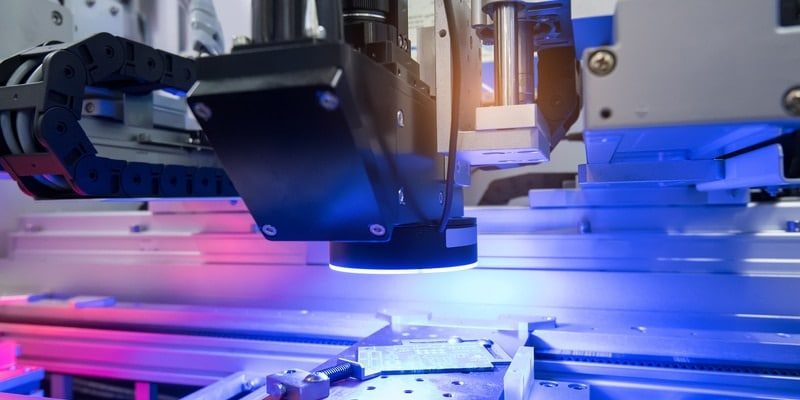
Picking and sorting of objects is an activity few humans look forward to with great elation. However, the tedious nature of the task is a prime candidate for automation using robotics. Beyond the obvious hardware that it takes for a robot to operate within the confines of a designated task, a less obvious one, machine vision, acts as a critical component of efficient robotic sorting. The technologies involved with machine vision, sensing, and object interaction are already being used by robots with great success on the International Space Station in completing even complex tasks, semi-autonomously.
Robotics labs around the world are hard at work refining the technology for applications in factories, warehouses, and even relief efforts in disaster areas. The environment in each example is likely one with an abundance of clutter as well as rife with objects of varying size, weight, and orientation. This is a perfect setting to test and apply the advancements of machine vision and object interaction.
Machine Vision Is Increasingly Relied Upon In Automation To Drive Quality And ROI. The Market Is Expected To Reach $18.7 Billion By 2022.
Components of Machine Vision
Machine vision has significant capabilities on factory floors and production lines. As systems acquire product images and extract the relevant information, the information is analyzed and communicated to the outside world. A lot goes into the technology behind machine vision, which can be broken down into five essential components: lighting, lenses, vision processing, image sensing, and communications.
Machine Vision Lighting
Lighting is essential to the success of machine vision results. By capturing images through analysis of reflected light, machine vision systems can effectively identify objects as well as their orientation in an environment. Several lighting techniques can be utilized by machine vision systems, including backlighting to measure external and edge measurements, structured lightning patterns to interpret angles on an object’s surface, and strobe lighting to freeze moving objects for examination or aid in countering blurring. These are only a few examples of the lighting techniques utilized in machine vision systems, which can also incorporate diffuse dome, bright-field, dark-field, and axial diffuse lighting. A more comprehensive guide to machine vision lighting can be found in this whitepaper from National Instruments.
Machine Vision Lenses
Just as in conventional cameras, lenses capture an image and deliver it to sensors within the camera. One can also think of this in terms of our eyes delivering the images we see to our brains for interpretation. Fixed and interchangeable lenses are the most common types of lenses in machine vision systems. Lenses of varying sizes and shapes are used to capture the most precise image for the system’s intended use. Fixed lenses are typically standalone components and can autofocus based on mechanical adjustment or as a fluid lens that automatically adjusts to deliver the highest quality. These lenses have a fixed field of view from a certain distance. On the other hand, interchangeable lenses are typically equipped with C-mounts or CS-mounts that allow them to be removed or attached at will to the systems they are enhancing. Vision Systems Design does an excellent job detailing the fundamentals of machine vision lenses in this article.
Machine Vision Image Sensors
An essential component of image capture, image sensors utilize a charged couple device (CCD) or a complementary metal oxide semiconductor (CMOS) to interpret light as electrical signals. In more easily digestible language, image sensors capture the reflected light from an image and make sense of the object, interpreting it as a digital image with precise details that aid in accurate measurements by processing software. A more comprehensive article on image sensors from Coventor can be found here.
Vision Processing Units
A Vision Processing Unit (VPU) is another component of machine vision that serves to extract information from the digital images captured by the cameras being used. The processing undertaken by these microprocessors can be completed externally or internally on a standalone system. A process completed over the course of several steps, images will first be acquired from the sensor and software will identify specific features of an image, including measurements and comparisons to reach a decision based on the result. The results are then communicated to the system to complete additional actions. While it is true that the physical components of machine vision are integral to the overall function of these systems, the processing algorithms that evaluate and compare results are the most influential. Processing software is responsible for configuring camera parameters, pass-fail detection, communicating information to factory floors, and supporting Human Machine Interface (HMI) development.
Machine Vision System Communications
As one might conclude from this brief overview of machine vision, these systems are an amalgamation of parts and components that must all work in unison to deliver accurate results consistently and in real-time. Add to this the fact that environments can change dynamically and at a moment’s notice raises necessity to realign vision on the fly. Communications are an essential component of machine vision systems and are typically executed through discrete I/O signals or via data delivered through a serial connection to a connected device, i.e. Ethernet or RS-232 output. Programmable logic controllers (PLC) are the favored connection made to discrete I/O points, which can control stack lights, solenoids or other indicators to trigger reject responses from the system.
Machine Vision Applications In Production Processes
As mentioned above, machine vision is already hard at work on the ISS. However, more candid applications exist right here on Earth. Industrial inspection is among the largest industries utilizing machine vision. However, many applications, such medical imaging, remote sensing, and autonomous vehicles use machine vision on a continuous basis.
Sorting
Machine vision applications in warehouse and factory conditions are exceptional at mitigating the amount of human error that can affect repetitive processes, such as bin-picking and sorting tasks. The technology allows for robots to make sense of a cluttered workspace or full bin and extract the relevant objects appropriately.
Assembly Verification
When quality is of the utmost importance, consistent outputs on the assembly line are necessary to a company’s bottom line. Inspection operations in assembly verification are completed in milliseconds to ensure that every item is up to spec and incomplete products don’t make it past the check.
Automation
Automating production is an essential function of manufacturing operations. Machine vision can assist in detecting system abnormalities, jams, and other hiccups that can affect the production process. Improving the consistency of operations ensures little interruption and a reduction in production costs that result from downtime.
Removing Defects
Automation demands two things: consistency and simplicity. When things get complicated they tend to also get expensive. Machine vision systems are capable of inspecting hundreds of items per minute to a high degree of accuracy, thus ensuring that defective items are removed from the equation before they can affect a business’ bottom line, without the need for complex systems of checks throughout the production process.
Identification
The ability to scan barcodes and other identifying under several difficult conditions, be it lighting, texture, or packaging, is essential to keep operations running smoothly. Machine vision systems help achieve optimum efficiency in quickly reading necessary labeling information on the production line and in distribution centers.
Encompass Solutions is a business and software consulting firm that specializes in ERP systems, EDI, and Managed Services support for Manufacturers and Distributors. Serving small and medium-sized businesses since 2001, Encompass modernizes operations and automates processes for hundreds of customers across the globe. Whether undertaking full-scale implementation, integration, and renovation of existing systems, Encompass provides a specialized approach to every client’s needs. By identifying customer requirements and addressing them with the right solutions, we ensure our clients are equipped to match the pace of Industry.
A recent comparison of Epicor ERP, NetSuite, and Infor SyteLine in the small business category revealed that in 10 of the modules tested, Epicor ERP outscored the competition as the best small business ERP. A Vendor dedicated to proving powerful capabilities alongside ease of use, Epicor seeks to redefine the relationship workforces share with ERP. This includes the visualization, interaction, and information consumption for organizations.
The three vendors were compared across 10 main modules that include 2500 features and functions. After Epicor received top marks for five of the 10 main modules tested – General Ledger, Accounts Payable, Accounts Receivable, Job and Projecting cost, and Sales Management – Technology Evaluation Centers’ (TEC) Vendor Showdowns placed Infor SyteLine and NetSuite in second and third place respectively.
ERP Vendor Showdowns
A regular installment from Technology Evaluation Centers, Vendor Showdowns provides unbiased comparisons of software according to set criteria. Complete scoring and rules can be found here. In short, top marks are received for complete support out-of-the-box with ratings decreasing from that benchmark of functionality.
Vendors Were Evaluated By TEC Across 10 Product Categories As Well As 2,500 Functions And Features.
According to TEC’s Vendor Showdowns editor Larry Blitz, “After taking a look at the results of our small business software vendor showdown it is evident that Epicor is the strongest solution overall, followed by Infor, with NetSuite ranking third.” TEC’s Blitz went on to detail Infor SyteLine’s performance in receiving marks for the Inventory, Budgeting, and Manufacturing modules. NetSuite received its recognition in Fixed Assets performance.
About Epicor
Epicor aims to provide the Best Small Business ERP with powerful capabilities alongside accessibility. With the goal of innovating how ERP is used, deployed, and managed, Epicor goes beyond reinventing interfaces and focuses more on the relationship between ERP systems and people. By removing the barriers standing between business and information, Epicor minimizes the steps taken to gain actionable insights and drive growth.
About Technology Evaluation Centers
An independent software analysis firm, Technology Evaluation Centers (TEC) helps organizations of all sizes to identify software solutions aligned with business’ unique requirements. With professional expertise in the realm of ERP, CRM, HCM, and BI, TEC is positioned as a leading authority on software in more than 40 categories with more than 25,000 functions and features. Utilizing a proprietary decision-support engine, TEC lets users in professional services, retail, distribution and wholesale, health care, energy, financial services, education, and many more industries find the right software for their needs in a fraction of the time when compared to traditional consulting.
Encompass Solutions is a business and software consulting firm that specializes in ERP systems, EDI, and Managed Services support for Manufacturers and Distributors. Serving small and medium-sized businesses since 2001, Encompass modernizes operations and automates processes for hundreds of customers across the globe. Whether undertaking full-scale implementation, integration, and renovation of existing systems, Encompass provides a specialized approach to every client’s needs. By identifying customer requirements and addressing them with the right solutions, we ensure our clients are equipped to match the pace of Industry.
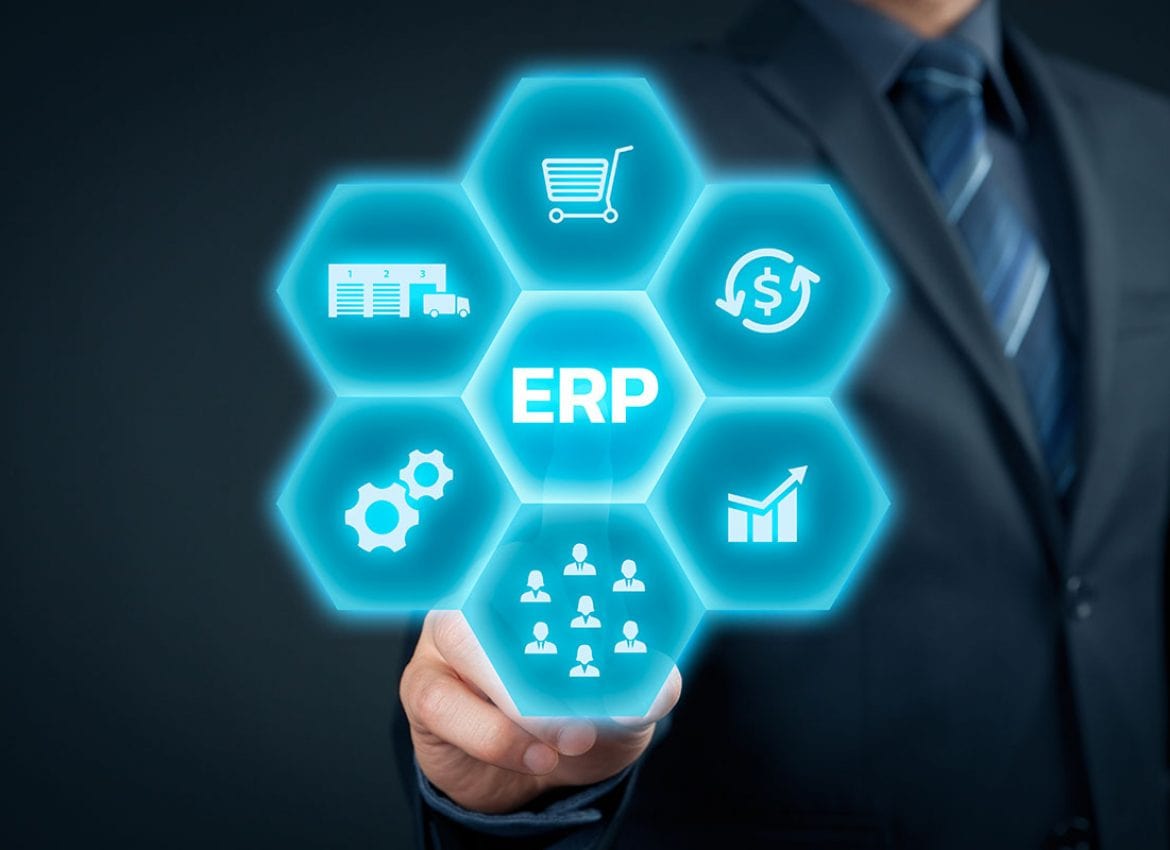
Often, Small and Medium-sized Businesses (SMB) get their start using home-grown systems and those they’ve pieced together for specific purposes within their operations. However, as time passes and the organization grows, those same systems don’t scale and can hinder a business’ competitiveness because of poor performance. That’s where Enterprise Resource Planning (ERP) comes into the picture. An ERP system is one that integrates all your business’ essential operations into one interface, connecting the data you need to the departments that need it.
Providing both the visibility and the tools necessary to scale with growth, ERP’s triggering and automating of actions enables SMB workforces to focus on more of the front-end essentials, like sales and ordering, while the back-end is managed by powerful software modules designed to automate repetitive processes.
Modern ERP Systems Are Built With SMBs In Mind
In the past, ERP systems were more often than not implemented onsite through a complex and costly process, which required substantial resources from a business not only to erect, but also maintain. With the advent of cloud technology, such costly implementations and maintenance practices are a thing of the past. SMBs can more readily afford the costs associated with implementing an ERP system and the burdens of maintenance are assumed by the provider. This will allow SMBs to maintain competitiveness as well as direct their in-house resources to better use following the offloading of repetitive operations to the business process automation capabilities that ERP software provides.
ERP Systems Are Accessible And Highly Beneficial To Small And Medium Businesses.
This is not to say that on-premises and hosted options are no longer available. Maybe your business would prefer an ERP solution be installed, run, and maintained within a local environment. This is the traditional approach to implementation and it is still available from virtually all providers. However, it is important to keep in mind that this is the costliest option for implementation, training, and maintenance.
Access to relevant and actionable data is another key component of ERP software that allows SMBs to operate as effectively as a larger company with more resources. Whether data is your product or helps your business run more efficiently, the business intelligence (BI) provided by ERP systems is an invaluable advantage to an enterprise of any size. Many SMBs might argue that they already have data. Maybe they have so much they don’t know what to do with it all. The response to that is: it’s not enough to have the data, you need to able to make sense of it all and then put it to use. This is the key component of ERP that makes it worth its weight in gold. The insights an ERP system can provide using your company’s data can prove invaluable. It may allow you to identify and rectify bottlenecks or more effectively target customers with marketing campaigns. By maintaining a lean staff with an efficient ERP system, your company can do more with less to accelerate growth and nurture your bottom line.
ERP Functionality And Flexibility
Consider the core components of an ERP system, which includes finances, procurement, and the like, as functionality that most businesses will want to take advantage of no matter what their given industry. Additional functionality is available in an array of tools that apply to a vast spectrum of industries.
Modern ERP Functionality Is Available In An Array Of Tools That Apply To A Vast Spectrum Of Industries.
Manufacturers want more distribution, logistics, and robust manufacturing execution system (MES) capabilities. A food processor will want a system places more focus on the aspects of batch processing, compliance, and other pertinent operations. ERP offers businesses of all sizes the freedom to pick and choose the functionalities that apply directly to their business. With over 20 years of industry best practices incorporated into system designs, SMBs can rest assured that they are getting a comprehensive solution that addresses their individual needs.
The Human Components Of ERP
A Major hurdle in ERP selection for most SMBs is getting the executive suite on board. Key decision makers need to agree that ERP is a good move for the business. Following the proper procedure and implementation, it’s all but guaranteed a positive outcome. However, implementing an ERP solution is more than just a change in technical systems.
The implementation of an ERP system requires a mindset that your whole company must get behind. Save for a few individuals, most of your workforce may be changing the way they approach daily tasks in a big way. Many ERP systems go to great lengths to make their software as user-friendly and intuitive as possible. Training is thoughtful and extensive from providers and vendors because so much of your company’s success relies on your employees using the software as intended.
Your Teams Will Work At Peak Performance With A Modern ERP System On Their side.
Is your workforce often on the move? do you need staff on the floor as connected as those in the office? Adopting an ERP solution with mobile functionality may be the answer you are looking for adn there are many ERP systems that excel in delivering mobile-ready solutions.
Addressing these issues ahead of a go-live event is the best way to ensure your success with a new ERP system. Connecting with a certified and proven consultant is a great way to map out your change management strategy in the early stages of the transition.
Tips For SMBs Considering ERP Systems
While there is no one-size-fits-all solution for any business when it comes to shopping for ERP solutions, there are a few points to consider that can narrow down your best candidates.
Outlining your company’s needs will give you a good starting point from which to develop your organization’s ERP strategy. Think about the key features you need now as well as those you’d like to incorporate, or at least evaluate, for future functionality as your business grows.
Your budget will be one of the most important components of the process to consider. Deployment method will factor into this as well, as onsite options will run a higher price tag than cloud-based ERP systems.
Training will be a huge component of getting your workforce up to speed and identifying how much time you must spend on training your employees will go a long way into selecting a solution that is more user-ready out of the box or one that is more technical and requiring of a more thorough set-up.
This list of considerations when approaching an ERP implementation is truly extensive and we couldn’t cover them all in a single blog post. These are a few of the most important attributes to evaluate. Beyond these broad characteristics, more detailed components of an ERP system can be discussed with providers, vendors, and consultants, who are prepared to work in tandem with you to create a comprehensive strategy for your implementation.
Encompass Solutions is a business and software consulting firm that specializes in ERP systems, EDI, and Managed Services support for Manufacturers and Distributors. Serving small and medium-sized businesses since 2001, Encompass modernizes operations and automates processes for hundreds of customers across the globe. Whether undertaking full-scale implementation, integration, and renovation of existing systems, Encompass provides a specialized approach to every client’s needs. By identifying customer requirements and addressing them with the right solutions, we ensure our clients are equipped to match the pace of Industry.

The latest component of Industry 4.0, Robotic Process Automation (RPA), maybe be an unfamiliar concept now, but soon these three words will be on the lips of operators big and small all over the world. RPA is already generating substantial revenue savings for businesses, with $50 million recovered in 2017, with a projected compound annual growth rate of more than 60% through 2026. Coupling this emerging technology with a business-centric solution like ERP systems will ensure your workforce is free to engage in the more demanding aspects of your operations, all while automation handles the rest.
What Is RPA?
When it comes to robots, we tend to think of the latest development from research labs like KUKA-style assembly line robots and the agile creations emerging from the labs of Boston Dynamics. RPA is quite a bit different. It refers to automation technology; more specifically RPA is a technology designed to handle clerical process automation based on the concept of Artificial Intelligence (AI) workers. These digital entities are also referred to as software robots.
RPA Is A Technology Designed To Handle Clerical Process Automation Based On The Concept Of Artificial Intelligence (AI) workers.
ERP serves as the backbone of your IT infrastructure by acting as a single source of information for your business. RPA automates several processes traditionally involving human interaction with the ERP system by entering transactions, executing programs, and extracting reports automatically, in a fraction of the time. These robots are taking the lead when it comes to back-office tasks that are repetitive and uninteresting to their human counterparts. Due to the repetitive nature of these tasks, robots are prime candidates to take over in completing the tasks with speed and efficiency. This gives the human capital component of your business more freedom to approach tasks that require reasoning, judgment, and critical thinking.
Robotic Process Automation Benefits For ERP-Equipped Businesses
Coupled with the right ERP, Robotic Process Automation is primed to deliver substantial benefits to small and medium businesses looking to leverage technology for a leg up on the competition in keeping operations lean.
Savings in costs is one of the most immediate benefits of RPA. Completing work faster and with higher accuracy than traditional data entry and management methods, RPA outputs more with fewer inputs and when tasks are completed for a fraction of the cost the result is in an improved ROI for your business.
Even the most diligent and experienced professionals make data entry and filing mistakes, with fatigue being one of the main culprits. RPA Delivers higher quality results within a fully-automated process. You’ll find data entry errors quickly falling out of the equation and you’ll enjoy higher satisfaction both internally and externally when the mundane is managed by RPA.
Data Entry Errors Exit The Equation And You Enjoy Higher Satisfaction Both Internally And Externally When The Mundane Is Managed By Robotic Process Automation.
Stemming directly from the relief of having to complete fewer mundane tasks, your employees will enjoy newfound job satisfaction by being able to engage in tasks that require talent, intelligence, and problem-solving.
Another benefit realized as a result of fewer errors and omissions in documentation is a higher standard of compliance. By maintaining standards and practices within the operations of your organization, compliance is more readily assured and employees have a firmer grasp of overall operations, explore their roles, and invest in the growth of the organization.
Your Competitive Advantage With ERP And Robotic Process Automation
The business world is a competitive one, and you’ll need every advantage at your disposal to ensure you’re operating at peak performance. A powerful ERP system and incorporating powerful technologies like robotic process automation are an exceptional way to ensure your competitiveness. Consulting with professionals is the best way to get an idea of how relevant these powerful tools are to you and your business, as well as how they can be leveraged to great effect. Consider working with implementation and consulting professionals to more effectively outline and execute the future of your business’ digital operations strategy.
Encompass Solutions is a business and software consulting firm that specializes in ERP systems, EDI, and Managed Services support for Manufacturers and Distributors. Serving small and medium-sized businesses since 2001, Encompass modernizes operations and automates processes for hundreds of customers across the globe. Whether undertaking full-scale implementation, integration, and renovation of existing systems, Encompass provides a specialized approach to every client’s needs. By identifying customer requirements and addressing them with the right solutions, we ensure our clients are equipped to match the pace of Industry.

There are a host of reasons why businesses ask the question: Do We Really Need an ERP solution? You may be asking yourself the very same regarding your business’ current state. For many growing enterprises, ERP is a “four-letter word”. However, operating within cobbled systems that demand attention with every little update or modification is like putting a Band-Aid on a bullet wound. This approach bleeds businesses dry. Addressing the shortcomings of siloed systems and preparing for growth before you’re inundated with orders, data, and paperwork by implementing an effective ERP solution will make all the difference.
Whether your apprehensions in addressing the problem stem from the associated costs, unfamiliar tech, modern information systems, employee push-back, or just the notion that you aren’t big enough to need a comprehensive solution yet, the cost of inaction could put you out of business sooner than you think. Saving that revenue from being lost by implementing a solution will capture resources and data more effectively while putting both to work toward your business’ future.
The Best Investments You Can Make Are In Yourself And Your Business.
Time To Make A Decision
Most small businesses maintain a mindset of my system has worked for me so far, why should I change now? While it’s true this approach will work for a time, eventually, home-made solutions will be outgrown and cause more problems than they are worth. This is where the decision to implement something more robust needs to be addressed.
The Long Wait To Implement An ERP System Is Likely Costing You More Thank You Know.
Sometimes the hardest decision and the right decision are one and the same. Just because you’ve been able to get by without a platform built specifically for businesses, doesn’t mean the decision to avoid implementing one altogether is the right one. Being lulled into the sense that because it has worked in the past and will continue to work for you into the future is nothing if not careless.
ERP As A Cost-Saving Initiative
Most who have heard of ERP software focus first and foremost on the price tag. While it’s true that these solutions are a big undertaking in terms of time and resources, they pay for themselves many times over in those resources that they save businesses day after day.
The Costs Associated With Maintaining Dated And Siloed Systems Are Too Large To Ignore.
For instance, take KPIs that you are likely already looking at, such as order fulfillment, customer satisfaction, inventory accuracy, financial reporting, and outstanding sales. In every one of these instances, businesses utilizing an up-to-date ERP system outperform those that do not, as well as those who are using outdated ERP systems to run their operations.
Technical Advantages
Consider paper systems, like the Rolodex and filing cabinet, that have all but completely fallen out of use. These antiquated systems present the opportunity to lose, misplace, or sink time into locating valuable information. By Incorporating the digital organization principles of an ERP system, your business can function more effectively on the front-end, where sales and customer interaction reside, instead of the backend dealing with filing, forms, and paperwork. ERP systems free up your labor pool to focus on growing your business by automating many financial and data-centric processes that can grind operations to a standstill when tackled manually.
Adapting To Incorporate Technology Can Make Or Break The Future Of Your Business In A Competitive Marketplace
Competitive Advantages
Mobile devices, touch-interfaces, and other modern innovations have catapulted the capabilities of modern businesses. ERP software keeps remote and in-house workforces connected, as well. Add to that embedded business analytics, eCommerce support, and social business capability, and your business is primed for a competitive advantage stemming directly from its technological one.
you’ll Find Yourself And Your business In A Favorable Position Thanks To The Advantages Of An ERP Solution.
In short, the advantages ERP solutions present can’t be ignored. ERPs help businesses build on their current success or counter shortcomings, thanks to:
Continuous efficiency
Enhanced Business Agility
Powerful Real-Time Insight
Superior Operational Control
Enhanced Customer Service
ERP Selection: Measure Twice, Cut Once
There are many factors for any business to consider when selecting an ERP solution. Some ERP solutions are designed for applications in food and beverage manufacturing, while others specialize in aerospace. Identifying your business’ needs and selecting an appropriate ERP solution will position you for a bright future. Partnering with a proven consultant will make the transition to and implementation of these new systems seamless and allow your workforce to hit the ground running when you’re ready to go live with your new set of tools.
Encompass Solutions is a business and software consulting firm that specializes in ERP systems, EDI, and Managed Services support for Manufacturers and Distributors. Serving small and medium-sized businesses since 2001, Encompass modernizes operations and automates processes for hundreds of customers across the globe. Whether undertaking full-scale implementation, integration, and renovation of existing systems, Encompass provides a specialized approach to every client’s needs. By identifying customer requirements and addressing them with the right solutions, we ensure our clients are equipped to match the pace of Industry.

Epicor Data Analytics (EDA) Release 7.3.0 has gone live and is now available to EDA customers. This release contains several bug fixes, new features, and key improvements. Here are the biggest takeaways to appear in the Epicor Data Analytics 7.3.0 update. For more information on the capabilities and functionality of Epicor ERP, click the more info button below.
Nested Grids In Epicor Data Analytics 7.3.0
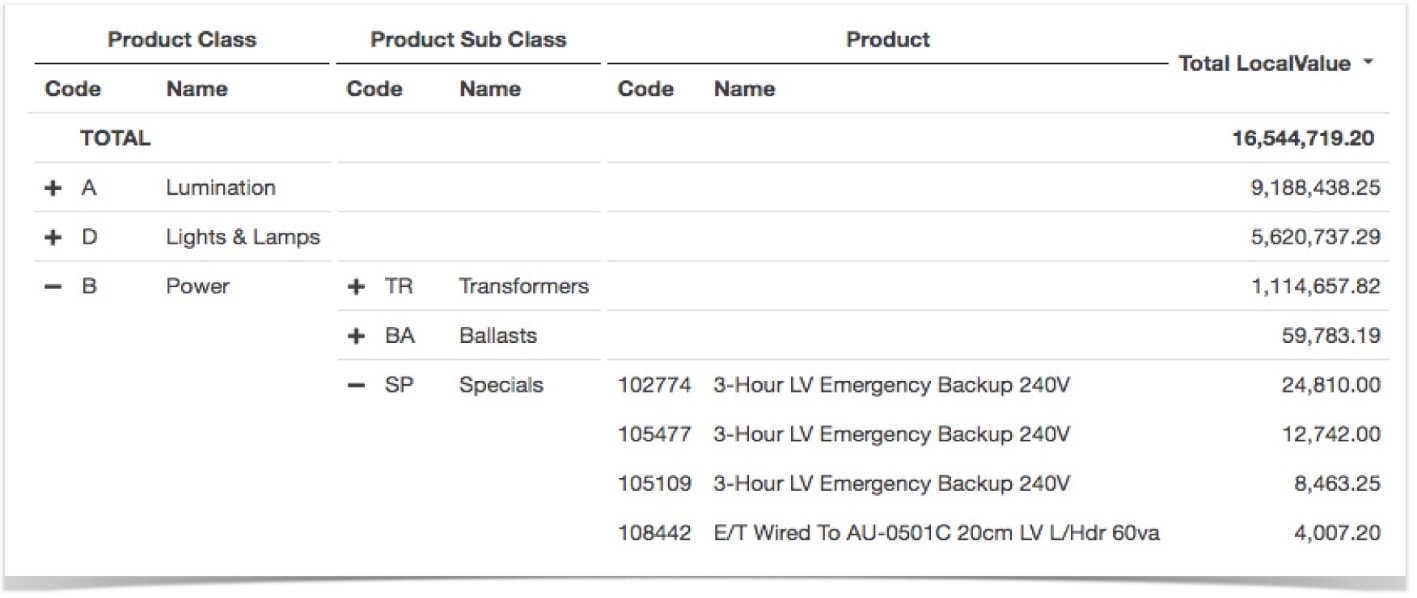
The new “marquee” feature for the Epicor Data Analytics 7.3.0 release, grid nesting allows users to create an “expand/contract” report within the EDA grid. Grouped by dimension, the nested grid will allow up to three levels of detail to be displayed. This can include everything from customer data, purchase history, and product information. Whatever data you wish to associate in the view, your preferences can be saved, added to the dashboard of your choice, or exported.
The Nested Grids Feature Is Useful On Many Levels. A full video of the nested grids feature and its capability can be viewed, here.
Data Snapshot Retention In Epicor Data Analytics 7.3.0
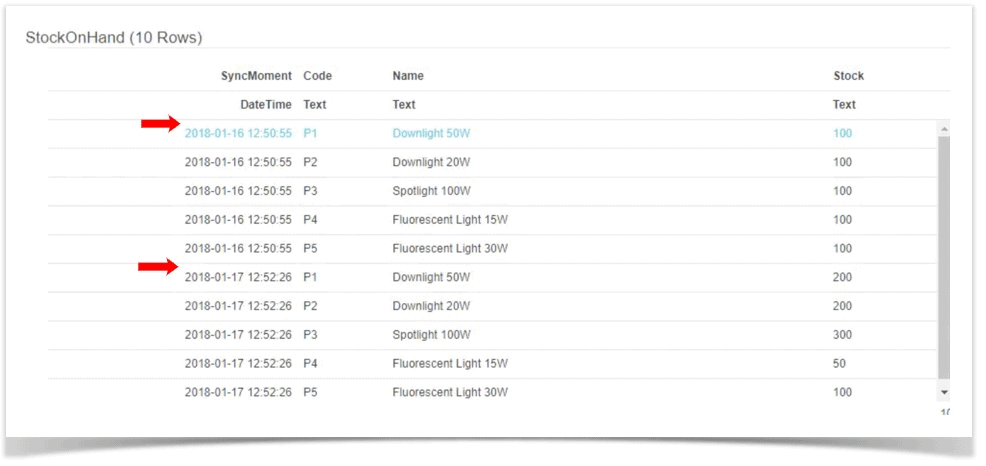
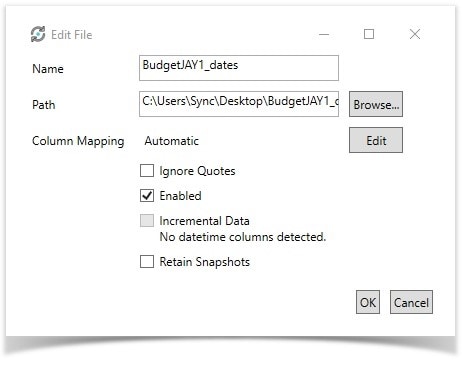
Administrators syncing data within Epicor Data Analytics 7.3.0, retention of historical snapshots can be an invaluable tool when working with datasets. To use the feature, tick the ‘Retain snapshot’ box when adding a file in Sync. Retention periods can be set for both daily and monthly periods. This feature is especially useful when working with data that is updated in real-time, allowing you to retain and view historical snapshots at-will.
Reference Your Snap Shots For An Easy Look Back At Historical Data.
Retained data can be viewed by navigating to Administration > Sync sources and selecting the relevant source to view in more detail. In the example below, each snapshot is identified by its timestamp according to the retention period previously set by the user.
Enable and Disable Sync Items Functionality In Epicor Data Analytics 7.3.0
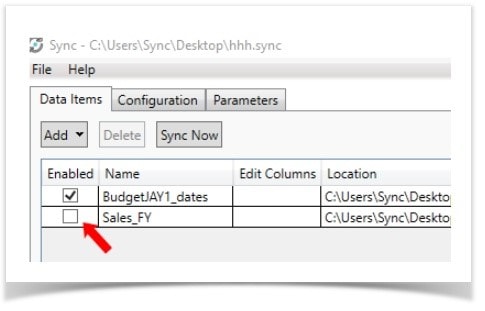
Administrators who have been looking for a veritable pause button when it comes to data sync will find just that with the new Enable/Disable Sync Items functionality released in EDA 7.3.0. The function is easy to engage. All admins need to do is tick enable box in the Data Items panel prior to sync taking place.
Enabling And Disabling Sync For Your Items Is A One-Click Action.
Newly added items and items being edited can also be enabled or disabled for sync using the same method.
Enable Sync When Adding A New Item With A Single Click. You Can Always Disable Later If You Choose.
Encompass Solutions is a business and software consulting firm that specializes in ERP systems, EDI, and Managed Services support for Manufacturers and Distributors. Serving small and medium-sized businesses since 2001, Encompass modernizes operations and automates processes for hundreds of customers across the globe. Whether undertaking full-scale implementation, integration, and renovation of existing systems, Encompass provides a specialized approach to every client’s needs. By identifying customer requirements and addressing them with the right solutions, we ensure our clients are equipped to match the pace of Industry.
For those unfamiliar with the Craft Beverage Modernization and Tax Reform Act, the recently passed tax reform applying to alcoholic beverage manufacturers, the short of it is that the legislation offers two years of heavy relief from federal excise taxes applied to one of the most severely taxed industries in the US. So, what are craft brewers, distillers, and vintners going to do with it? For most, the word is grow.
The tax breaks will translate into substantial annual savings for these craft beverage makers, between $20,000 and $100,000 to be more precise, and allow them to hire more staff, expand operations, and invest in marketing to build their brands.
Brewer Benefits
For many of the nation’s thousands of small breweries, the tax break of $3.50, effectively halving the previous $7.00, on the first 60,000 barrels(BBL) produced for domestic breweries producing less than 2 million BBL annually, will be a desperately needed lifeline. To put things into perspective, that $7 has been anywhere from 15 percent to 25 percent of the total cost of that BBL.
For many of the nation’s thousands of small breweries, the tax break of $3.50 effectively halves the previous $7.00.
Competing with the likes of D. G. Yuengling & Son, Inc, Sierra Nevada, New Belgium, and Boston Beer Co., mom-and-pop and Main-street brew operations have had a hard time coming up in an industry that has seen improved performance year on year but is at the same time contracting. An extra $20,000 going towards a brewpub can provide another part-time employee, new vats, advertising, and a host of other potentially powerful tools to aid expansion. Some operations will transcend the modest manufacturing operations to the regional scale and evolve into full-blown enterprises as a result. With new enterprise comes new concerns, including accounting, production, distribution, and, perhaps the most significant hurdle of even the most robust ERP solutions, tax responsibilities.
Distiller Details
The same positive outlook is true of the States’ 1,500 craft distillers who are already seeing big benefits from the change. The tax cuts bring federal excise taxes for distillers down significantly from $13.50 to $2.70 per proof gallon, applying to the first 100,000 gallons per year for a two-year period. Used to its maximum benefit, the savings translates to $2.16 million. With taxes on distilled spirits among the highest in the US, reaching more than 50 percent of a product’s purchase price in many cases, the relief is more than welcome from the craft distillers of America.
Used to maximum benefit, the savings in taxes translate to $2.16 million annually for craft distillers.
The industry workforce has grown to 20,000 with a cumulative investment total of $600 million in the last decade alone. Compare that to Jack Daniel’s Distilleries, which blows through that 100,000-gallon tax break in one day of production, and the future is only looking brighter for the craft distillers of America.
Vintners Toast Approval
Wine is another beneficiary of the latest excise tax reform, albeit with a slightly more complicated structure. Wine is taxed based on alcohol content with new rates applied to those containing 16 percent or less of alcohol, 16 percent to 21 percent, and 21 percent to 24 percent. These categories are taxed 21-cents, 31-cents, and 62-cents per bottle respectively. The benefits are a bit easier to see with a broader view. Let’s first take the initial 30,000 gallons a winery produces. Each of these barrels receives a $1 credit per gallon. The following 100,000 gallons receive a 90-cent tax credit and a 53.5-cent credit is applied to the next 620,000 gallons. All wine produced after that is taxed at the standard rate. The new tax rates are a far cry better than those previously afforded to the small wineries of America and when used to their fullest potential can provide craft vintners more than $450,000 in tax credits.
When used to their fullest potential, the tax breaks can provide craft vintners more than $450,000 in tax credits.
With the results of the tax reform already taking effect, it’s not hard to see why the craft beverage manufacturers of America are celebrating. This reduction of excise taxes will afford the burgeoning craft beverage industry considerable capacity for expansion over the next two years and we can’t wait to see where the influx of capital will take up and coming enterprises.
Encompass Solutions is a business and software consulting firm that specializes in ERP systems, EDI, and Managed Services support for Manufacturers and Distributors. Serving small and medium-sized businesses since 2001, Encompass modernizes operations and automates processes for hundreds of customers across the globe. Whether undertaking full-scale implementation, integration, and renovation of existing systems, Encompass provides a specialized approach to every client’s needs. By identifying customer requirements and addressing them with the right solutions, we ensure our clients are equipped to match the pace of Industry.

Maintenance, Repair, and Overhaul (MRO) costs can cripple a manufacturer’s bottom line, especially when the required work compounds problems by impacting production to a significant degree. Implementing a dynamic ERP solution, like Epicor ERP, can address the issue before it becomes a problem. Through an effective mix of Quality Assurance and Asset Management modules, Epicor has built a powerful solution to specifically tackle the tasks associated with maintenance management, from Small and Medium Enterprises (SME) to multinational corporations.
Industry 4.0 – Machine Learning As An Essential Tool
By leveraging the Industrial Internet of Things and modern data analytics, manufacturers are finding that machine learning is the next essential tool in keeping their operations running at peak performance. These tools provide manufacturers with more and better data to ensure impacts that are detrimental to business are circumvented even before becoming roadblocks.
Manufacturers Are Finding That Machine Learning Is The Next Essential Tool In Keeping Their Operations Running At Peak Performance.
According to John Fryer, senior director of industry solutions at fault-tolerant computer servers and software company Stratus, on his partnership with TransCanada, “data is now being collected from every turbine, pump and compression station, and fed back to a centralized control room. The data is then integrated and analyzed…to identify trends and enable predictive maintenance to be carried out.”
Stratus is currently working in tandem with TransCanada to maintain the operation of the gas company’s 57,000 miles of pipelines. The network often stretches into in rural and remote regions, which makes monitoring and predictive maintenance even more essential.
ROI With ERP Solutions
Because of improved monitoring, quality assurance, and asset management, manufacturers receive significant savings when it comes to MRO costs. By providing a comprehensive and fully-integrated approach to the calibration and upkeep of systems and equipment, manufacturers employing ERP solutions in their facilities can operate at maximum runtime to secure an optimum return on their total costs.
Improved Monitoring, Quality Assurance, And Asset Management Allow Manufacturers To Realize Significant Savings When It Comes To MRO Costs.
In the case of TransCanada, savings between $16m and $17m were measured in the first year following implementation alone. That’s just one success story. When an entire industry employs such advancements in how operations are maintained, the savings can compound by an order of magnitude.

How Epicor ERP Addresses Predictive Maintenance
Through the Maintenance Management module of Epicor’s ERP solution, manufacturers gain extensive support for maintenance request processing, planned preventive maintenance (according to predefined schedules), and improvised break/fix maintenance processing for a single piece of equipment. When it comes to the facilities themselves and production equipment housed within, maintenance can be scheduled according to a pre-defined service interval, usage, time or through manual requests. Once these work orders have been identified in the system, the upkeep planner can schedule equipment downtime and exchange resources or materials on the fly. The complete history of these machines, materials, and work orders are tracked using many metrics, including the in-service date, equipment location, warrant expiration date, and preventative maintenance plans based on either time or meter frequencies.

Encompass Solutions is a business and software consulting firm that specializes in ERP systems, EDI, and Managed Services support for Manufacturers and Distributors. Serving small and medium-sized businesses since 2001, Encompass modernizes operations and automates processes for hundreds of customers across the globe. Whether undertaking full-scale implementation, integration, and renovation of existing systems, Encompass provides a specialized approach to every client’s needs. By identifying customer requirements and addressing them with the right solutions, we ensure our clients are equipped to match the pace of Industry.