In the competitive world of the boat manufacturing industry, there are numerous challenges to overcome, from sourcing raw materials to efficiently assembling boats. To navigate these complexities, boat manufacturers require a reliable and comprehensive enterprise resource planning (ERP) system. This integrated platform streamlines operations, enhances collaboration, and facilitates better decision-making. By integrating various processes involved in boat manufacturing, an ERP system optimizes production scheduling, inventory control, cost tracking, and customer relationship management. With the scalability of ERP, custom boat manufacturers can outperform their competitors, adapt to evolving needs, and achieve their goals of improving quality control, optimizing resource utilization, and enhancing client satisfaction.

Boat Manufacturing Challenges and How ERP Helps Offset Them

The boat manufacturing industry faces challenges, from global competition to rising customer expectations. ERP solutions for boat manufacturing can address these challenges in innovative ways:

1. Inventory Management: An ERP system can help manage inventory and optimize stock levels, helping you reduce costs and increase efficiency. It can also help manage parts requirements to ensure the right parts are ordered at the right time.

2. Quality Control: ERP can help you automate quality control processes and track data from suppliers, giving you visibility across the entire supply chain. With this information, you can make better decisions to improve customer satisfaction and maintain high-quality standards.

3. Production Planning: ERP helps you streamline production planning by providing real-time updates on material availability, labor costs, and other key elements. This helps you optimize production cycles and ensure orders are completed on time and budget.

4. Cost Optimization: ERP helps reduce costs by providing visibility into the production process. It can track costs associated with materials, labor, and suppliers to help you identify areas where savings can be made.

5. Changing Consumer Preferences: Today, most boat lovers prefer sustainable, innovative, and technologically advanced boats. ERP systems can allow boat manufacturers to design, test, and produce new models quickly and cost-effectively.

6. Seasonal Demand Fluctuations: ERP can help you manage seasonal fluctuations in demand by providing real-time visibility into inventory levels and customer orders. This helps you adjust production schedules to meet customer demands.

7. Supply Chain Disruptions: ERP systems provide visibility into the entire supply chain, allowing you to detect and address potential disruptions before they impact production. For example, you can quickly identify and source an alternative if a supplier is delayed.

8. Global Economic Uncertainty: ERP can help you track global economic trends and make better decisions to protect your business from potential risks. With access to data from multiple sources, you can make sound business decisions and ensure profitability.

ERP and the Boat Manufacturing Process

The boat manufacturing process is complex and often involves numerous steps, from design to production. An ERP system can help streamline this process in several ways:

  • Design and Engineering

The first step in the boat manufacturing process is design and engineering. It involves creating accurate drawings and designs that meet customer specifications for safety, performance, and aesthetics. It also involves engineering calculations to ensure the structural integrity of the boat.

ERP systems can help manage this process by providing visibility into all design and engineering stages, from concept to final product. Moreover, ERP provides manufacturers access to real-time data on materials, labor costs, and other components. This helps you design boats quickly and cost-effectively. It also helps ensure quality across all stages of production.

  • Material Selection

From fiberglass and aluminum to polyethylene, material selection is critical for boat manufacturers. It helps ensure the finished product’s performance, durability, and aesthetic appeal. 

ERP systems can help manage the procurement process by automating it and providing visibility into the entire supply chain. This helps you identify potential disruptions in the supply chain. ERP also allows you to track orders and ensure parts are delivered on time and within budget.

  • Fabrication

The next manufacturing step is to fabricate the parts. This involves cutting, bending, welding, and prefabricating the components before being integrated into the boat’s structure.

ERP software for shipyard management can help manage the fabrication process by providing access to accurate drawings and designs. This helps reduce errors and ensure quality in each stage of production. Further, ERP systems provide detailed information on materials, labor costs, and other components.

  • Assembly

Now, onto the interesting part: assembly! This is where all the individual parts combine to create the hull, deck, and other parts, transforming it into a functional boat.

Thanks to ERP, you can streamline the assembly process by enjoying real-time visibility into the entire production line. This helps reduce errors and ensure quality control throughout the process. Moreover, ERP systems provide detailed information on parts, labor costs, and other components. This enables you to make better business decisions to optimize production schedules and maximize profits.

  • Finishing

The final step is finishing, which involves priming, painting, and outfitting the boat with features such as seats, controls, and other components.

ERP systems can take this process to the next level. They allow you to track and monitor every step of the finishing process, ensuring quality and accuracy. This helps you keep costs down while creating a superior product.

ERP Helps You Keep Up with Industry Trends

From sustainability to digitalization, the boat manufacturing industry is undergoing drastic changes. ERP innovates boat manufacturing and helps you stay ahead of the curve by providing real-time data and insights into these trends. Here’s a closer look:

●      Sustainability – Environmental sustainability is becoming increasingly essential in the boat manufacturing industry. ERP systems can provide valuable insights into the carbon footprint of your production processes and help you identify areas for improvement.

●      Automation and Technology – Gone are the days of manual manufacturing processes. Today, luxury boat manufacturers leverage advanced technologies like computer-aided design (CAD), robotics, and digital manufacturing to create superior products. ERP systems can provide visibility into the latest technology trends and help you stay ahead of the competition.

●      Electric and Hybrid Propulsion – Traditional combustion engines are becoming less popular due to their environmental impact. As a result, electric and hybrid propulsion systems are gaining traction in the boat manufacturing industry. ERP systems can help you identify potential areas for improvement and capitalize on this growing trend.

●      Connectivity – Connected boats are also becoming more popular due to their convenience and safety. Consumers want a seamless experience, and ERP systems can help you stay up-to-date with the latest technologies to meet their expectations.

Boat Manufacturing Industry Regulations and Standards

Like any other industry, boat manufacturing is subject to various regulations and standards. For example:

●      The International Maritime Organization (IMO) sets safety, maritime security, and pollution prevention standards.

●      The United States Coast Guard (USCG) is responsible for setting safety regulations about boat design and construction.

ERP systems can help you ensure that all components adhere to the latest industry regulations and standards. This helps ensure quality products while reducing costs associated with non-compliance.

Market and Competition

The boat manufacturing industry is highly competitive. New technologies, changing consumer preferences, and emerging markets are all factors that can influence the success of a boat manufacturer.

ERP systems can provide real-time insights into market trends and customer behavior to help you stay ahead of the competition. You can use this information to develop better marketing campaigns and improve production processes.

Final Remarks

ERP systems are revolutionizing the boat manufacturing industry. By providing real-time visibility into production processes, they can reduce costs and improve efficiency. They also make it easier to stay up-to-date with industry regulations and standards while helping you stay ahead of the competition. Ultimately, ERP systems are the perfect tool for any boat manufacturer looking to streamline their operations and maximize profits.

At Encompass Solutions, we’re a premiere ERP software consulting firm passionate about helping our clients achieve their business goals. We specialize in implementing and optimizing ERP systems for boat manufacturers to ensure their operations run smoothly and efficiently. 

Curious to learn more? Download our guide – 7 Ways ERP Can Transform Your Manufacturing Business.


In the dynamic manufacturing world, where efficiency and optimization are paramount, Enterprise Resource Planning (ERP) systems stand out as key players. These tools streamline operations, enhance collaboration, and offer real-time insights into critical business processes.

In this blog, we begin a comprehensive journey, guiding you through the process of selecting the right ERP system for your manufacturing enterprise. Together, we’ll explore the steps that lead to operational excellence, charting a path toward a more agile and competitive future. 

This exploration aims to gain the expertise needed to navigate the ERP landscape, empowering your business with the transformative potential of these robust systems. So, let’s uncover the secrets of harnessing ERP’s capabilities and aligning them with your manufacturing goals.

Understanding ERP Systems

To begin the selection process, it’s vital to grasp the ERP systems’ essence. In simple terms, ERP systems are intricate software solutions designed to seamlessly manage essential business processes and data across an organization. Imagine them as the linchpin orchestrating harmonious operations, covering manufacturing, finance, supply chain, and customer relationship management.

The significance of ERP systems in transforming operations is immense. They eliminate data silos, automate repetitive tasks, and establish standardized processes. This efficiency spreads throughout the organization. ERP systems excel by providing real-time insights into resource availability and utilization. With this capability, organizations can precisely allocate resources, boosting productivity.

But there’s more to the story. ERP systems foster cross-functional teamwork, bridging communication gaps between departments. This creates a shared knowledge ecosystem, fueling growth. These systems channel collaborative energy, breaking down barriers and uniting departments. This unity drives organizations towards goals, turning visions into reality through seamless cooperation.

Assessing Business Needs and Requirements

As you begin your search for an ERP system, conducting a comprehensive needs assessment becomes your guiding compass. This pivotal step ensures that the chosen ERP system seamlessly aligns with your unique business requirements. Begin by pinpointing existing pain points and inefficiencies within your manufacturing process. This examination sheds light on areas needing improvement.

Moving forward, pinpoint the specific functionalities and modules your operations demand. From inventory management to production planning and supply chain optimization, identifying these needs lays the groundwork for an effective ERP solution. Also, consider the critical aspect of scalability. Your chosen ERP system should effortlessly accommodate your business’s growth trajectory, ensuring your technology investment remains relevant in the long run.

Integration with your current systems and technologies is another crucial facet. The seamless flow of data between systems minimizes hiccups and compatibility challenges. These considerations establish a strong foundation for efficient business operations. Naturally, budget and financial parameters are integral to your decision-making process. Balancing the value of the ERP system with your organization’s financial feasibility ensures a well-rounded approach to selection.

Researching and Evaluating ERP Vendors

Armed with your needs assessment, the next step is delving into the realm of potential ERP vendors. Vendor selection is an important step demanding scrutiny. Seek out vendors with a solid grasp of the manufacturing industry – their specialized knowledge guarantees a solution tailored to your needs. It’s also recommended that you assess the sustainability of the vendor’s offerings and their standing within the market.

Distinguishing factors lie in the realm of support and implementation services. A vendor’s commitment to guide you through the transition and beyond speaks volumes about their commitment to your success. While evaluating, keep the concept of total cost of ownership (TCO) in view. 

This involves considering not only the initial costs but also ongoing expenses like license fees, implementation charges, and maintenance.

Remember, the vendor you choose isn’t just a provider but a partner in your business journey. Their expertise and dedication will significantly impact the success of your ERP implementation and its subsequent performance. Careful vendor evaluation forms the cornerstone of an ERP implementation that aligns with your organization’s aspirations.

Vendor Selection and Implementation

The synergy between your selected vendor and your business objectives holds immense significance. A vendor that comprehends your strategic aims presents tailored solutions, and adds value to your organization becomes a partner in your journey. This alliance extends to change management – a pivotal aspect of any ERP implementation. A vendor equipped to guide you through the intricacies of organizational change that accompany new systems ensures a smoother transition and heightened user engagement.

As you arrive at your final decision, consider the system’s functionalities of your business requisites. Delve into the vendor’s standing, their history of support and implementation, and the overall cost of ownership. Collaborating with your chosen vendor initiates the implementation phase – a process inaugurated by project planning and team establishment. This stage encompasses data migration, system setup, user training, and change management. The triumph of a successful implementation hinges on transparent communication and astute execution.

Remember, the chosen vendor is more than a mere transaction; they become a cornerstone of your ERP journey. Their expertise and alignment with your goals are instrumental in shaping the trajectory of your ERP system’s efficacy and subsequent business performance. Optimal vendor selection catalyzes a seamless ERP implementation that resonates with your organizational aspirations.

Best Practices and Lessons Learned

As you navigate through the stages of selection and implementation, it’s important to heed these invaluable best practices. Engage key stakeholders consistently, ensuring their involvement at every juncture. Rigorously test and evaluate systems, emphasizing user adoption and fostering a smooth transition. Sustain transparent communication with your selected vendor, nurturing a partnership that bolsters your ERP journey.

Despite the well-charted path to ERP implementation, challenges can arise. Prepare for potential pitfalls by acknowledging the lessons learned by those who’ve walked this path before. Inadequate planning can lead to scope creep and delays, underscoring the necessity of meticulous preparation. Change management, often underestimated, is pivotal to addressing resistance and securing user commitment. Data migration complexities are a reality, emphasizing the importance of comprehensive planning and execution. Guard against over-customization, which can inflate costs and complexity, by aligning your ERP system with core requirements. Resource allocation and project management play pivotal roles, requiring dedicated teams and adept oversight.

Each challenge presents an opportunity for growth. Embrace these lessons and best practices to steer your ERP implementation toward a beneficial outcome. Remember, the journey toward successful ERP integration isn’t just about the destination; it’s about honing your processes, fostering collaboration, and realizing efficiencies that propel your organization toward excellence.

Ongoing Maintenance, Updates, and Optimizations

Ensuring your ERP system’s continued effectiveness is a vital undertaking that parallels its initial implementation. Just as the foundation of a building needs consistent upkeep to stand strong, your ERP system requires ongoing attention to thrive. Regular system health checks, like routine medical check-ups, detect and address potential issues before they escalate. Staying on top of updates and patches is like keeping your vehicle well-maintained to ensure optimal performance.

Periodic system reviews, like home inspections, ensure that your ERP aligns with evolving business needs. User training acts as a steady stream of nourishment, ensuring your team’s proficiency. Leveraging your vendor’s support services is akin to consulting a trusted advisor, invaluable in times of need. The implementation of change management practices during updates and enhancements ensures a seamless transition, similar to navigating a smoothly paved road.

Tips for ongoing ERP systems maintenance, updates, and optimizations

  • Regular Health Checks: Schedule routine system health checks to identify and address potential issues before they escalate.
  • Stay Up-to-Date: Keep your ERP system updated with the latest patches and updates provided by your vendor to ensure security and functionality.
  • Periodic Reviews: Conduct periodic reviews of your system’s performance and user feedback to identify areas for improvement.
  • User Training: Provide ongoing training to users to ensure they are familiar with new features and functionalities, promoting efficient usage.
  • Vendor Support: Engage with your vendor’s support services to address any technical issues or queries promptly.
  • Change Management: Implement change management practices for updates and enhancements to ensure a smooth transition for users.
  • Performance Monitoring: Utilize performance monitoring tools to track system performance and identify any bottlenecks.
  • Data Cleanup: Regularly clean up outdated or unnecessary data to optimize system speed and efficiency.
  • Data Security: Implement robust data security measures to protect sensitive information from breaches.
  • Continuous Improvement: Foster a culture of continuous improvement by seeking user feedback and incorporating suggestions for system enhancements.

Maintaining your ERP system is a commitment to its enduring vitality. Just as gardens require nurturing to flourish, your ERP demands continual care. Each action you take—health checks, updates, reviews, training—cultivates a landscape of efficient operations. By prioritizing ongoing maintenance, you guarantee that your ERP continues to boost your organization, supporting growth and enhancing your competitive edge.

Conclusion

ERP systems have the remarkable power to boost your manufacturing business’s efficiency, productivity, and profitability to new heights. By carefully following each step described here, from understanding ERP systems and assessing your business needs to selecting vendors, implementing the system, and ongoing maintenance, you’ll have the wisdom to make wise decisions aligned with your organizational goals.

It’s vital to acknowledge that every ERP journey is a unique voyage, often accompanied by its own set of challenges. However, bolstered by these astute insights and time-tested best practices, you’re ready to steer through these challenges, emerging triumphant with a seamlessly integrated ERP system that serves as your business’s catalyst for progress.

Are you a manufacturer aiming for streamlined operations, improved collaboration, and real-time insights? If so, Encompass Solutions has the tools and knowledge to help you get there. We understand the challenges manufacturers face and we’re here to guide you through every stage of your journey. Download our free handcrafted guide, “Enterprise Resource Planning Software for Manufacturers,” you’ll have everything you need to make an informed decision. The opportunity to elevate your manufacturing business is right here, waiting for you. Contact us today!


In today’s fast-paced business landscape, organizations constantly search for ways to optimize their operations and gain a competitive advantage. One particular area that often presents challenges is supply chain management. The smooth flow of goods and information from suppliers to customers is critical for the success of any company. This is where the power of Enterprise Resource Planning (ERP) comes into play. ERP systems provide a comprehensive solution for streamlining supply chain management by integrating various processes and departments into one centralized platform. From procurement and inventory management to production planning and customer relationship management, ERP empowers businesses to make informed decisions, cut costs, and enhance overall efficiency. In this article, we will explore the potential of ERP in revolutionizing supply chain management and how it can help businesses stay ahead in today’s competitive marketplace.

What is ERP?

At its core, ERP is a software system that integrates various processes and departments into one centralized platform. It allows companies to manage and automate a wide range of business activities, including finance, human resources, procurement, inventory management, production planning, and customer relationship management. By providing a holistic view of the organization’s operations, ERP enables businesses to make informed decisions, reduce costs, and improve overall efficiency.

Benefits of Using ERP in Supply Chain Management

Implementing an ERP system for supply chain management offers numerous benefits. First, it enables real-time visibility into the entire supply chain. With a single source of truth, businesses can track inventory levels, monitor production processes, and identify potential bottlenecks or delays. This visibility allows for better planning and forecasting, ensuring the right products are available at the right time.

Secondly, ERP systems facilitate better collaboration and communication between different departments and stakeholders involved in the supply chain. By breaking down silos and enabling seamless information sharing, teams can work together more efficiently, resulting in faster decision-making and improved customer service.

Additionally, ERP streamlines critical supply chain processes such as procurement and inventory management. With automated workflows and integrated tools, businesses can optimize their purchasing activities, reduce lead times, and minimize stockouts or excess inventory. This not only saves costs but also improves overall supply chain performance.

Streamlining the Supply Chain with ERP

ERP systems play a vital role in streamlining the supply chain. One way they achieve this is through demand planning and forecasting. By analyzing historical data and market trends, ERP software can accurately predict demand and help businesses align their production and inventory levels accordingly. This proactive approach ensures that products are available when customers need them, reducing lead times and enhancing customer satisfaction.

Another key aspect of supply chain management that ERP addresses is order fulfillment. With integrated order management functionality, businesses can automate and streamline the order-to-cash process. ERP systems ensure smooth and efficient order fulfillment, from capturing customer orders to managing shipping and invoicing, reducing errors and delays.

Furthermore, ERP allows for effective inventory management. By providing real-time visibility into inventory levels, ERP systems help businesses optimize their stock levels, minimize carrying costs, and prevent stockouts or overstocking. This level of control ensures that the right products are available at the right time, reducing lead times and improving customer satisfaction.

Key Features of ERP for Supply Chain Management

To effectively streamline supply chain management, ERP systems offer a range of key features. These include:

Demand Planning and Forecasting

ERP software leverages historical data and market insights to accurately predict demand, enabling businesses to optimize their production and inventory levels.

Order Management

Integrated order management functionality allows businesses to automate and streamline the entire order-to-cash process, reducing errors and delays.

Inventory Management

Real-time visibility into inventory levels helps businesses optimize stock levels, minimize carrying costs, and prevent stockouts or overstocking.

Supplier Management

ERP systems enable businesses to effectively manage their supplier relationships, ensuring timely deliveries and maintaining high product quality.

Warehouse Management

ERP systems improve efficiency, reduce errors, and optimize storage and picking processes by automating warehouse operations.

Transportation Management

Integrated transportation management functionality allows businesses to optimize shipping routes, reduce costs, and improve delivery times.

Implementing ERP for Supply Chain Management

Implementing an ERP system for supply chain management is a complex undertaking that requires careful planning and execution. It involves several steps, including:

  1. Needs Assessment: Identify the specific requirements and goals of the organization to determine the right ERP solution.
  2. Vendor Selection: Research and evaluate different ERP vendors based on factors such as functionality, scalability, ease of use, and customer support.
  3. System Customization: Customize the ERP system to align with the organization’s unique supply chain processes and requirements.
  4. Data Migration: Transfer existing data from legacy systems to the new ERP system, ensuring data integrity and accuracy.
  5. User Training: Provide comprehensive training to employees to ensure they can effectively use and maximize the benefits of the ERP system.
  6. Testing and Deployment: Thoroughly test the ERP system before deploying it across the organization, ensuring a smooth transition and minimal disruption to operations.

Challenges and Considerations When Implementing ERP

While implementing an ERP system can bring significant benefits, it also comes with its fair share of challenges. Some common challenges and considerations include:

  • Cost: ERP implementation can be expensive, including upfront costs for software licenses, hardware infrastructure, customization, and ongoing maintenance and support.
  • Change Management: Introducing a new system can disrupt existing workflows and require employees to adapt to new processes. Effective change management strategies are essential to ensure a smooth transition.
  • Data Integrity: Migrating data from legacy systems to the new ERP system requires careful planning to ensure data integrity and accuracy.
  • Scalability: As businesses grow and evolve, the ERP system needs to be scalable to accommodate increased data volumes, users, and functionality.
  • User Adoption: Ensuring user buy-in and providing comprehensive training is crucial for successful implementation.

Best Practices for Optimizing Supply Chain Management with ERP

To maximize the benefits of ERP in supply chain management, businesses should follow these best practices:

  1. Define clear goals and objectives: Clearly define the desired outcomes and objectives of implementing an ERP system for supply chain management.
  2. Involve key stakeholders: Involve key stakeholders from different departments and levels of the organization to ensure their needs and requirements are considered throughout the implementation process.
  3. Ensure data accuracy and integrity: Invest time and resources in data cleansing and migration to ensure accurate and reliable data in the ERP system.
  4. Provide comprehensive training: Train employees on how to effectively use the ERP system and its specific features for supply chain management.
  5. Continuously monitor and improve: Regularly monitor key performance indicators and metrics to identify areas for improvement and optimize supply chain processes.

Conclusion

In today’s competitive marketplace, streamlining supply chain management is essential for businesses to stay ahead. ERP systems offer a comprehensive solution for integrating and optimizing supply chain processes, enabling real-time visibility, better collaboration, and improved efficiency. By leveraging key features such as demand planning, order management, and inventory management, businesses can unlock the full power of ERP in revolutionizing their supply chain. However, implementing ERP for supply chain management comes with challenges and considerations that need to be carefully addressed. By following best practices and learning from successful case studies, businesses can successfully harness the power of ERP to streamline their supply chain and gain a competitive edge in the market.

ERP streamlines supply chain management by integrating processes and departments, automating activities, and providing real-time visibility. It optimizes procurement, inventory, and order fulfillment, reducing lead times and ensuring product availability. However, implementing ERP has challenges like cost, change management, and data integrity. Best practices and involving key stakeholders help businesses harness ERP’s power to stay competitive.

If you’re ready to unlock the true potential of ERP in revolutionizing your supply chain management, contact us today for a consultation and take the first step towards operational excellence. You can learn more about Encompass Solutions by visiting our website or contacting us as sales@oldencompass.sevenagesdesign.com.


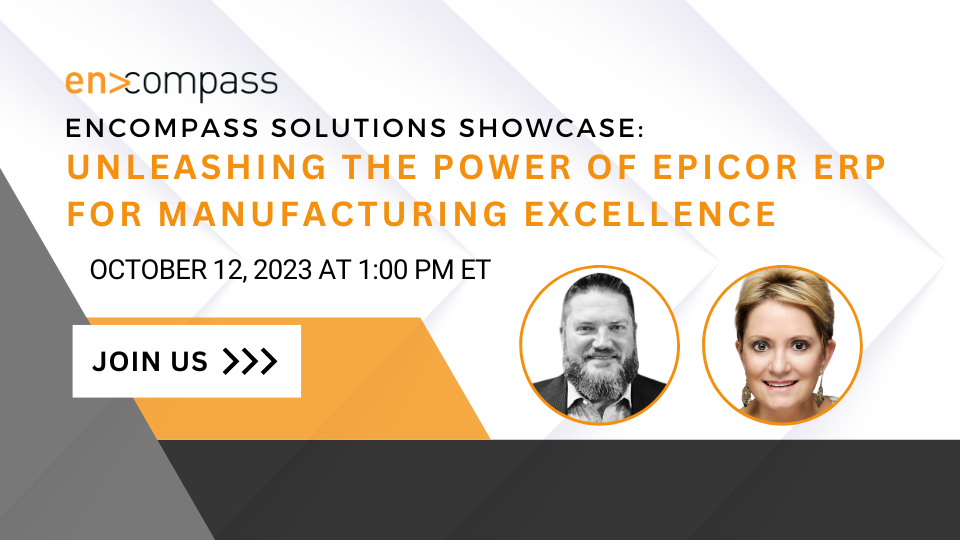
As a manufacturer, you know that navigating the complexities of ERP selection can be overwhelming. You may struggle to find an ERP solution that truly understands your industry-specific needs, leaving you with operational inefficiencies and missed opportunities for growth.

Discover the transformative power of Epicor ERP, the game-changer designed precisely for manufacturing excellence. During this event, we will discuss how Epicor ERP streamlines operations, enhances collaboration, and unlocks hidden profitability, tailored to your industry.

Our expert team at Encompass Solutions will be your trusted guides on this journey to your ERP success. With years of experience and a strong partnership with Epicor, we will lead you through the implementation process.

Hear success stories from manufacturing businesses just like yours, who have harnessed the potential of Epicor ERP through your guidance. See how they overcame challenges, boosted productivity, and achieved remarkable growth.

Don’t miss this opportunity to join the manufacturing revolution. Save your seat now and discover why Epicor ERP, powered by Encompass Solutions, is the unrivaled choice for manufacturers aiming to take their operations to new heights.

In today’s competitive market, staying ahead is crucial for manufacturers. Failure to embrace the right ERP solution means falling behind, missing out on growth, and facing operational inefficiencies that drain profitability.

Save your seat and secure your chance to revolutionize your manufacturing business.

Save my seat!


As a manufacturer, you know that navigating the complexities of ERP selection can be overwhelming. You may struggle to find an ERP solution that truly understands your industry-specific needs, leaving you with operational inefficiencies and missed opportunities for growth.

Discover the transformative power of Epicor ERP, the game-changer designed precisely for manufacturing excellence. During this event, we will discuss how Epicor ERP streamlines operations, enhances collaboration, and unlocks hidden profitability, tailored to your industry.

Our expert team at Encompass Solutions will be your trusted guides on this journey to your ERP success. With years of experience and a strong partnership with Epicor, we will lead you through the implementation process.

Hear success stories from manufacturing businesses just like yours, who have harnessed the potential of Epicor ERP through your guidance. See how they overcame challenges, boosted productivity, and achieved remarkable growth.

Don’t miss this opportunity to join the manufacturing revolution. Save your seat now and discover why Epicor ERP, powered by Encompass Solutions, is the unrivaled choice for manufacturers aiming to take their operations to new heights.

In today’s competitive market, staying ahead is crucial for manufacturers. Failure to embrace the right ERP solution means falling behind, missing out on growth, and facing operational inefficiencies that drain profitability.

Save your seat and secure your chance to revolutionize your manufacturing business.

Save my seat!


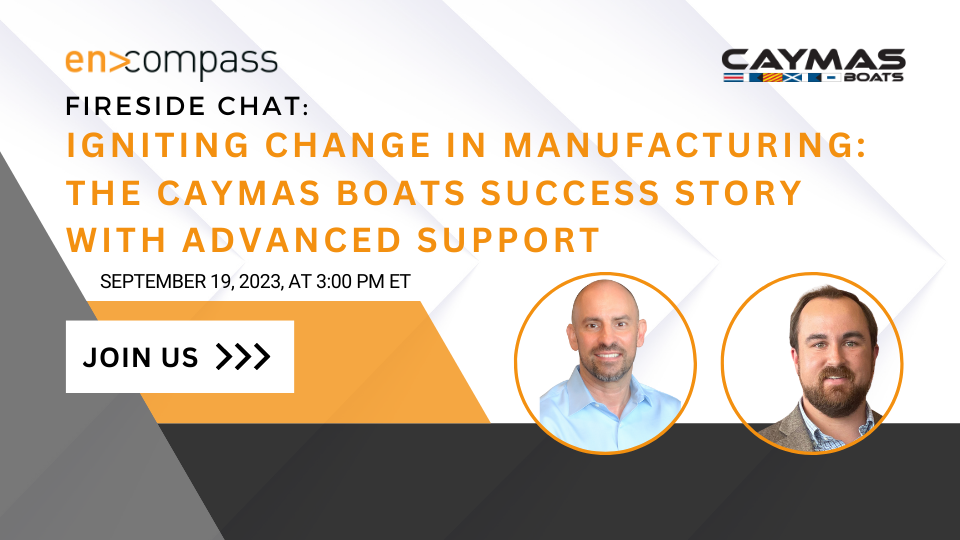
This exclusive event will feature our host, Jason Claggett, Director of Advanced Support and Operations, alongside our special guest, Tyler Smith, Senior Accountant, of Caymas Boats.

During this insightful conversation, Jason and Tyler will discuss how the implementation of advanced support solutions has elevated Caymas Boats’ manufacturing business. They will highlight the challenges faced by the company before adopting the solution and share the significant improvements achieved since its implementation.

Discover how Caymas Boats leveraged cutting-edge technologies and comprehensive support systems to enhance their manufacturing processes, streamline operations, and optimize efficiency. Gain valuable insights into the strategies and methodologies employed by Caymas Boats to overcome obstacles and drive growth in a competitive industry.

As Jason and Tyler engage in candid dialogue, they will address key aspects of the advanced support solution, such as increased productivity, reduced downtime, improved quality control, and enhanced customer satisfaction. Explore how these advancements have not only impacted Caymas Boats’ internal operations but also fortified their position as an industry leader.

Whether you are an industry professional, business owner, or simply intrigued by the intersection of technology and manufacturing, this fireside chat promises to be an illuminating event. Be prepared to gain invaluable knowledge and inspiration from the firsthand experiences shared by our distinguished speakers.

Join us for an evening of insightful discussion, practical takeaways, and networking opportunities. Reserve your spot today to ensure you don’t miss out on this exceptional fireside chat highlighting the success story of Caymas Boats and their advanced support solution.

Save your seat!


This exclusive event will feature our host, Jason Claggett, Director of Advanced Support and Operations, alongside our special guest, Tyler Smith, Senior Accountant, of Caymas Boats.

During this insightful conversation, Jason and Tyler will discuss how the implementation of advanced support solutions has elevated Caymas Boats’ manufacturing business. They will highlight the challenges faced by the company before adopting the solution and share the significant improvements achieved since its implementation.

Discover how Caymas Boats leveraged cutting-edge technologies and comprehensive support systems to enhance their manufacturing processes, streamline operations, and optimize efficiency. Gain valuable insights into the strategies and methodologies employed by Caymas Boats to overcome obstacles and drive growth in a competitive industry.

As Jason and Tyler engage in candid dialogue, they will address key aspects of the advanced support solution, such as increased productivity, reduced downtime, improved quality control, and enhanced customer satisfaction. Explore how these advancements have not only impacted Caymas Boats’ internal operations but also fortified their position as an industry leader.

Whether you are an industry professional, business owner, or simply intrigued by the intersection of technology and manufacturing, this fireside chat promises to be an illuminating event. Be prepared to gain invaluable knowledge and inspiration from the firsthand experiences shared by our distinguished speakers.

Join us for an evening of insightful discussion, practical takeaways, and networking opportunities. Reserve your spot today to ensure you don’t miss out on this exceptional fireside chat highlighting the success story of Caymas Boats and their advanced support solution.

Save your seat!


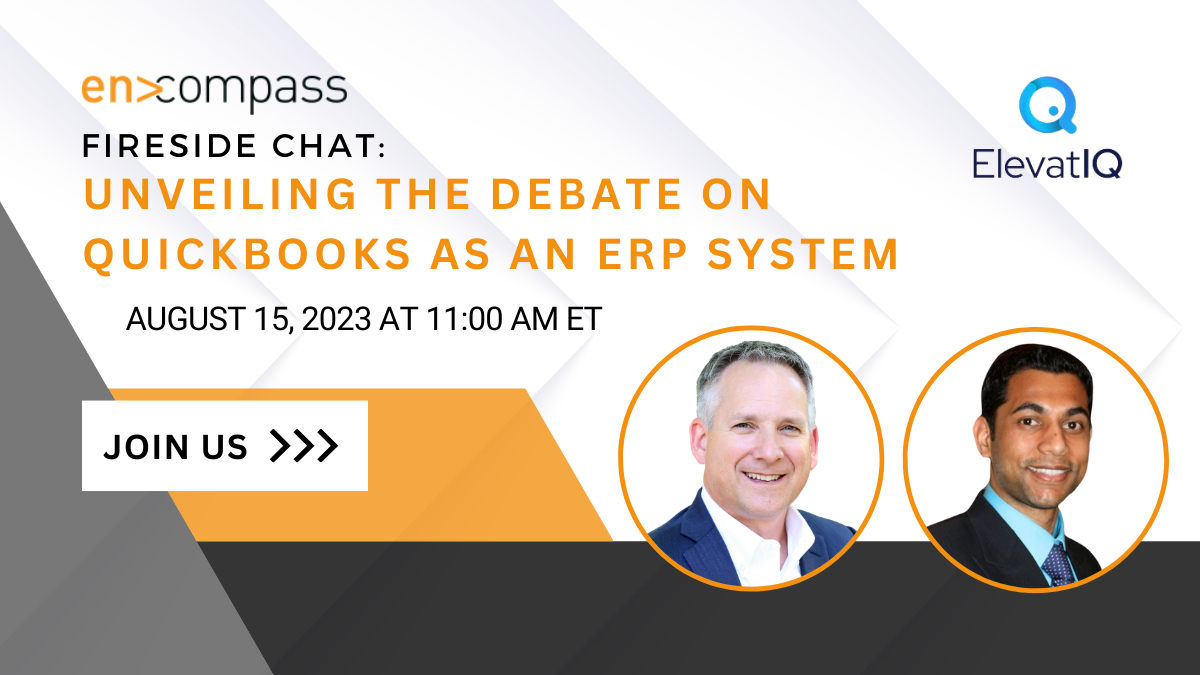
Is QuickBooks an ERP system? Join us for a thought-provoking discussion featuring Encompass Solutions’ Director of Sales and Marketing, Paul Bilodeau, and Principal Consultant, Sam Gupta, with ElevatIQ. Brace yourself for an electrifying exploration of the ongoing debate surrounding QuickBooks as an ERP system and its impact on your manufacturing business!

Paul and Sam will take the stage to unravel diverse viewpoints surrounding QuickBooks. Prepare for an exhilarating journey as we critically examine the perceived benefits of QuickBooks as a powerful solution. Is it truly capable of amplifying efficiency, streamlining processes, and propelling your manufacturing operations to new heights? Let’s find out!

But that’s not all! Our esteemed speakers fearlessly tackle concerns raised within the QuickBooks ERP community, addressing the skeptics head-on. We’ll explore alternative ERP solutions and unveil an array of additional features and enhancements available to elevate your business. Discover possibilities you may not have considered before!

Join us for this insightful event where knowledge collides with excitement. Gain profound insights, ignite your imagination, and uncover the potential pitfalls of QuickBooks as an ERP system. Don’t miss out on this electrifying conversation that challenges the status quo!

Secure your spot now and get ready for a high-energy discussion with Paul Bilodeau and Sam Gupta. Be inspired, motivated, and empowered as we challenge the boundaries of QuickBooks in the manufacturing industry. Reserve your seat today and embark on an extraordinary journey of exploration and discovery!

Save your seat!


Is QuickBooks an ERP system? Join us for a thought-provoking discussion featuring Encompass Solutions’ Director of Sales and Marketing, Paul Bilodeau, and Principal Consultant, Sam Gupta, with ElevatIQ. Brace yourself for an electrifying exploration of the ongoing debate surrounding QuickBooks as an ERP system and its impact on your manufacturing business!

Paul and Sam will take the stage to unravel diverse viewpoints surrounding QuickBooks. Prepare for an exhilarating journey as we critically examine the perceived benefits of QuickBooks as a powerful solution. Is it truly capable of amplifying efficiency, streamlining processes, and propelling your manufacturing operations to new heights? Let’s find out!

But that’s not all! Our esteemed speakers fearlessly tackle concerns raised within the QuickBooks ERP community, addressing the skeptics head-on. We’ll explore alternative ERP solutions and unveil an array of additional features and enhancements available to elevate your business. Discover possibilities you may not have considered before!

Join us for this insightful event where knowledge collides with excitement. Gain profound insights, ignite your imagination, and uncover the potential pitfalls of QuickBooks as an ERP system. Don’t miss out on this electrifying conversation that challenges the status quo!

Secure your spot now and get ready for a high-energy discussion with Paul Bilodeau and Sam Gupta. Be inspired, motivated, and empowered as we challenge the boundaries of QuickBooks in the manufacturing industry. Reserve your seat today and embark on an extraordinary journey of exploration and discovery!

Save your seat!


Are you a business owner or decision-maker in the manufacturing industry? Are you looking to streamline your operations, improve efficiency, and increase profitability through the right Enterprise Resource Planning (ERP) system? Look no further!

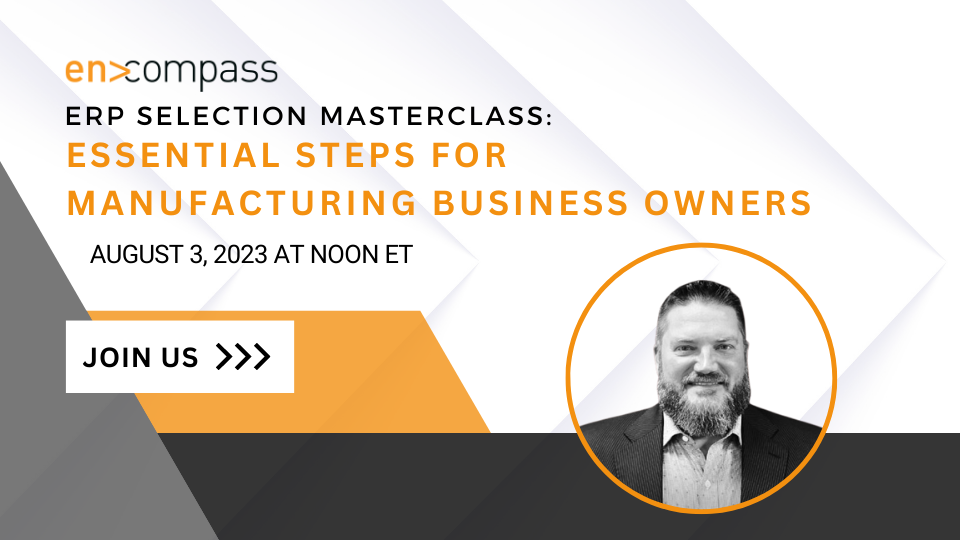
Join us for the “ERP Selection Masterclass: Essential Steps for Manufacturing Business Owners,” an exclusive online event designed to guide you through the process of selecting and purchasing an ERP system that aligns with your business objectives and drives success.

During this masterclass, industry experts will provide you with valuable insights and practical strategies to navigate the complexities of ERP selection. Gain a deep understanding of ERP systems and their role in streamlining operations, enhancing collaboration, and boosting profitability in the manufacturing sector.

Key topics covered in this event include:
✅ Defining ERP systems and their benefits in manufacturing
✅ Conducting a comprehensive needs assessment to identify your specific requirements
✅ Researching and evaluating ERP vendors effectively
✅ Best practices for vendor selection and implementation
✅ Lessons learned from real-world ERP implementations
✅ Ongoing system maintenance, updates, and optimization tips for long-term success

Whether you are considering implementing a new ERP system or looking to optimize your existing one, this masterclass will equip you with the knowledge and tools necessary to make informed decisions.

Don’t miss this opportunity to learn from industry experts, engage in interactive sessions, and network with fellow manufacturing business owners. The event will include a Q&A segment, allowing you to get answers to your specific ERP selection queries.