Manufacturers are transitioning from traditional on-premise ERP systems to cloud-based solutions, such as Epicor Kinetic Cloud. This shift is more than just a tech upgrade; it’s a strategic decision to boost efficiency and profitability. Epicor Kinetic Cloud is specifically designed for discrete and made-to-order manufacturers, offering tools to streamline processes and cut costs. Discover the benefits of cloud migration and any concerns and improvements in scalability, cost efficiency, security, and collaboration. Recognizing these advantages helps business leaders confidently modernize their operations.

Comprehending Epicor Kinetic Cloud

Epicor Kinetic Cloud is a cloud-based ERP solution designed specifically for manufacturers. It combines pivotal business functions—production, supply chain, finance, and customer management—into one platform. This integration is beneficial for manufacturers that require a system capable of handling complex operations efficiently.

For manufacturers, Epicor Kinetic Cloud is a game-changer. It offers real-time data analytics, helping businesses make quick, informed decisions to stay competitive. The cloud setup means updates and upgrades happen seamlessly, so that manufacturers always have the latest features without the hassle of downtime.

Using Epicor Kinetic Cloud, manufacturers can streamline processes, cut down on operational delays, and boost productivity. Its intuitive interface and customizable dashboards make it easy for everyone—from IT managers to CFOs—to access and use. This ensures all departments benefit from the improved visibility and control that the platform offers.

Key Benefits of Moving to Epicor Kinetic Cloud

Switching from an on-premise ERP to Epicor Kinetic Cloud brings significant advantages for discrete and made-to-order manufacturers. This transition boosts operational efficiency and strengthens a company’s position in the market.

Enhanced Scalability and Flexibility

Epicor Kinetic Cloud stands out for its scalability. Unlike traditional systems that demand hefty investments and time for expansion, cloud solutions adjust swiftly to business changes. This adaptability is necessary for manufacturers facing variable demand or planning growth. With Epicor Kinetic Cloud, businesses can easily scale resources, paying only for what they use.

Another significant advantage is flexibility. Cloud-based ERP allows manufacturers to integrate new features or modules without extensive hardware upgrades. This agility helps companies quickly adapt to market shifts and technological advancements, keeping them competitive.

Cost Efficiency and ROI

Switching to Epicor Kinetic Cloud can lead to substantial cost savings. Traditional on-premise ERP systems often demand heavy investments in hardware and maintenance. In contrast, cloud solutions cut these costs by eliminating the need for physical infrastructure. This allows manufacturers to redirect funds towards strategic initiatives like innovation or expansion.

Epicor Kinetic Cloud’s long-term ROI is significant. Manufacturers can enhance production and increase output by minimizing downtime and boosting operational efficiency. The subscription-based pricing model also aids in financial planning, helping companies manage costs effectively over time.

Improved Security and Compliance

Security is required for any business, and Kinetic Cloud delivers with robust measures. Cloud providers offer advanced protocols like encryption and multi-factor authentication to safeguard data. This level of security often surpasses what many manufacturers can achieve with on-premise systems.

Epicor Kinetic Cloud also supports compliance with industry regulations. Automatically updating compliance features helps businesses stay aligned with legal requirements, reducing the risk of penalties.

Increased Accessibility and Collaboration

Epicor Kinetic Cloud enhances accessibility and collaboration. Employees can access business information anywhere, anytime, using any device. This is invaluable for teams spread across multiple locations or those working remotely.

Another benefit is real-time collaboration. Cloud solutions enable seamless communication and data sharing among departments, improving coordination and decision-making. This leads to faster problem-solving and innovation.

Overcoming Migration Concerns

Despite the benefits, some manufacturers hesitate to move to the cloud due to migration concerns. Fears about data loss, integration challenges, and potential downtime are common. However, these issues can be addressed with careful planning and the right expertise.

Epicor offers comprehensive support for a smooth migration. Data migration tools and services ensure secure data transfer, while integration capabilities ensure existing systems work seamlessly with the new cloud platform. With a well-planned strategy, manufacturers can minimize disruption and quickly benefit from their new ERP system.

Steps to Transition from On-Prem to Kinetic Cloud

Transitioning to Kinetic Cloud requires a structured approach. Start by assessing current systems to identify specific needs and goals and create a tailored migration plan.

Partnering with experienced cloud migration experts is wise. They guide practices, assist with data migration, and ensure the new system is configured correctly. Training and support help employees adapt to the new platform and maximize its potential.

Establish a timeline for the transition, allowing for testing and adjustments before fully going live. This phased approach minimizes risk and ensures successful migration.

Let Encompass Solutions Help You Modernize Operations

Moving to Kinetic Cloud offers manufacturers benefits like scalability, cost efficiency, enhanced security, and improved collaboration. Businesses can modernize operations and maintain a competitive edge by addressing migration concerns and following a strategic plan.

Manufacturers ready to explore cloud ERP should consider migrating to Epicor Kinetic Cloud. Contact us at Encompass Solutions for guidance and support to begin the journey towards operational excellence and innovation.


Effective resource planning is crucial for staying competitive among discrete and made-to-order manufacturers. ERP systems are central to this effort; however, ensuring they are well-supported remains a challenge. Manufacturers must decide whether to build an in-house team or outsource support through Epicor ERP Support Services. These options allow decision-makers to align their ERP support strategy with overall business goals. 

The Critical Role of ERP Support in Manufacturing

ERP systems, such as Epicor, unify business processes, including inventory and customer relationship management, but their complexity can pose significant challenges. Manufacturers often encounter data integration challenges, customization difficulties, and scaling issues as they expand. Post-implementation, challenges such as system downtime, user training, and software updates can disrupt operations if not managed. 

Reliable ERP support addresses these issues and keeps systems running smoothly. Support services need to be quick and practical to minimize disruptions. As technology advances, ongoing support is necessary for implementing new features and ensuring system security.

Internal ERP Support: Pros and Cons

Manufacturers often consider building an internal team for ERP support to maintain control and customize solutions. This approach allows direct oversight, ensuring that ERP systems align with specific business goals. In-house teams, familiar with the company’s operations, can offer tailored support that addresses unique needs. 

However, this strategy isn’t without challenges. Finding and keeping skilled employees to manage complex ERP systems like Epicor can be tough, particularly for smaller companies. Training and salary expenses add up quickly, straining budgets. Employee turnover can lead to knowledge gaps, disrupting the continuity of support. 

While internal ERP support has its benefits, it demands a careful evaluation of long-term costs and resource requirements. Companies need to assess their ability to sustain a skilled team capable of managing the complexities of their ERP systems effectively.

Outsourcing ERP Support: Pros and Cons

For manufacturers aiming to streamline operations without the burden of an in-house team, outsourcing ERP support is an appealing option. By collaborating with external experts, companies tap into specialized knowledge that can be difficult to develop internally. This strategy brings several key benefits. 

A major advantage is access to specialized expertise. Providers of Epicor ERP support services, for example, have extensive experience across various industries, allowing them to swiftly address issues and implement best practices that boost system performance. 

Another benefit is cost efficiency. Outsourcing eliminates the expenses tied to training and retaining an internal team. Companies can adjust the level of service according to their needs, which is particularly useful for small—to mid-sized manufacturers dealing with variable demand. 

Outsourcing comes with its own set of challenges. Relying on external providers can lead to concerns about losing control over ERP systems. Straightforward communication and transparent service-level agreements (SLAs) maintain a productive partnership. Additionally, manufacturing companies should consider cultural and time zone differences when choosing an outsourcing partner to ensure smooth integration with existing operations. 

While outsourcing ERP support offers significant advantages, manufacturers must carefully evaluate potential drawbacks to find the best fit for their specific needs and resources.

Comparing Costs: Internal vs. Outsourced ERP Support

Deciding between internal and outsourced ERP support involves a careful look at costs. Building an in-house team means investing heavily in hiring, training, and keeping skilled staff. Salaries for ERP specialists are high, and ongoing training to keep up with tech changes adds to the expense. 

Infrastructure is another cost factor. Maintaining the necessary hardware and software for internal teams can be pricey, especially with regular updates and security needs. Employee turnover also brings hidden costs, like lost productivity and hiring expenses, which can disrupt operations. 

Outsourcing offers a different financial picture. Service providers often have flexible pricing models that let companies adjust services as needed, which is useful for small to mid-sized manufacturers with changing demands. This approach can lower overhead costs tied to maintaining an internal team, freeing up resources for core business activities. 

The value of outsourcing hinges on several factors. Negotiating SLAs ensures support services meet operational needs without unexpected costs. Choosing a provider with a strong track record in ERP support services can boost system performance and offer a good return on investment. 

A detailed cost-benefit analysis helps manufacturers choose the most financially sound ERP support strategy. Companies can align their decisions with their operational and financial goals by weighing immediate and long-term costs.

Why Choose Epicor ERP Support Services from Encompass Solutions

Encompass Solutions offers a compelling choice for manufacturers seeking Epicor ERP support. Their expertise in Epicor systems ensures manufacturers can enhance system performance and maintain a competitive edge. 

Specializing in the needs of discrete and made-to-order manufacturers, Encompass Solutions provides services that efficiently address complex ERP challenges. Their team’s industry knowledge allows for timely problem-solving and the implementation of best practices, which can be costly to develop internally. This makes them an ideal partner for companies aiming to streamline operations and concentrate on core activities. 

Encompass Solutions also offers flexible service models tailored to specific operational needs and budgets. This flexibility is crucial for small to mid-sized manufacturers dealing with variable demands. By choosing Encompass Solutions, companies gain consistent, high-quality support without the expense of a full-time internal team.

Beyond immediate support, Encompass Solutions takes a proactive approach to ERP management. Regular system reviews, updates, and security enhancements keep clients ahead of technological changes and industry trends. This strategy minimizes downtime and maximizes the return on ERP investments.

Making the Right Decision for Your Manufacturing Business

Choosing between internal and outsourced ERP support requires strategically evaluating your business’s structure, goals, and resources. Begin by assessing how each option aligns with your long-term objectives, such as scalability, cost-efficiency, and innovation. The complexity of your Epicor ERP system, industry-specific requirements, and compliance needs should also factor into your decision. 

Evaluate your in-house team’s current capabilities. Outsourced support may offer greater value if they lack the specialized skills or bandwidth to manage, maintain, and evolve the ERP system. A reliable external provider can deliver scalable, expert-level service that adapts as your business grows, without the overhead of expanding an internal team. Ultimately, the right ERP support strategy should enhance operational performance while aligning closely with your company’s vision and growth trajectory.

Get Scalable ERP Support That Grows With You

Outsourcing ERP support delivers significant advantages for manufacturers facing complex system requirements, limited internal resources, or the need for scalable service. From cost efficiency to access to deep industry expertise, partnering with an experienced provider like Encompass Solutions helps businesses overcome ERP challenges while focusing on core operations.

With a proven track record in Epicor ERP Support Services, Encompass Solutions offers tailored, proactive support that evolves with your business. Their team reduces the risk of downtime and data issues and ensures your system stays secure, updated, and aligned with long-term goals. 

Ready to optimize your ERP strategy? Visit Encompass Solutions’ website to learn more about their advanced support and discover how expert support can maximize the value of your ERP investment.


Excellence in manufacturing shows in efficiency, sustainability, team satisfaction, and your bottom line. Your equipment’s performance drives it, your team’s dedication, and how quickly your facilities adopt innovation.

Your customers know excellence through high-quality products and precise delivery schedules, and your staff know excellence when they contribute to a constantly improving workflow every day. Achieving that excellence involves more than just “pulling the lever.” It calls for dedication to discovering and implementing the latest innovations in manufacturing, from technology to methodology.

That is why we are hosting the second annual Manufacturing Excellence Summit 2025.

Executives, operations managers, plant managers, and manufacturing stakeholders of all kinds can come together as we discuss ways to stay ahead of manufacturing trends and technologies to unlock improvements at every level of your business. This event is essential for operational improvement, automation, growth, and retention in the manufacturing industry.

What Is the Manufacturing Excellence Summit?

The Manufacturing Excellence Summit by Encompass Solutions will be held on August 27th, 2025, at the Revolutionary Mill in Greensboro, NC 27405. The summit will be held in Gallery 1250, where industry leaders will meet to explore the latest in manufacturing.

This year’s core focus areas will cover automation, employee retention, employee engagement, employment law, and risk management. Each session during the Summit will highlight a different focus area and feature a leader who will demonstrate how these areas work together to support and strengthen today’s manufacturing operations.

This is an exclusive event for manufacturing stakeholders and decision-makers to enhance your operations, employee satisfaction, innovation leveraging, and proactive risk management.

Why This Event Matters for Manufacturers

Manufacturers benefit from steady access to new technologies, trends, and strategies that work. Proven practices and shared expertise in manufacturing often lead to meaningful improvements and performance and efficiency, which is why we’re bringing decision-makers together. The Manufacturing Excellence Summit is an important opportunity for manufacturers for three key reasons:

Insights into Key Trends

A summit reveals insights into key trends and technologies shaping the future of manufacturing. From in-house tools to standout projects using current industry practices, you’ll explore real-world improvements and learn which strategies are delivering measurable results.

Peer Learning

When every member is an expert in their own right, we open the doors to unlimited peer learning from other manufacturing decision-makers. It’s not just networking, it’s a meeting of the minds when it comes to efficiency, integration, and strategy that you can learn from your fellow attendees.

Direct Access

The summit will feature sessions with industry thought leaders and solution providers. In addition to attending talks and hands-on sessions, attendees will gain direct access with the opportunity to ask questions and explore specific applications.

What Attendees Can Expect

When you attend the summit, you can expect a high-level experience focused on how to achieve increased production performance and operational improvements for manufacturing plants. Both the featured sessions and connecting with the other attendees will provide concrete value for your manufacturing business, employees, and clients.

High-Value Sessions

The purpose of any summit is to host high-value sessions led by experienced professionals and thought leaders. Each session will focus on how manufacturing decision-makers can make a powerful impact through new techniques and technologies.

Networking Opportunities

The people you meet at the Manufacturing Excellence Summit of 2025 will all be movers and shakers in your industry. You’ll network with fellow executives, operators, and visionaries — the people shaping the future of manufacturing

Practical Tools and Resources

Every session and showcase is designed to equip attendees with practical tools and resources that they can take back to their team. You will learn about technological implementations, new management strategies, and how to optimize the resources you already have to achieve both better overall performance and a more engaging staff experience.

Who Will Be Speaking and What Topics Will Be Covered

Encompass Solutions will announce an impressive lineup of speakers soon — strategists and thought leaders ready to share real-world applications you can apply immediately. Watch this space.

Key themes that will be covered will include

  • Optimizing operational efficiency
  • Digital transformation in many forms
  • Proactive risk mitigation strategies

How to Register and What’s Included

Registration for the Manufacturing Excellence Summit 2025 is fast and easy. Simply fill out your name and information on the registration page, and we’ll take care of the rest.

Your free registration unlocks more than just entry — it includes access to insightful sessions, hands-on resources, and catered meals to keep you fueled throughout the day.

Spaces are limited, so register today to secure your spot.

Invite Your Network

This is an excellent event to share with your colleagues and peers. The summit represents a valuable opportunity for your executive team, manufacturing business partners, and fellow decision-makers. Invite your network to register so you can enjoy the event and benefit from the innovative sessions with industry leaders together.

Bring Your Expertise to the Manufacturing Excellence Summit 2025

The best part about a professional summit is that every attendee brings their own expert experiences to the event. Every one of our attendees adds value as a leading figure in the manufacturing industry. Bring your perspective, meet other movers and shakers, and learn about the latest technology, trends, and strategies transforming the manufacturing industry today.

Don’t Miss Your Chance to Lead the Future of Manufacturing

Join us at the Manufacturing Excellence Summit 2025 and walk away with actionable tools, connections, and a renewed vision for your facility’s future. Spots are limited — register now and secure your place among the industry’s best.

If you have any questions, contact Encompass Solutions, your hosts for the Manufacturing Excellence Summit 2025. Contact us today if you have any questions, and we look forward to seeing you there!


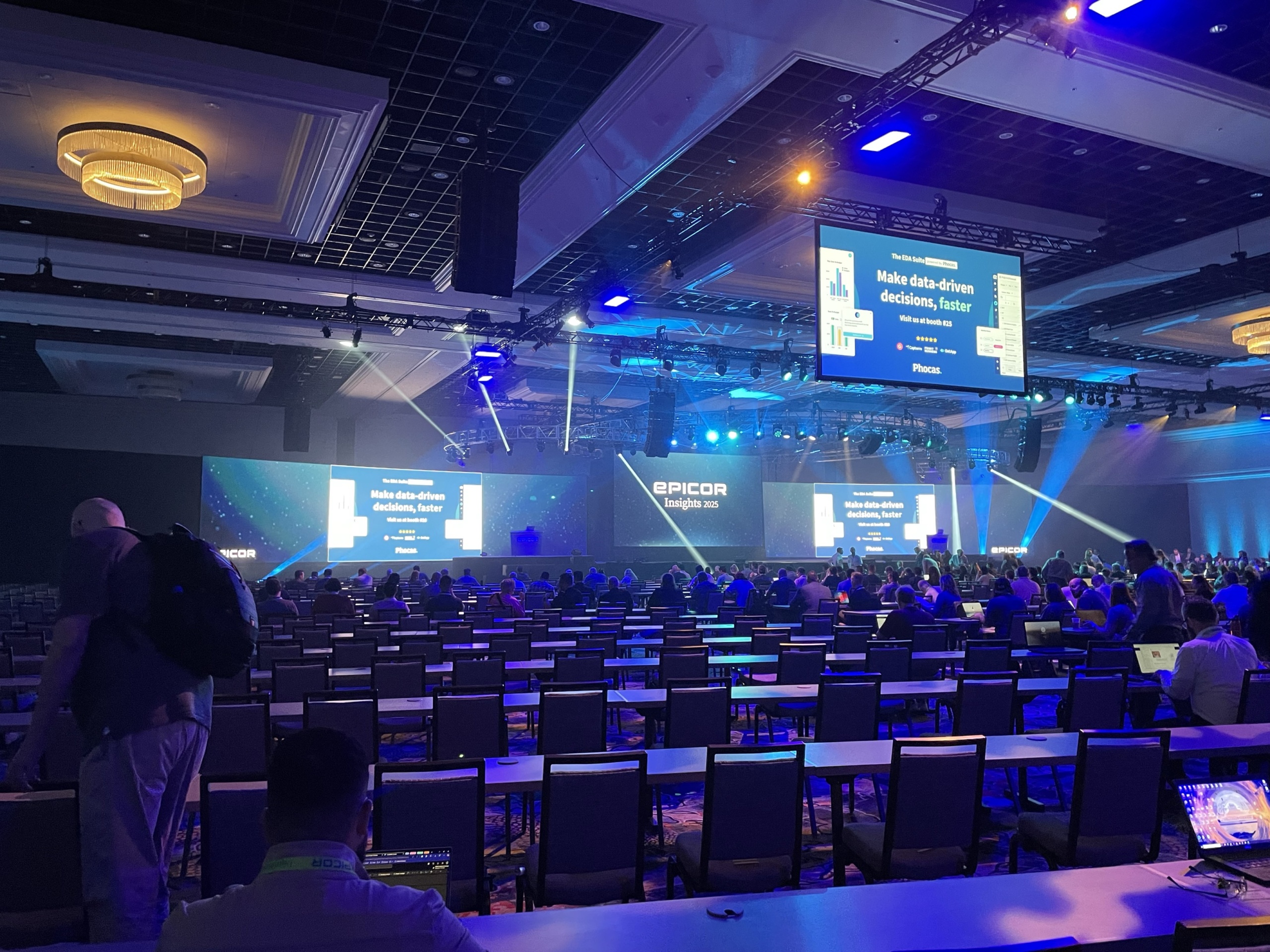
Innovation is what drives the future, and it drives our partnership with Epicor. Which is why we attended Epicor Insights 2025 to find out where things are going in this evolving ecosystem. If you use Epicor…or are considering an ERP…then it’s worth learning a bit about our and their insights for the future.

What’s Next with ERP: Key Takeaways from Epicor Insights 2025

The focus of Epicor Insights 2025 was on agentic AI. Epicor’s CEO, Steve Murphy, discussed  AI and the fact that Epicor is approaching integrating AI vertically, focusing on those existing Make, Move, and Sell verticals. With the current challenges that manufacturers are facing, particularly around realigning supply chains overnight due to tariffs, and how AI can be used to respond to these challenges if used correctly. Murphy mentioned that Epicor values the impact of AI and how it is an accelerator to help people gain insights into the data within an ERP, versus a tool that would replace them.

Epicor also unveiled Epicor Prism and Epicor Grow AI. The latter covers more than 200 use cases, while Epicor Prism can now integrate with Epicor Industry ERP Cloud, including Epicor Prophet 21, and Epicor Kinetic (which is our specialty).

This means our Kinetic customers can now experience faster employee onboarding, enhance decision making with rapid visual analysis, streamline information retrieval, and more. And Grow AI provides predictive AI modeling. Our Director of Operations and Advanced Support, Jason Claggett, had this to say: “Epicor showcased their AI solution, ‘Prism, ‘ that is aimed to empower the workforce.”

They also added a new Carbon Cost Rollup solution to Kinetic to support carbon tracking and treat CO2 emissions as currency.

Introduction – Why Epicor Insights 2025 Matters

Epicor Insights 2025 is a significant conference with around 4,000 attendees – large for a company-specific conference and an impactful event with 45 extended education sessions and 85 hands-on labs.

This allows customers, partners, and influencers to interact with the company and move their use of Epicor to their next level. For us, it’s a way to learn what Epicor is doing and changing, and how they are moving forward. We can then pass this knowledge on to our customers and help them use the platform better. We can, in particular, help current and future Epicor users customize tools and leverage people-centric AI to get the most value out of their ERP software.

Epicor’s Five Innovation Principles – Building a Future-Ready ERP

Epicor has long focused on five principles of innovation to build its ERP, and Epicor Insights is a timely reminder of them. They are:

  1. Great Experience. Epicor’s ERP is easy to use, keeping everything centralized. It provides a great, streamlined experience for employees and allows them to do more in less time.
  2. Data-Driven Insights. Using AI to crunch data, Epicor builds a data supply chain that improves accuracy and collaboration without compromising security. This allows you to use your data to the full.
  3. Industry Expertise. Epicor has deep experience in five areas – automotive, building supply, distribution, manufacturing, and retail. This allows thousands of companies to get the best out of Epicor and benefit from their expertise.
  4. Co-Innovation with Customers. This means working with customers to improve and listening to feedback – which is a major driving force behind Epicor Insights.
  5. People-Centric AI. AI that does not replace humans but rather makes their lives easier and more productive.

Spotlight on Emerging Solutions and Tools

A major purpose of Epicor Insights is to showcase emerging solutions and tools and give customers a chance to try them with the company’s help. Some of the new solutions Epicor demonstrated include:

  • SparkCentral – GROW. Epicor’s Grow AI provides predictive modeling and analysis to help customers manage their supply chain and predict demand.
  • Inventory Planning & Optimization (IP&O). Epicor continues to improve its IP&O solution. Adding more AI improves sales and inventory planning by offering probabilistic forecasting to help connect inventory optimization to your bottom line.
  • Prism, Ascend, Acadia, Kyklo. These AI solutions continue to develop. Acadia, for example, helps frontline workers gain real-time insights directly, instead of through dispatch.
  • Insights GO Demo. Epicor also demonstrated GO, 3D visual intelligence that will further improve data-driven insights and be a fantastic tool for showing data to stakeholders.

In particular, Ashley Limbers, our Marketing Manager, enjoyed the focus on AI. “It’s exciting to see how Epicor’s commitment to AI is already sparking action—and will continue to drive growth and competitiveness for our clients.”

Epicor Connected Process Control (CPC) and Acadia

Another focus was connected process control, which uses digital work instructions to enforce process control, connects devices to harvest IoT data, provides embedded quality management, and supports preventive maintenance. All of this allows manufacturing employees to work more effectively. The Andon solution allows all employees to view real-time production information and empowers them.

Acadia does the same thing for front-line workers. Both of these solutions improve employee trust by allowing them direct access to the data they need to do their jobs and encourage innovative solutions from the front line or factory floor.

CPC also matters for workforce readiness and compliance. It allows for the development of a Skills Matrix that directs job-based training so that employees have the skills and knowledge they need and opportunities to continuously improve.

Closing the Visibility Gap and Overcoming Data Challenges

According to Epicor, 79% of companies lack tier 1 supplier visibility, and 48% ignore critical insights. These pain points are something Epicor is working hard to address.

One way is the data supply chain, which ensures that accurate data is transmitted across companies to the people who need it. In many cases, insights are “ignored” because people simply don’t see them. Data from tier 1 suppliers can easily be brought into the data ecosystem.

Epicor also provides solutions for supply chain resilience that include improving visibility so that sourcing can be switched and balanced as needed. Supplier disruptions don’t turn into production disruptions.

3D data visualization is going to be another tool for overcoming data challenges by making data easily visible to stakeholders and showing them, clearly, the impact of changes on their bottom line.

Real-World AI Use Cases That Deliver ROI

Back to AI. Epicor’s AI is designed to support human innovation. Here are four areas in which Epicor’s AI really can help:

  1. Quoting. AI can analyze the supply chain, predict demand, and help you assess costs so you can provide more accurate quotes.
  2. Onboarding. New employees can get on track faster, with onboarding even starting before they come on-site.
  3. Ordering. AI ordering can allow for targeted upselling, dramatically increasing revenue.
  4. Analysis. Last, but far from least, AI can automate the interpretation of lists and charts so humans don’t have to spend hours poring over them.

Epicor AI – functional, practical, human-first.

Strategic Growth and Vision

Epicor also talked about its growth as a company. Since 2021, they have made 14 acquisitions. Their growth has averaged 12% year-over-year.

They have made over 100 major project releases and over 600 minor ones. All of this reinforces their deep vertical focus in the Make, Move, Sell economy.

Final Thoughts – Empowering the Maker Community

A clear thread through the Epicor Insights 2025 was that while AI has much potential, it is only valuable when applied in context. AI use cases need to be industry-specific, well-thought-out, and centered around supporting people in their activities. Our Director of Professional Services, Dave Cranshaw, had this to say: “I’m excited to work with Kinetic as not just a static ERP as we have all been working with most of our careers, but now as a platform to truly provide actionable insights to our customers very soon. What’s key is clients should be cleaning up their data so it’s good, then moving to the cloud, so they can use PRISM, and lastly turn on GROW post go-live so they can start being part of the change in the industry.”

Epicor also reinforced its commitments to innovation, security, and, above all, community.

At Encompass Solutions, we are here to help our clients learn what is coming next and take advantage of it to improve operations and your bottom line.

Are you ready to see how these innovations fit your business strategy? Talk to your Encompass Solutions account manager today or contact us to explore Epicor and how AI can be used can help your business.


Revolutionizing Worker Productivity with AI and Prism

Experience a paradigm shift in manufacturing productivity with Epicor Kinetic 2025.1, featuring leading AI-driven tools that take worker efficiency to the next level. The new release sets a new standard as the ERP for manufacturing, boosting operational capabilities with cutting-edge technology designed to streamline workflows and maximize productivity. At the top of its list of innovative advancements is Prism, an ECM (Enterprise Content Management) agent fully integrated into the Kinetic platform.

Prism: Enhancing Efficiency through Intelligent Automation

Prism offers a fundamental shift in how document management and task automation are approached using AI in manufacturing. Consequently, this tool gives users everything they need to boost their operational efficiency and streamline workflows. Prism revolutionizes worker productivity on many different fronts:

  • Document Management Reinvented: Document handling is simplified by smarter categorization, organization, and information storage. Critical documents are always readily accessible, which is a huge time saver.
  • Accelerated Information Retrieval: Advanced search algorithms are used to rapidly retrieve key information from even the largest repositories. Users can easily find and extract what they’re looking for quickly, helping them make quicker, informed decisions.
  • Automated Task Execution: One of Prism’s best features is the ability to automate repetitive tasks across a manufacturing workflow, saving workers valuable time to spend on more important matters. It can reliably handle everything from simple data entry to more complex tasks with greater accuracy.
  • Intuitive User Experience: Designed to improve the user experience, Prism can easily integrate with existing workflows without disrupting your operation. Users of all skill levels can use its intuitive interface and interactive features to use the power of its AI-driven enhancements.

With Prism within Epicor Kinetic 2025.1, manufacturers will see administrative overhead greatly reduced and time-to-market projections for new products accelerated. It’s a transformation tool setting a new standard for productivity in manufacturing that will pave the way for smarter operations.

Supporting Sustainable Manufacturing with New Capabilities

As global expectations for manufacturing sustainability increase, manufacturers scramble to face the growing pressure of guaranteeing their operations are aligned with environmental initiatives. Therefore, Epicor Kinetic 2025.1 meets this challenge by introducing innovative tools that give manufacturers what they need to measure and reduce their environmental footprints.

Tracking and Reducing Environmental Footprints

The new Epicor Kinetic release introduces the Carbon Cost Rollup for Purchase Orders, Jobs, and Quotes as one of its standout features. It’s an advanced tool that allows manufacturers to thoroughly analyze and track their carbon footprints across every facet of their operations.

  • Comprehensive Carbon Footprint Analysis: Kinetic 2025.1 integrates carbon tracking into core operations, giving manufacturers the ability to measure the environmental impact of their activities. It gives a comprehensive view of carbon contributions through the manufacturing lifecycle, including emissions associated with purchase orders, production jobs, and project quotes.
  • Data-Driven Sustainability Insights: Using detailed analytics and reporting, manufacturers now receive actionable insights into their environmental footprint. The Carbon Cost Rollup feature gathers data from different operational sources, giving them the information they need to make informed decisions on how to reduce carbon emissions and optimize resource use.
  • Alignment with Global Sustainability Standards: Kinetic 2025.1 also helps manufacturers meet compliance regulations and stakeholder demands.  With the ability to monitor and manage environmental impacts, businesses can be responsible corporate citizens and meet their long-term sustainability goals.
  • Operational Efficiency and Cost Savings: Managing resource usage and reducing waste through sustainability initiatives can save a lot of money and streamline operations. Kinetic 2025.1 gives manufacturers the tools they need to identify areas for improvement, implement new sustainable practices, and boost overall business performance.

In addition, Kinetic ERP gives manufacturers a competitive edge in a sustainability-focused market landscape. The development of carbon tracking and environmental management tools is Epicor’s pledge to driving meaningful change in the manufacturing sector.

Delivering Customer-Driven Improvements and Accelerating Digital Transformation

As a result, Epicor Kinetic also supercharges the way manufacturers address the needs of their customers through a digital transformation within their operations. This newest release uses extensive feedback harvested through Epicor Ideas, generating 1,346 enhancements to enhance both system productivity and user experience.

Key Enhancements in Kinetic 2025.1

  • New Warehouse Inactive Option: The new Warehouse Inactive Option helps streamline inventory management. Manufacturers can optimize warehouse space and other resources by effectively managing inactive or slower-moving inventory items. A reduction in inventory carrying costs and smarter space usage helps manufacturers better use their resources and save money.
  • Reason Code Maintenance Improvements: Improvements in Reason Code Maintenance gives manufacturers smarter reporting capabilities.  Kinetic 2025.1 simplifies data analysis and reporting by standardizing and automating the process of assigning reason codes to operational events and transactions. Manufacturers will be able to identify and pinpoint issues, trends, and opportunities for improvement faster than ever before, improving their ability to make data-driven decisions.
  • Enhanced MRP Urgent Planning: Kinetic 2025.1 took dynamic market demands into consideration and improved Material Requirements Planning (MRP) Urgent Planning capabilities. Manufacturers can now quickly respond to demand or supply disruptions, guaranteeing production schedule continuity.  This improvement in production planning and inventory management allows manufacturers to respond faster, shorten lead times, and exceed customer expectations.

Expanding Integrations for Enhanced Digital Transformation

In addition to these cutting-edge enhancements, Epicor Kinetic 2025.1 continues to add integration capabilities across popular key solutions. These integrations are vital in enabling manufacturing enterprises to speed up their digital transformation journey and improve their overall operations.

Integrations Across Solutions

Kinetic integrates seamlessly with a range of ERP cloud solutions, including:

  • Grow: Makes business growth strategies easier through enhanced insights and scalability.
  • ECM (Enterprise Content Management): Streamlines document management and information retrieval.
  • Quick Ship: Greatly improves order fulfillment and logistics management to boost customer satisfaction.
  • Automation Studio: Streamlines repetitive tasks to make automations better.
  • CPQ (Configure Price Quote): Complex quoting processes make accelerating sales cycles and improving accuracy easier.
  • Epicor IP&O Quickstart: Provides a rapid deployment solution for Inventory Planning and Optimization (IP&O).
  • Field Service Management (FSM): Improves service delivery and customer experience using field service operations.

Therefore, these integrations give businesses data-driven insights, automate critical workflows, and enhance collaboration across departments. Kinetic 2025.1 allows manufacturing organizations to adapt swiftly to market demands and drive sustainable growth by using a unified approach to digital transformation.

Unlock the Full Power of Kinetic 2025.1

The future of manufacturing is smarter, greener, and more connected today than it has been before.  This Epicor Kinetic update gives you what you need to be a leader in this transformative era. Are you ready to harness these new capabilities and propel your business forward?

Contact us today at Encompass Solutions and let us show you how Kinetic 2025.1 can revolutionize your operations, help you reduce your environmental footprint, and help you reach your goal of digital excellence faster. Stay ahead of your competition and embrace the power of Kinetic ERP to shape the future of manufacturing.


Trade policy has long been a driving force in shaping the global manufacturing landscape. It sets the rules of engagement for how, where, and at what price companies can source materials and sell their products. But in 2025, it feels more like a high-stakes game of whack-a-mole. One week you’re putting the finishing touches on supplier contracts for the next quarter and the next, you’re reconsidering your entire sourcing strategy because of today’s new executive orders.

We’ve been hearing it directly from our clients. All sectors are feeling the strain of manufacturing trade policy 2025 uncertainty. Whether you’re sourcing components overseas or exporting finished goods, the ripple effects of tariffs and shifting regulations can’t be ignored.

The good news is that there are practical, proactive steps you can take right now to protect your business and build a more resilient supply chain.

Trade Policy Uncertainty: What’s Happening?

New and proposed tariffs keep popping up in the news, and manufacturers are paying attention. As the U.S. rethinks its trade relationships with major partners, the rules of the game are constantly changing—sometimes overnight. These changes are not just political talking points. They’re causing damage, from the cost of raw materials to decisions about where companies build, source, and ship their products. For so many manufacturers, it’s forcing some difficult decisions and a whole lot of strategy rework.

The exact impact varies by industry, but when it comes to tariffs and manufacturing, the frustration is the same across the board. It’s getting harder and harder to make long-term plans. Most capital investments are put on pause. And it is far too risky to put multi-year supplier agreements in place without knowing what the next round of tariffs will look like.

And we understand. If you lived through the tariffs imposed by the U.S. on Chinese imports back from 2018 to 2020, this all sounds painfully familiar. Many manufacturers are simply dusting off the mitigation strategies they put together back then, tailoring them for the stronger complexities of our global landscape today.

What Manufacturers Are Doing in Response

Let’s talk strategy. Here’s what we’re seeing across the board:

1. Scenario Planning Is Back in a Big Way

Companies are using data analytics and AI to model different tariff scenarios. Think of it as “what-if” planning on steroids. What if tariffs on Chinese components increase by 25%? What if Mexico becomes the next target? How does that affect your margins, delivery times, and customer satisfaction?

By running these scenarios in advance, companies are giving themselves room to pivot quickly—and with a lot less panic.

2. Having Backup Suppliers Ready to Go

One strategy more companies are embracing is finding backup suppliers and having them on standby. The contracts are in place, relationships are maintained, and if things go wrong, you can switch over seamlessly. Yes, there’s a small investment but when the waters get rough, it can be the lifeboat you need to get through it.

3. Reshoring and Regional Diversification

There’s been a lot of talk about reshoring strategies for manufacturers, and bringing businesses back to the U.S. from overseas for many years now. It’s a serious option.  We’re seeing manufacturers reevaluate cost structures, and in several cases, the benefits of reduced tariff exposure and quicker turnaround time are a better deal than the higher cost of labor that comes with domestic production.

Even if bringing everything back to the States isn’t realistic, spreading production and sourcing across different regions can help companies avoid getting too dependent on one market or being caught off guard by sudden policy changes.

4. Investing in Digital Supply Chain Tools

Online supply chain tools that provide real-time visibility and control across your supply chain are a must-have to navigate business today. Systems like Epicor ERP for supply chain resilience are helping companies respond to disruptions quickly, produce “what-if” scenarios in real time, and gain clearer insights into supplier performance and risk exposure.

Want a closer look at how ERP supports your supply chain risk mitigation? Check out our post: ERP in Supply Chain Management: Path to Operational Excellence.

From Strategy to Execution: How ERP Helps Mitigate Tariff Risk

Let’s zoom in on ERP for a minute. Platforms like Epicor are not just for managing orders and inventory. They’re becoming the nerve center of the operation, where all the data flows in, decisions get made, and the right moves get sent out across the business.

With the right ERP system, manufacturers can:

  • Model tariff impact scenarios using historical and real-time data
  • Track costs and margins dynamically as tariffs shift
  • Optimize sourcing decisions with supplier scorecards and geo-risk data
  • Automate procurement processes and minimize delays
  • Connect departments with one source of truth for faster decisions

At Encompass Solutions, we work closely with clients to tailor these systems to their specific needs, especially for made-to-order manufacturing challenges or engineer-to-order manufacturing environments. These businesses need flexibility built in from day one, and that’s what ERP delivers when configured the right way.

Curious about where your current system stands? Try our free Epicor Business Process System Review.

Real Talk: What Are You Doing to Prepare?

We’ve spoken with dozens of manufacturers in the past few months, and one thing is abundantly clear—everyone’s doing something, but not everyone is doing enough.

If you’re still stuck in a “wait and see” strategy, we completely understand. But let’s be realistic. Hoping the trade winds settle down isn’t a strategy, it’s a gamble. And if the past few years have taught us anything, it’s that supply chain disruption is the new normal.

So here’s our advice: start small, start now.

  • Identify your most vulnerable suppliers
  • Map out your global sourcing footprint
  • Run a quick what-if model for a tariff spike
  • Talk to your ERP partner about getting a clearer view of your supply chain.

And if you need a hand, we’re here to help. Whether it’s modeling risk or building a more flexible supply chain with Epicor ERP, we’ve helped companies just like yours make smart, sustainable moves.

Final Thoughts: Navigating Today’s Supply Chain Challenges

Tariffs and trade policy will always be part of the equation for manufacturers, but today’s level of uncertainty requires a more proactive, tech-forward approach. Agility, visibility, and the right digital tools are what separate the companies that weather the storm from those that get caught in it.

At Encompass Solutions, we’re not just ERP experts, we’re supply chain resilience partners. Let’s talk about how you can future-proof your operations. If you need a hand figuring out your supply chain risks or want to see how Epicor ERP and other tools can help you stay flexible, let’s chat. Our team at Encompass Solutions is here to help.


Unlocking Data Insights: Master Epicor ERP Reporting Tools

In modern business, data insights are one of the most powerful tools you can command. The ability to derive patterns, trends, and performance indicators from data generated by your everyday operations can help to inform decisions, shape strategies, mitigate risks, and prepare for growth.

Unlocking data insights is essential for today’s manufacturers. One of the greatest advantages of using an all-encompassing ERP solution like Epicor Kinetic is the ability to compile data and prepare reports from every facet of your company. Epicor ERP users have a wealth of reporting tools at their fingertips, ready to help them make the most of their resources from problem-solving to growth planning.

Encompass Solutions is an expert in Epicor implementation and data management. Today, our goal with this article is to help you improve your Epicor Kinetic reporting processes, gain deeper insights from your data, and enhance your decision-making capabilities through the discovery of tools that simplify reporting and help you leverage your Epicor ERP more effectively.

Whether you are trying to optimize financial reporting, enhance operational visibility, or tailor reports to meet unique business needs, this content series will help you find the Epicor reporting tools you need.

Epicor Kinetic Reporting Tools

Epicor ERP transforms your operations into valuable data insights. Every order, invoice, and project is made up of data points. Epicor makes these accessible through a wide range of ERP reporting tools designed to streamline your reporting processes and enhance your decision-making capabilities.

Each reporting tool is tailored to specific business needs. A quick look can help you get a sense of the tools we are about to cover in depth.

GROW translates your data through real-time interactive dashboards. Financial Planning and Analysis provides financial reports and forecasts. SSRS enhances operational reporting with the help of an SQL server. BarTender simplifies label printing and documentation for compliance and operational efficiency.

GL Report generates general ledger reports, Enform manages paperwork inside the Epicor ERP system, and Custom Reporting helps you build tailored reports that address more unique business needs.

1. GROW

GROW is the Epicor Business Intelligence toolkit, which allows organizations to create innovative and interactive dashboards of custom data. You decide what data is most important and how you want it presented, and GROW will do the rest. GROW empowers real-time business intelligence, offering interactive dashboards and reports that simplify complex data analysis.

GROW implements an innovative back-end that utilizes ETL Processes (Extract, Translate, Load) to acquire the data you need from each source, then stores your real-time data in a data warehouse so it is ready to present through an interactive chart at any time.

Organizations can build a large number of custom dashboards, accessing data extracted from throughout the ERP system and integrations such as Kinetic. It can be used by top leadership or implemented for specific roles and departments. Once you decide the data you want to display, you can organize and refine it into the most useful charts for quick visual presentation and detailed analysis.

Dashboards designed with GROW can be used to monitor operations, create powerful presentations, and inform data-driven decision-making.

2. Financial Planning and Analysis (FP&A)

The Epicor FP&A or Financial Planning and Analysis toolkit helps you to streamline financial reporting for smarter forecasting and budgeting. It is designed to assist your organization in making data-driven financial decisions using in-depth analysis of your financial health, ongoing operations, and potential opportunities.

FP&A is a cloud-based solution that uses machine-learning technology to provide powerful financial insights based on your company’s real-time financial data. It is designed to empower your organization by improving the way you access financial reports, enhancing your operations, and helping your business adapt to an ever-changing financial environment.

With the Financial Planning and Analysis toolkit, you will be able to quickly generate reports that both ensure compliance and accurately predict future revenues, profits, and cash flows based on both recent and historical financial data. This allows you to craft goal-oriented and driver-based plans by presenting models of complete financial operations and even exploring what-if scenarios to stay agile in the ever-changing marketplace.

The tools provided by FP&A can also help you analyze and discover which products, customers, and segments of the business are generating the greatest profits so you can prioritize and adapt your strategy for a more successful future. Then, consolidate your reports with ease across entities so you can compare financial performance in a compact yet comprehensive way.

3. SSRS – SQL Server Reporting Services

The SQL Server Reporting Service (SSRS) is designed to enhance your access to operational reporting with the help of SQL Server operations. Epicor SSRS Reports are customizable data representations built using Microsoft SQL Server Reporting Services, tailored to Epicor ERP users. This allows you to build and deploy robust, interactive reports using truly complex and innovative methods.

SSRS provides an interface that makes it possible to visualize complex data that is empowered by the dynamic and in-depth data management toolkits built into the Microsoft SQL Server Reporting Services. It is an extremely effective and powerful method to extract, analyze, and present your business data.

Benefits of the SSRS reporting system include dynamic data representation, customization, integration, and accessibility. Take control of real-time data analysis and engage in accurate data-driven decision-making. You can also personalize reports to fit unique requirements and generate reports in multiple formats such as Excel, PDF, and Word.

For even more access to your data, SSRS integrates seamlessly with other Epicor ERP modules for fully connected data presentation.

4. BarTender

The Epicor BarTender toolkit was designed to simplify label printing and documentation processing. It will improve traceability, compliance, and operational efficiency by creating and automating the printing and control of labels, barcodes, RFID tags, plastic cards, and other essential forms of physical data output.

BarTender is a unique method of accessing data that is essential to manufacturing businesses because it allows you to print accurate labels and documents regarding your products. The toolkit primarily focuses on design for product labels, cards, RFID tags, and other related output types. You can enter print time easily and ensure your data is presented through customizable forms.

With Bar Tender, it’s easy to consolidate design with intelligent templates and ensure that each label represents the most current data. Then you can apply secure document control to ensure your business is always within regulatory compliance.

BarTender represents a set of tools that help you design labels and label templates with ease and efficiency. You can configure and connect to data sources through your Epicor-managed business systems and then launch print commands. It is also designed to empower automated printing, automate print status, manage printing supplies, and streamline print production while providing complete control over the process.

5. GL Report

General Ledger reports are an essential part of your company’s financial performance. This led to the Epicor GL Reports toolkit to help your business generate clear and comprehensive general ledger reports that provide visibility into your financial performance. A general ledger report is a financial tool that summarizes all of a business’s financial transactions, is organized by account type, and provides a comprehensive record of account balances.

The General Ledger module is linked to all aspects of business operations. By mastering it, you can achieve better financial reporting. Ig gives you the ability to record and report on finances from throughout your ERP system with no repeat data entry.

The Chart of Accounts (COA) feature shows up to 20 user-defined segments. This makes it possible to record, store, allocate, and report financial data with granular control.

The Fastclose Financial Intelligence feature helps you build reports on customer and project profitability. You can break down your data between multiple sites or branches to compare performance easily.

The multiple books function can help you build unlimited financial books, seamlessly combined into a single consolidated report for a unified financial truth. You can also build multiple financial schedules, which will be compiled gracefully into your GL reports. From tracking subsidiaries to forecasting to consolidations, GLreports is a great way to compile your financial insights and remove needless complexity from the process.

6. Enform

Business forms play a vital role in operations and data management. EnForm is the Encompass Solutions answer to the Epicor Standard Style business forms. Enform makes it possible to improve your forms with superior formatting, unified data types, and clear, detailed information to empower more efficient and integrated paperwork management. Enform Reports improves Epicor’s Standard Style business forms for any organization that uses the Epicor Kinetic ERP system.

EnForm Reports makes use of a more modern style of document that is both pleasing to see and easier to read for both your workforce and business partners. Users can also hide unused form fields to streamline formatting and improve the readability of each form in every use case across your business operations.

EnForm reports transform the Epicor Standard Style of forms to make better use of each page. We ensure word-wrapping occurs less often than standard reports while maintaining sufficient white space for clarity and optimal legibility. This means fewer pages that you need to print per report while ensuring the same level of usefulness and detail. Each report appears as a new option in the Report Style field to help you print reports with ease, using fewer pages for an eco-friendly update across the board.

7. Custom Reporting

Epicor also makes it possible to design custom reports based on needs that are not predicted by common Epicor Kinetic use cases. Custom reporting allows you to tailor your reports and dashboards any time out-of-the-box tools do not quite align with your needs.

Building custom reports requires more attention to detail and fine-tuning your report’s data curation and dashboard assembly. However, with the tools available and the comprehensive source-of-truth data within the Epicor EPR system, you will be able to create valuable data insights and presentations based on the unique needs of your business, operations, projects, collaborations, and goals.

Custom reporting makes it possible for a company to operate outside of standard procedures, whether you are innovating new internal operations or planning industry-disruptive strategies. Reports are valuable no matter your purpose, and custom reports with Epicor reporting tools will empower your progress.

Unlock Powerful Insights with Epicor Reporting Tools

Epicor ERP empowers comprehensive business management and collects a treasure-trove of both real-time and historical data in the process. Epicor’s powerful reporting tools put that data at your fingertips with intuitive charts, reports, dashboards, and ways to put the data to work through label creation, GL reports, and standard forms. Encompass Solutions is an expert Encor ERP consultant who can help you get more from your ERP infrastructure, tools, and more.

To receive more information about these reporting tools, see this guide, or to see a live demo, fill out a form here: https://content.oldencompass.sevenagesdesign.com/encompass-solutions-erp-edi-consulting-rfq-request-a-demo

Contact us for a personalized consultation on how we can improve your Epicor implementation.


AI and automation are changing shop floor operations in today’s manufacturing world. Automation has been around for a while, handling repetitive tasks and streamlining workflows. But now, AI is taking things up a notch—adding intelligence, learning, and adaptability to the mix. When you combine these two in an ERP system, manufacturers don’t just get a smooth system. They get one smart enough to adjust, predict issues before they happen, and make real-time decisions.

So, what’s the difference between AI and automation? How do they work together? And why should manufacturers care? Today, we’ll explore how automation and AI in manufacturing each offer something unique. We’ll also explain why integrating both is essential for anyone ready to level up their shop-floor operations.

AI vs. Automation: Key Differences

Discuss automation and AI and why both are vital on today’s manufacturing floor, especially within an ERP system.

Automation is the backbone of most ERP systems, handling repetitive tasks that follow set rules. Think about task scheduling, inventory forecasting, and production tracking—these reliable, rule-based functions keep the wheels turning. Take Epicor ERP as an example. Automation jumps in without human input when it’s time to update stock levels or trigger production orders. It’s quick, predictable, and great for saving time on tasks that don’t change.

AI, however, is in a league of its own. It moves beyond the limitations of rule-based routines by analyzing vast data sets and using machine learning to deliver deeper insights. AI can spot patterns and make predictions that go beyond simple automation. Imagine it identifying potential production delays based on weather data or adjusting schedules based on predicted demand fluctuations. With AI, your ERP system doesn’t just follow instructions; it learns and adapts, improving decision-making over time.

The key distinction here? Automation is about performing consistent, routine tasks efficiently, while AI brings intelligence and adaptability into the mix. When you combine both within an ERP, you get a system that doesn’t just work harder but also works smarter. ERP is the central platform, integrating automation’s speed and AI’s insight to streamline shop floor operations in real-time. This partnership between AI and automation turns the ERP into a powerful tool for managing and optimizing every aspect of the manufacturing floor. It truly gives you the best of both worlds.

AI on the Shop Floor: Practical ERP Applications

AI on the shop floor isn’t just about futuristic tech. It’s solving real, everyday challenges in ways traditional systems couldn’t dream of. Here’s how AI-enabled ERP is changing the game in three key areas:

  1. Predictive Maintenance: Picture this: machines that practically tell you when they need attention. With AI in your ERP, you can analyze machine data to predict when maintenance is due. Instead of waiting for breakdowns, your system flags potential issues before they happen, setting off automated alerts for repairs. This predictive approach means fewer surprises, less downtime, and smoother operations all around. Plus, it extends the lifespan of equipment, helping manufacturers save on replacement costs and reduce interruptions.
  2. Quality Control: Manufacturing quality control issues don’t stand a chance with AI’s ability to use image recognition and data analysis within ERP systems. AI-powered tools can scan products in real time, spotting defects early. By catching these issues before they pass the production line, AI helps keep standards high and prevents costly rework, letting you maintain consistent quality without slowing down production. This real-time detection also enables quicker responses to issues, ensuring customers receive a reliable, high-quality product every time.
  3. Inventory and Demand Forecasting: Imagine always having the right stock at the right time. With AI-driven ERP, your system analyzes historical data and market trends to predict future demand. It adjusts inventory levels accordingly, automatically replenishing stock when needed. This means no more excess inventory gathering dust—and no more stockouts that hold up production. The result? Reduced waste, lower costs, and an optimized supply chain allow manufacturers to improve profitability while meeting customer demands seamlessly.

AI in ERP is far more than just a nice system. It’s an innovative, powerful tool for optimizing shop floor operations in real-time. Whether predicting maintenance, ensuring product quality, or managing inventory, AI makes your ERP more intelligent and responsive, giving you a serious edge in today’s competitive manufacturing landscape.

Integrating AI with ERP Automation: The Best of Both Worlds

When you combine ERP with AI, magic happens on the shop floor. Together, they handle routine tasks and adapt, predict, and respond to changes faster than ever. Here’s how this powerful combo works:

Enhanced Efficiency

Imagine your ERP system scheduling tasks and adjusting those schedules based on live data from the supply chain. That’s what happens when AI steps in. With AI-enhanced data processing, ERP systems become smarter, adjusting production schedules and resources in real-time. Did a sudden change in supply? No problem—AI and automation keep things running smoothly without missing a step.

Data-Driven Decision Making

AI’s insights go beyond simple reports. AI learns from data to guide more intelligent automation within an ERP platform. Your workflows start adjusting independently, whether reordering supplies or adjusting machine workloads based on current demand. It’s like having a team of digital analysts constantly fine-tuning operations to ensure production and supply chain activities stay on track.

Case Study Example

Let’s look at a manufacturer. By integrating AI with their ERP, they’ve created a seamless flow where inventory levels update automatically based on predicted demand, ensuring they have exactly what they need without overstocking or running short. Production schedules also adjust dynamically, responding to real-time factors like supply chain disruptions or shifts in demand. Quality inspections have become more proactive, with AI catching potential defects early to maintain high standards and reduce costly rework.

The result? Less downtime, minimal waste, and a significant boost in productivity. This manufacturer didn’t just save time—they positioned themselves to thrive in a fast-moving industry with the agility to adapt to market demands, the efficiency to cut costs, and the foresight to anticipate and tackle challenges before they impact operations. Using AI-powered ERP, they’re not just keeping up but staying ahead of the competition.

With AI and automation working together in ERP, manufacturers gain an efficient, flexible, and ready-to-adapt system. This combination turns challenges into opportunities, giving manufacturers a real edge in a world where agility and efficiency mean everything.

Implementation Challenges and Considerations

Bringing AI into an ERP system sounds like a game-changer—and it is—but it comes with its challenges. Here’s what manufacturers should keep in mind to make the transition smooth and effective:

Integration with Existing Systems

Aligning AI tools with current ERP automation isn’t always plug-and-play. Manufacturers must ensure AI can work seamlessly with shop floor machinery and processes. This means choosing AI tools that mesh with legacy systems to avoid disrupting workflows. Think of it as bringing in a new team member who needs to play well with others from day one.

Data Requirements

AI doesn’t just run on any data; it needs clean, high-quality, and structured data to deliver reliable insights. AI can’t provide the actionable results you’re after without good data. For manufacturers, this means investing time and resources in organizing and refining data inputs so that AI-enhanced ERP systems can perform at their best. The quality of your data directly affects the quality of your AI-powered decisions.

Training and Skills Development

AI is more than a system add-on; it’s a new way of operating. To get the most out of AI-enhanced ERP systems, the workforce must know how to work with them. This means training employees to understand AI-driven insights, adapt to data-driven processes, and harness automation for smarter decision-making. Developing these skills ensures that employees feel confident and empowered, making the transition to AI smooth and beneficial for everyone.

Implementing AI in ERP isn’t without hurdles, but by focusing on these critical areas—compatibility, data quality, and training—manufacturers can set up their teams and systems for success. The payoff? An operation that’s agile, data-driven, and ready for the future of manufacturing.

Why AI and Automation Are the Future of Manufacturing

Bringing AI and automation together through an ERP system isn’t just an upgrade—it’s a complete shift in manufacturers’ operations. When you have AI’s predictive power working hand-in-hand with automation’s efficiency, you get a shop floor that’s agile, adaptable, and ready to handle whatever comes its way. From predictive maintenance to dynamic inventory management, AI-enhanced ERP gives manufacturers a natural edge in making faster, smarter decisions that reduce downtime and optimize every step of production.

Combining AI and automation is essential in a world where responsiveness and efficiency are key. Manufacturers who adopt this tech now will lead the industry, stay ahead of the competition, and set themselves up for a future where smart, data-driven operations are the standard.

Encompass Solutions brings deep industry expertise and a commitment to tailoring Epicor ERP solutions that meet the specific demands of modern manufacturing. With a track record of helping manufacturers integrate AI and automation seamlessly, we understand the unique challenges and opportunities on the shop floor.

Ready to explore how AI-powered ERP can transform your shop floor? Contact Encompass Solutions to learn more about custom ERP solutions that bring the best AI and automation to your manufacturing process. Together, let’s build the future of smart manufacturing.