Trade policy has long been a driving force in shaping the global manufacturing landscape. It sets the rules of engagement for how, where, and at what price companies can source materials and sell their products. But in 2025, it feels more like a high-stakes game of whack-a-mole. One week you’re putting the finishing touches on supplier contracts for the next quarter and the next, you’re reconsidering your entire sourcing strategy because of today’s new executive orders.

We’ve been hearing it directly from our clients. All sectors are feeling the strain of manufacturing trade policy 2025 uncertainty. Whether you’re sourcing components overseas or exporting finished goods, the ripple effects of tariffs and shifting regulations can’t be ignored.

The good news is that there are practical, proactive steps you can take right now to protect your business and build a more resilient supply chain.

Trade Policy Uncertainty: What’s Happening?

New and proposed tariffs keep popping up in the news, and manufacturers are paying attention. As the U.S. rethinks its trade relationships with major partners, the rules of the game are constantly changing—sometimes overnight. These changes are not just political talking points. They’re causing damage, from the cost of raw materials to decisions about where companies build, source, and ship their products. For so many manufacturers, it’s forcing some difficult decisions and a whole lot of strategy rework.

The exact impact varies by industry, but when it comes to tariffs and manufacturing, the frustration is the same across the board. It’s getting harder and harder to make long-term plans. Most capital investments are put on pause. And it is far too risky to put multi-year supplier agreements in place without knowing what the next round of tariffs will look like.

And we understand. If you lived through the tariffs imposed by the U.S. on Chinese imports back from 2018 to 2020, this all sounds painfully familiar. Many manufacturers are simply dusting off the mitigation strategies they put together back then, tailoring them for the stronger complexities of our global landscape today.

What Manufacturers Are Doing in Response

Let’s talk strategy. Here’s what we’re seeing across the board:

1. Scenario Planning Is Back in a Big Way

Companies are using data analytics and AI to model different tariff scenarios. Think of it as “what-if” planning on steroids. What if tariffs on Chinese components increase by 25%? What if Mexico becomes the next target? How does that affect your margins, delivery times, and customer satisfaction?

By running these scenarios in advance, companies are giving themselves room to pivot quickly—and with a lot less panic.

2. Having Backup Suppliers Ready to Go

One strategy more companies are embracing is finding backup suppliers and having them on standby. The contracts are in place, relationships are maintained, and if things go wrong, you can switch over seamlessly. Yes, there’s a small investment but when the waters get rough, it can be the lifeboat you need to get through it.

3. Reshoring and Regional Diversification

There’s been a lot of talk about reshoring strategies for manufacturers, and bringing businesses back to the U.S. from overseas for many years now. It’s a serious option.  We’re seeing manufacturers reevaluate cost structures, and in several cases, the benefits of reduced tariff exposure and quicker turnaround time are a better deal than the higher cost of labor that comes with domestic production.

Even if bringing everything back to the States isn’t realistic, spreading production and sourcing across different regions can help companies avoid getting too dependent on one market or being caught off guard by sudden policy changes.

4. Investing in Digital Supply Chain Tools

Online supply chain tools that provide real-time visibility and control across your supply chain are a must-have to navigate business today. Systems like Epicor ERP for supply chain resilience are helping companies respond to disruptions quickly, produce “what-if” scenarios in real time, and gain clearer insights into supplier performance and risk exposure.

Want a closer look at how ERP supports your supply chain risk mitigation? Check out our post: ERP in Supply Chain Management: Path to Operational Excellence.

From Strategy to Execution: How ERP Helps Mitigate Tariff Risk

Let’s zoom in on ERP for a minute. Platforms like Epicor are not just for managing orders and inventory. They’re becoming the nerve center of the operation, where all the data flows in, decisions get made, and the right moves get sent out across the business.

With the right ERP system, manufacturers can:

  • Model tariff impact scenarios using historical and real-time data
  • Track costs and margins dynamically as tariffs shift
  • Optimize sourcing decisions with supplier scorecards and geo-risk data
  • Automate procurement processes and minimize delays
  • Connect departments with one source of truth for faster decisions

At Encompass Solutions, we work closely with clients to tailor these systems to their specific needs, especially for made-to-order manufacturing challenges or engineer-to-order manufacturing environments. These businesses need flexibility built in from day one, and that’s what ERP delivers when configured the right way.

Curious about where your current system stands? Try our free Epicor Business Process System Review.

Real Talk: What Are You Doing to Prepare?

We’ve spoken with dozens of manufacturers in the past few months, and one thing is abundantly clear—everyone’s doing something, but not everyone is doing enough.

If you’re still stuck in a “wait and see” strategy, we completely understand. But let’s be realistic. Hoping the trade winds settle down isn’t a strategy, it’s a gamble. And if the past few years have taught us anything, it’s that supply chain disruption is the new normal.

So here’s our advice: start small, start now.

  • Identify your most vulnerable suppliers
  • Map out your global sourcing footprint
  • Run a quick what-if model for a tariff spike
  • Talk to your ERP partner about getting a clearer view of your supply chain.

And if you need a hand, we’re here to help. Whether it’s modeling risk or building a more flexible supply chain with Epicor ERP, we’ve helped companies just like yours make smart, sustainable moves.

Final Thoughts: Navigating Today’s Supply Chain Challenges

Tariffs and trade policy will always be part of the equation for manufacturers, but today’s level of uncertainty requires a more proactive, tech-forward approach. Agility, visibility, and the right digital tools are what separate the companies that weather the storm from those that get caught in it.

At Encompass Solutions, we’re not just ERP experts, we’re supply chain resilience partners. Let’s talk about how you can future-proof your operations. If you need a hand figuring out your supply chain risks or want to see how Epicor ERP and other tools can help you stay flexible, let’s chat. Our team at Encompass Solutions is here to help.
The most recent escalation of US-China Tariffs has seen a commitment from China to raise tariffs on more than $60 billion worth of goods from the US. The results are already being felt. Most notably, in the US stock market. The Dow Jones Industrial Average has fallen more than 700 points since trading began Monday morning following the announcement that China’s latest round of tariffs will go into effect on June 1, 2019. Additionally, The S&P 500 dropped by 2.6 percent and the Nasdaq Composite fell by 3.5 percent.

US-China Tariffs: A Brief Background

In December of last year, President Trump introduced tariffs on $200 billion in Chinese goods, which resulted in a slight slowdown in the Chinese Economy. With two of the world’s largest economies in an active trade war, fears around the world of a global economic downturn quickly spread. Fortunately, fears were abated by renewed talks between the two countries over the following months. However, the economic ceasefire would soon be put aside as President Trump instated a new round of heightened tariffs on Chinese imports.

US-China Tariffs: The latest Exchange

The Chinese commitment to raise prices on US-made goods followed President Trump’s commitment to increase tariffs on more than $200 billion worth of Chinese manufactured goods last week. That round of tariffs would include more than 5,700 goods subject to as high as a 25 percent tariff, up from the previous 10 percent. Experts believe that the latest US-China tariffs will only make things worse for both economies.

Trump’s duty increase on Chinese exports came following allegations that China had backtracked on its agreement reigning in the alleged theft of intellectual property and pressures to hand over technology to companies manufacturing components in China. Trump has gone so far as to threaten an additional $325 billion worth of tariffs on other Chinese products.

After the most recent developments regarding US-China tariffs, Alec Young, managing director of global markets research at FTSE Russell in New York, stated regarding investor activity, “With the ultimate trade outcome inherently uncertain and difficult to model or predict, investors are selling first and asking questions later. Investors are increasingly worried an anticipated second-half profit rebound may now evaporate as President Trump’s threat to tariff the remaining $325bn in Chinese imports would disproportionately target consumer products like iPhones, thereby posing a greater threat to the consumption-driven US economy.”

US-China Tariffs: Who’s Affected

There are industries across the board that is affected by the ongoing trade war, particularly those incorporating steel and aluminum into their manufacturing operations. Listen firsthand to 12 top executives explain how the trade war has already affected their bottom line as far back as late 2018.

Twelve US execs explain how Trump’s trade war affects their bottom lines from CNBC.

It remains unclear just how the latest round of tariffs will affect small and medium-sized businesses, which cannot as readily absorb cost increases when compared to their larger, conglomerate counterparts. However, based on reports, many are less than optimistic regarding the economic outlook.

About Encompass Solutions

Encompass Solutions, Inc. is an ERP consulting firm, NetSuite Solution Provider, and Epicor Platinum Partner that offers professional services in business consulting, project management, and software implementation. Whether undertaking full-scale implementation, integration, and renovation of existing systems or addressing emerging challenges in corporate and operational growth, Encompass provides a specialized approach to every client’s needs. As experts in identifying customer requirements and addressing them with the right solutions, we ensure our clients are equipped to match the pace of the Industry.


Metal Tariffs

New metal tariffs on foreign materials are likely going to affect industries that employ millions of Americans. Beverage and robotics manufacturing are just two of the affected industries, but these two will be among the segment most heavily affected by the new tariffs on imported building materials. The metal tariffs recommended by the U.S. Commerce Department apply to aluminum and steel imported to the US from abroad. The tariffs reach as high as 53%, which could pose a big problem for industries relying on these essential metals for manufacturing purposes.

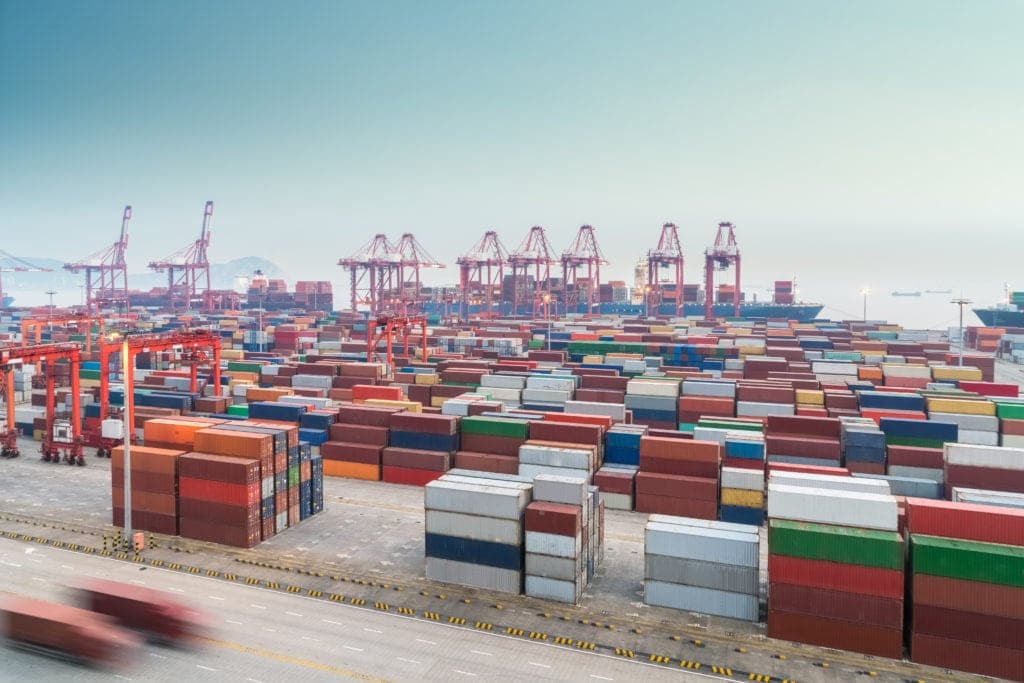
an image of a port where metal tariffs will likely have a massive impact.

New tariffs on foreign materials are likely going to affect industries that employ millions of Americans.

The proposed metal tariffs were submitted by Commerce Secretary Wilbur Ross, effectively giving the president three options to choose from as per Ross’ recommendations. The first option is the broadest and most sweeping, in which Ross recommends the president impose tariffs of 24% on all steel and 7.7% on aluminum imports from all countries. The second is far more specific in whose imports are tariffed the hardest, with Ross’ recommended tariffs of 53% on steel imports from 12 countries, including China, Brazil, and Russia, and tariffs of 23.6% on aluminum imports from China, Hong Kong, Russia, Venezuela, and Vietnam. Ross has gone so far as to supplement these tariffs alongside quotas. Finally, the third option Ross has laid out will impose a quota on steel and aluminum imports from all regions, which will limit countries to 63% of the steel and 86.7% of the aluminum that each had shipped to the United States last year.

The Fear Following Metal Tariffs

While it is surmised that these metal tariffs will prompt a reinvestment into the US metals manufacturing sector, some experts believe the shift could earn the ire of many US trading partners. What if, as some economics and trade experts argue, China decides to place tariffs on US semiconductors or India on food imports from the US? Retaliation is the biggest fear according to these specialists beyond the notion that the tariffs will upset the current climate of international trade. Not to mention, most of the US metals importuning comes from valued trading partners and allies not targeted specifically by Ross’ proposed tariffs, like Canada.

US Metal Manufacturing

In the last 18 years, nearly the same number of aluminum smelters have closed their facility doors in the US. Currently, there are only two aluminum smelters running at capacity, with three others in the US operating at partial capacity. On the other hand, steel has enjoyed a bit of a bounce back. Market leaders in metals, like Alcoa and Nucor, are optimistic at the possible shit as it will likely inject US metals manufacturing with some desperately needed vigor. Share prices of US steel and aluminum smelters have surged following the announcement of the proposed tariffs. However, the rally may be premature if the president decides to explore an alternative route in addressing the undermining of domestic metals production.

Nevertheless, Alcoa has announced plans to restart a smelter in southern Indiana by mid-2018. Southeast Missouri may find one if its dormant smelters resurrected, pending negotiations of an electrical supply contract with local utility company Ameren Missouri. While the news for metals manufacturers leaves room for optimism, the state of metals manufacturing has been sorely outpaced by producers like China, which operate many modern facilities that make the processes cost effective. Without significant modernization efforts on top of the revitalization of metals manufacturing in the US, the long-term efficacy of these efforts remains to be seen.

The State Of US Robotics In The Face Of Metal Tariffs

When it comes to the robotics manufacturing industry, the US is a global leader in the field. Innovating creations in every sector from defense and medical applications to the automated manufacturing of confections, the state of robotics has never been more fruitful for the US. However, robotics is an industry that relies heavily on the supply of steel and aluminum as the two metals make up the bulk of manufacturing materials in building robots and robotic components.

The tariffs could significantly increase the costs of innovation at while production gains momentum among competitors abroad. Elsewhere in the world, US competitors in robotics will likely continue to make headway and possibly outpace the US manufacturers forced to adapt to a much different landscape when it comes to materials availability. The imposing of tariffs could additionally upset last year’s optimistic forecast that the metal fabrication robotics market is set to grow at a compound annual growth rate (CAGR) of 18.5% over the next three years.

How Brewers And Canners Are Affected By Metal Tariffs

Breweries and canned food companies are two more industries that are expected to be affected by the move, as they rely heavily on imported metals for the packaging of their products. The resulting tariffs, if accepted will not only raise the prices of canned goods but could significantly increase the cost of beer should breweries decide to abandon canning altogether and go to the bottle.

The two different packaging systems require entirely different mechanical apparatuses, which cost tens if not hundreds of thousands of dollars to implement operate and maintain for brewers. The result is a more costly six-pack, despite what the container is made of.

About Encompass Solutions

Encompass Solutions is a business and software consulting firm that specializes in ERP systems, EDI, and Managed Services support for Manufacturers and Distributors. Serving small and medium-sized businesses since 2001, Encompass modernizes operations and automates processes for hundreds of customers across the globe. Whether undertaking full-scale implementation, integration, and renovation of existing systems, Encompass provides a specialized approach to every client’s needs. By identifying customer requirements and addressing them with the right solutions, we ensure our clients are equipped to match the pace of Industry.