Every manufacturer’s goal is continued growth and sustained profitability. To achieve this, those primarily in the robotics and automation industries strive to cultivate client loyalty, develop high-quality products, and endure disruption in volatile global markets.
Therefore, Enterprise Resource Planning (ERP) software is an invaluable asset in modern manufacturing. This software enables manufacturers to meet their complex needs by providing the tools they need to streamline operations, extract valuable information from data, and uphold fruitful business relations with partners and clients.
Competitive Benefits of ERP Software
Robotic component manufacturers of all sizes are increasingly contemplating what they should modernize first now that digital transformation is a reality, and ERP is frequently considered a high-priority choice for tech adoption.
An ERP solution offers a complete set of supply chain management tools that go far beyond supplier relationship management tools. These tools include:
- Purchase Management
- Inventory Management
- Manifesting and Freight Management
- Supplier Connect
- Warehouse Management
- Advanced Material Management
An ERP system enables you to manufacture more effectively than your industry rivals, resulting in higher profit margins and a surefire competitive advantage. Here’s how:
Well Managed Manufacturer-Supplier Relationship
Small and medium-sized manufacturers frequently depend on outside suppliers to provide specific parts for manufacturing operations, which prevents them from being self-sufficient. The immediate issue is that if a manufacturer’s sole supplier of parts fails or is incapable of providing what is required, production stops, and the company is unable to fulfill orders.
Companies must adopt a systematic sourcing strategy to maintain profitability and efficiency at their peak. The supplier relationship tools provided by ERP software make this job easier for the manufacturer.
Some of the advantages realized from supplier relationship tools include:
- Lower Cost: Dealing with new suppliers can be costly; however, a supplier relationship management program can often reduce or eliminate those costs.
- Consolidated Supply Chain: The more the manufacturer and supplier are aware of one another’s businesses, the more likely they collaborate.
- Continuously Enhanced Operations: Suggestions and feedback shared between a manufacturer and supplier will help streamline the supply chain, cut costs, and improve customer service simultaneously.
- Outsourcing Activities: ERP’s supplier relationship tools bring about trust. This enables the organization to permanently delegate to the supplier non-core tasks like maintaining inventory and providing customer support.
Enhanced Automation of Processes
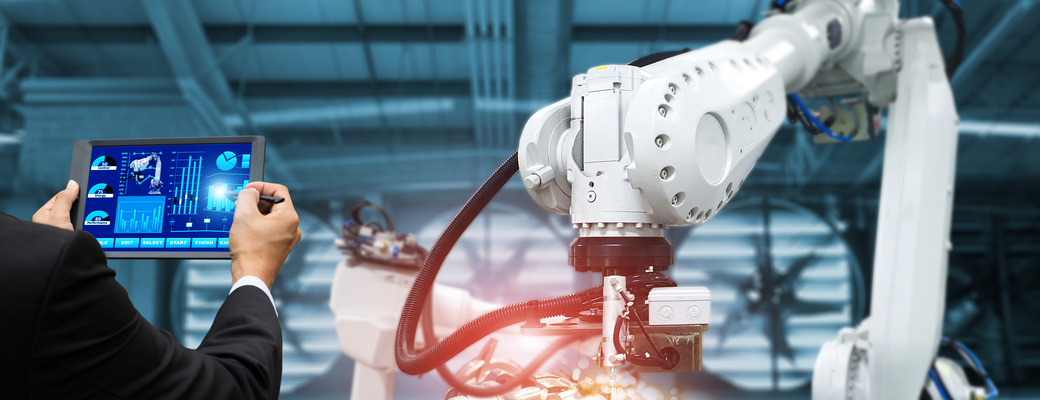
Spreadsheets with user-entered data previously went hand in hand with past ERP systems. Modern ERP software connects to technologies like robots and Internet of Things (IoT) sensors via the internet. This seamless integration enables automatic, real-time data capture and processing to identify business needs proactively.
Robots improve ERP’s strengths of automating repetitive tasks and incorporating transactions between various departments but also eliminate human intervention necessary for data entry and routine departmental follow-ups.
For instance, in the past, automation enabled automatic reordering whenever stocks reached a predetermined level, but it still required an employee to manually input changes in the inventory level. With current ERP systems, however, modern robotics constantly monitor inventory levels and automatically transmit real-time data to all business operations.
Modern ERP systems receive real-time data from IoT sensors as well. They can continuously gauge motion, acceleration, pressure, proximity, water, temperature, and other variables that can be measured remotely. The data is autonomously entered into the system, and the relevant departments are alerted.
Employees can handle more productive tasks that directly contribute to achieving the company’s goals by integrating robots and IoT technologies into present-day ERP systems. Additionally, it lessens accidental double entry and human error, saving time and lowering operating expenses.
Improved Performance and Productivity
Manufacturers are acquiring faster and more detailed insights into their production line operations by relying on real-time data from enterprise resource planning. In addition, they can identify which aspects of availability, performance, and quality significantly impact productivity.
By analyzing production processes and cycles, ERPs help you better understand how your organization operates. As a result, you’ll realize which operations on the factory floor need to be changed to boost productivity and get more out of your production line.
Likewise, an ERP will provide you with production statistics such as worker productivity and machining time, improving your performance metrics and providing a new perspective to your organization.
Further, what previously required hours of careful data collection and report creation can now be completed automatically with an ERP. To maximize the capacity of your plant and boost throughput, you can use this information to optimize your plant’s equipment, workforce, and production schedules.
Boost in Business Efficiency
To increase efficiency and profitability and address labor issues manufacturers are automating processes and integrating robotics. This is driving a need for more Make-to-Order (MTO) and Engineer-to-Order (ETO) Robotic Solutions necessary for customization and streamlining production.
According to a recent ERP study, an impressive 49% of organizations in the survey stated that implementing enterprise resource planning in their business drastically improved all business processes. In comparison, only 5% didn’t realize its benefits.
Enterprise resource planning gets its name by emphasizing unifying business processes into a single system, eliminating redundant, unnecessary, and isolated processes. With ERP, businesses can organize their departments company-wide and prevent common inefficiencies caused by departmental isolation by integrating every computer system of an organization, including sales, human resources, planning, finance, marketing, and more.
How Automation Addresses Labor Shortage
In the era of Industry 5.0, automation is one of the most efficient tools for increasing manufacturers’ productivity. Through ERP software, manufacturing automation is combined with cutting-edge technologies like robotics and robotic process automation to further boost productivity.
Manufacturers are automating and integrating robotics to drive efficiency and profitability and solve labor issues. Automation solves the labor shortage problem by:
- Improving retention and cutting recruitment costs
- Increasing production while improving safety
- Freeing the workforce for less repetitive tasks
- Increasing production quality
Download our Free Epicor Kinetic Catalog for Manufacturing
Invest in the knowledge you need to accelerate business momentum and growth while future-proofing your manufacturing operations. In our Free Epicor Kinetic Catalog for Manufacturing, learn how to unlock cloud ERP’s true potential and manufacturing expertise to boost your business’s growth and profitability.
Our Epicor Kinetic Catalog is built with you, for you. Trust our expertise to maximize your capabilities to compete, scale, and recruit top talent!