Encompass Solutions is a business and software consulting firm that specializes in ERP systems, EDI, and Managed Services support for Manufacturers and Distributors. Serving small and medium-sized businesses since 2001, Encompass modernizes operations and automates processes for hundreds of customers across the globe. Whether undertaking full-scale implementation, integration, and renovation of existing systems, Encompass provides a specialized approach to every client’s needs. By identifying customer requirements and addressing them with the right solutions, we ensure our clients are equipped to match the pace of the Industry.
Encompass Solutions is a business and software consulting firm that specializes in ERP systems, EDI, and Managed Services support for Manufacturers and Distributors. Serving small and medium-sized businesses since 2001, Encompass modernizes operations and automates processes for hundreds of customers across the globe. Whether undertaking full-scale implementation, integration, and renovation of existing systems, Encompass provides a specialized approach to every client’s needs. By identifying customer requirements and addressing them with the right solutions, we ensure our clients are equipped to match the pace of the Industry.
Encompass Solutions is a business and software consulting firm that specializes in ERP systems, EDI, and Managed Services support for Manufacturers and Distributors. Serving small and medium-sized businesses since 2001, Encompass modernizes operations and automates processes for hundreds of customers across the globe. Whether undertaking full-scale implementation, integration, and renovation of existing systems, Encompass provides a specialized approach to every client’s needs. By identifying customer requirements and addressing them with the right solutions, we ensure our clients are equipped to match the pace of the Industry.
Encompass Solutions is a business and software consulting firm that specializes in ERP systems, EDI, and Managed Services support for Manufacturers and Distributors. Serving small and medium-sized businesses since 2001, Encompass modernizes operations and automates processes for hundreds of customers across the globe. Whether undertaking full-scale implementation, integration, and renovation of existing systems, Encompass provides a specialized approach to every client’s needs. By identifying customer requirements and addressing them with the right solutions, we ensure our clients are equipped to match the pace of the Industry.
Encompass Solutions is a business and software consulting firm that specializes in ERP systems, EDI, and Managed Services support for Manufacturers and Distributors. Serving small and medium-sized businesses since 2001, Encompass modernizes operations and automates processes for hundreds of customers across the globe. Whether undertaking full-scale implementation, integration, and renovation of existing systems, Encompass provides a specialized approach to every client’s needs. By identifying customer requirements and addressing them with the right solutions, we ensure our clients are equipped to match the pace of the Industry.
The Gartner Magic Quadrant for Cloud ERP is an annually published report that outlines the research organization’s perspective on the best software available. This year, Epicor Software again received designation as a visionary in the category of Cloud ERP for Product-Centric Enterprises.
The published report is free to download for anyone interested in learning more about Epicor Software and other Cloud ERP vendors.
You can download the Gartner Magic Quadrant for Cloud ERP for Product-Centric Enterprises report HERE.
Epicor ERP Cloud
Epicor ERP Cloud is a secure, economical, efficient, and reliable enterprise resource planning (ERP) system.
The solution provides businesses with flexibility and comprehensive support. It helps manufacturers simplify processes, optimize operations and ease IT responsibilities.
For example, Epicor Cloud ERP delivers a 99.5% or greater uptime.
Aerospace and defense manufacturer Wipaire leverages the benefits of Epicor Cloud ERP to free up resources and reduce costs.
The company enjoys real-time access to information, which delivers higher cost efficiency and better time management.
Wipaire Controller Mike Elrod commented about their choice to use Epicor ERP, “We chose to deploy in the cloud because it offered flexibility and cost savings and we no longer need to maintain in-house servers or equipment.”
Epicor ERP is built to scale alongside manufacturers as they grow and depend on better tools to deliver the results and experience their stakeholders and customers expect.
With Epicor Cloud ERP, businesses are better equipped to compete, thrive, and grow by harnessing data and implementing automation to improve productivity and profitability.
“We believe Epicor’s spot in the Visionaries quadrant proves that we are a cloud vendor of choice in the markets we serve and that our cloud ERP software is providing customers with the tools they need to succeed in today’s mid and enterprise markets,” said President Himanshu Palsule. “Our customer base is large, incredibly loyal, and actively engaged, and we will continue to foster those relationships to address and prioritize their feedback in future product updates so that our customers can push ahead of their competitors and can focus on business resiliency rather than IT administration.”
Placement in the Visionary quadrant validates Epicor’s ability to provide businesses with the best ERP solution. Read the Gartner Magic Quadrant for Cloud ERP for Product-Centric Enterprises report HERE to learn more.
Encompass Solutions is a business and software consulting firm that specializes in ERP systems, EDI, and Managed Services support for Manufacturers and Distributors. Serving small and medium-sized businesses since 2001, Encompass modernizes operations and automates processes for hundreds of customers across the globe. Whether undertaking full-scale implementation, integration, and renovation of existing systems, Encompass provides a specialized approach to every client’s needs. By identifying customer requirements and addressing them with the right solutions, we ensure our clients are equipped to match the pace of Industry.
The article “It’s 2020 — Should Business Owners Fear The Cloud?” was written by Epicor Software Corp. CEO Steve Murphy and published by Forbes on March 2, 2020. You can read the original article here.
The cloud. It’s a small word that packs a big punch. Defining what a cloud is can confuse some while implementing it raises concerns for others.
We should consider three key factors as we continue into a new decade and business owners ask if they should fear the cloud: privacy, interoperability, and cost.
But first, what is the cloud, and why are businesses migrating to this solution?
Essentially, the cloud is a delivery method for your software. It’s a network of servers that are linked together and operate as a single system. The cloud can perform a variety of functions (e.g., storing data, running applications, delivering content, etc.), and you can access it online. There are both public and private cloud options. The biggest difference with the cloud is what it doesn’t require. You don’t need any hardware or networking gear on-site – all you need is a tablet or a phone to run the software.
One of the major reasons I believe cloud adoption continues to grow is the flexibility and productivity enhancements it offers. As the CEO of a company that offers cloud platforms, I’ve found that these features are particularly attractive for business owners looking to build resiliency in the face of unpredictable trade wars and other geopolitical changes. Business owners often look to business management software to provide stability. According to Goldman Sach’s 2020 review (via CNBC), 23% of IT workloads are now in public clouds.
So, should business owners fear the cloud when it comes to privacy, interoperability, and cost?
Should I fear privacy in the cloud?
There is no denying privacy is a major concern when it comes to data. Data breaches continue to increase, as does the projected production of data. To keep pace, both software solutions and IT departments will have to up their game.
First, I’ll share the bad news. According to Hiscox’s 2019 Cyber Readiness Report, most businesses are unprepared for cyber threats. In fact, in the U.S., 73% of businesses are “novices” at cyber readiness.
The good news, however, is that the public cloud has proven safer than on-premise data center environments. Specifically, Gartner found that “to date, there have been very few security breaches in the public cloud” and that “through 2020, public cloud Infrastructure as a Service (IaaS) workloads will suffer at least 60% fewer security incidents than those in traditional data centers.”
If you decide to move to the cloud due to these safety findings, you should still be mindful of cloud vulnerabilities. Take stock of what kinds of sensitive information you are putting in the cloud, and ensure you understand how the cloud provider will protect that data. The time needed to safely migrate systems and data can be lengthy, but it shouldn’t be rushed at the expense of security infrastructure. Select a provider who prioritizes security during the migration process and who has a solid reputation for getting the configuration right, and communicate with your team so that they understand the migration timeline and can manage their expectations.
Regardless of your software solution, privacy issues will continue to be a concern. One of the most important things business leaders can do is ensure they have a crisis management protocol in place if and when a breach should occur.
Should I fear cloud interoperability challenges?
I have great news on this front. There have been major strides toward interoperability. Multiple systems can exchange and use information easier than ever before. This is due to a variety of reasons: Many application programming interfaces (APIs) continue to get better, standards continue to improve, and, notably, I see tech giants such as Google, Amazon, and Microsoft Azure frequently expand the universe of applications that can easily be put in their clouds. I believe their efforts have significantly moved the needle.
While interoperability isn’t perfect, there’s a lot of upward momentum. I expect that to progress.
Should I fear the cost of the cloud?
If you’re a business owner and you aren’t sure cloud makes sense for you from a cost perspective, ask yourself if you have a good grip on how much it costs to have your own data center in your business. Do you already have the IT skills in-house to run your system? If so, the cloud may not make sense.
However, many business owners are surprised to find that their IT operations cost them a lot more than they think and that implementing cloud solutions can save them both time and money when it comes to issues such as automatic upgrades (which keep your company current and competitive), labor and maintenance costs, or increases in workforce productivity, to name a few.
Just remember that the decision between on-premise and cloud will be unique for each business. When you’re evaluating your IT operations cost, ask yourself how scalable you need your solution to be in the future. How adept is your IT department at staying up to date with evolving technology? Will you need additional data storage, and do you have the physical space to accommodate an expansion of your on-premise data center? Do you need access to data on the go? If a natural disaster hits your business, how will you back up your data?
What it comes down to is the total current cost of your on-premise data center versus a cloud solution. For business leaders who are still on the fence about expenses, make sure you evaluate your options regularly. Cloud providers will have to continue to be cost-competitive, which could work in your favor.
Bottom line: Don’t fear the cloud. It could be a safer option than on-premise data. Its interoperability continues to improve. It can be highly effective at increasing productivity. It can save you money long-term. And the cloud will likely continue to improve over time. The year 2020 may be the one for you to move forward with implementation.
Encompass Solutions is a business and software consulting firm that specializes in ERP systems, EDI, and Managed Services support for Manufacturers and Distributors. Serving small and medium-sized businesses since 2001, Encompass modernizes operations and automates processes for hundreds of customers across the globe. Whether undertaking full-scale implementation, integration, and renovation of existing systems, Encompass provides a specialized approach to every client’s needs. By identifying customer requirements and addressing them with the right solutions, we ensure our clients are equipped to match the pace of the Industry.
Businesses of every size contend with keeping the availability of materials, components, products in sync with their rate of production and customer demand. Finding the balance between these factors is, at a high level, the core concept of inventory management.
Why Inventory Management Important
As a business digs deeper into the specifics of inventory management, it will refine its goals. This includes all the additional details that make the process more efficient. Suffice it to say, good inventory management goes beyond the weight, dimensions, quantity, and location of items.
At a foundational level, your business will need a system of categorization to manage inventory. This also requires a means of interacting with this system when adding, removing, and identifying items.
Your system may require software and interactive technologies. These technologies can include computers, barcoding hardware, and scanners.
Knowing what you have in inventory and where is only one part of the equation. Forecasting demand to inform a business of when to replenish stock or when to buy more materials to manufacture those products is just as essential.
By ensuring that warehouse space is used efficiently and in sync with the rate of sales and replenishment, the cost associated with goods held in inventory is kept to a minimum.
In a broader sense, Inventory management is the component of your business’ supply chain that keeps material flowing into and out of your facility.
This is kept by production processes and customer demand.
Inventory Management Principles
Suppliers may experience fluctuations in the ability to fulfill POs and global events may shake up availabilities across the board. However, you can keep your own house in order with inventory management best practices.
For example, keeping a detailed record of products as they enter and leave your warehouse provides visibility to your business needs. This ensures you can deliver on customers’ and supply chain partners’ requirements at any given time.
Businesses of every size use inventory management principles to manage their flow of goods. However, there is no defined set of guidelines that all businesses can look to for the answers.
The best inventory management strategies will change from business to business, but generally accepted best practices can be applied in almost every case.
Identifying the right set of guidelines for your mode of operation will ensure you can deliver the right goods in the right quantities to your customers at the right place and time.
The Difference Between Inventory Management And Inventory Control
While these terms may seem the same at face value, they are generally not considered interchangeable.
A strong inventory management system ensures a business can source, store, and sell materials or finished goods in such a way that yields a consistent and dependable profit for the business overall. Good inventory management is a sustainable practice.
Inventory management follows a structure of thought as a business principle. It is an overarching set of concepts that address a larger business model.
Inventory Control is housed, pun-intended, within the larger concept of inventory management. Inventory control is focused on maintaining visibility and understanding of the materials and their flow. Namely, where and how much inventory can be found on-hand and readily accessed in a retail location, stockroom, or warehouse.
Why Inventory Management Is Important
Global supply chains are complex and in a state of constant ebb and flow.
Manufacturing processes that utilize raw materials and components are also changing continually according to customer demand, specification, and regulatory requirements.
In short, what is available today may not be available tomorrow. However, there are usually indicators of when a supply shortage may be looming or new regulations will be coming into effect.
Keeping up with these constant changes is more than simply difficult, it’s outright unnerving and even chaotic at times. Being stuck with an abundance of stock that can’t be used, spoils, or becomes obsolete can cost a considerable amount of capital, running a business well into the red. This is where the balancing act of inventory management becomes so critical.
The costs of carrying goods can be considerable. For this reason, many organizations seek to refine and optimize their methods for ensuring they have just enough material on hand to deliver on anticipated production levels or sales.
Streamlining inventory management will keep inventory levels low, which keeps costs sunk into stock on hand to a minimum. Furthermore, lower stock levels will ensure less space is required to match material requirements to production levels. With less space required, facilities can be kept to a more manageable size and minimize warehouse leasing costs.
How You Can Implement Best Practices
Fortunately, for many decades, businesses have been refining how they bring stability to the unpredictable world of global supply chains, manufacturing processes, and inventory management.
As part of those efforts, two major philosophies of inventory management have emerged as the most widely accepted and utilized: Just-In-Time (JIT) and Material Requirements Planning (MRP). Both instances have their benefits and drawbacks. We go into more detail in dedicated articles on JIT and MRP inventory management strategies.
Technology And Software
Beyond JIT and MRP inventory management, there are several technologies and software that make the process of managing inventory easier for businesses, staff, supply chains, and customers.
ERP software is one such technology that delivers all the critical data needed to inform demand forecasting and purchasing, whether a business is based in manufacturing or wholesale and distribution.
Inventory management data housed within the ERP system is accessed and reported digitally, while also easily sharable for key stakeholders and managers to use in their decision-making processes.
Encompass Solutions is a business and software consulting firm that specializes in ERP systems, EDI, and Managed Services support for Manufacturers. Serving small and medium-sized businesses since 2001, Encompass modernizes operations and automates processes for hundreds of customers across the globe. Whether undertaking full-scale implementation, integration, and renovation of existing systems, Encompass provides a specialized approach to every client’s needs. By identifying customer requirements and addressing them with the right solutions, we ensure our clients are equipped to match the pace of the Industry.
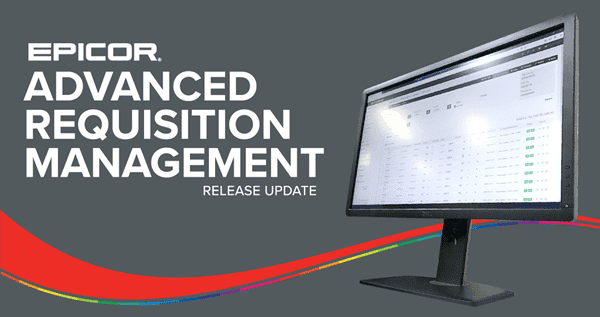
The latest update for Epicor ARM (Advanced Requisition Management) has been released as Epicor ARM 10.3 SP7. The developer, Precise Business Solutions, is an Independent Software Vendor (ISV) creating Epicor ERP solutions and more tools dedicated to minimizing waste and maximizing efficiency for small and medium-sized businesses.
What is Epicor Advanced Requisition Management?
Epicor Advanced Requisition Management (ARM) is online requisition management and workflow solution designed to deliver full-cycle procurement functionality securely to your organization’s desktops or mobile devices. ARM’s real-time budget visibility empowers your company to make informed purchasing decisions, while consolidated purchase orders allow you to negotiate contract pricing with your suppliers-ultimately reducing costs and maximizing efficiency across your entire enterprise.
Solution Benefits
Epicor Advanced Requisition Management (ARM) is an online solution for managing the cycle of requisitioning, ordering, and receiving. Benefits include:
Reduce purchasing costs and effort
Improve communication internally and with vendors
Assign preferred suppliers or default supply locations
Gain visibility of the purchasing process
Features
The web browser-based application allows easy deployment throughout the enterprise and facilitates the entire requisition process electronically-from requisition submission through to purchase order creation and optional distribution to vendors.
Epicor ARM automates and streamlines the procurement process, utilizing a web browser to integrate with and extend the Epicor Supply Chain Management module. Multiple approval methods provide a flexible framework that can be configured to meet the requirements of any organization.
Epicor ARM 10.3 SP7
In addition to features incorporated as part of the Epicor ARM scheduled product roadmap, the updates in this release have been influenced by requests received from Epicor ARM customers.
Epicor 10.2.600 compatibility, enhanced attachment capability, and support for multiple invoices against a single purchase order receipt are just some of the features we have incorporated in this release to enhance your overall ARM experience.
An overview of some of these enhancements is outlined below.
New features and enhancements in Epicor ARM 10.3 SP7
E10.2.600 Compatibility (E10) – ARM 10.3.7 is compatible with E10.2.600.
Split BIL for APM and non-APM Environments (E10) – ARM has now split BIL with one version supporting APM and the other supporting non-APM environments. Choose the appropriate version when installing this product in your environment.
Support Edit Tax at Line level in AP Module (E10) – This is a ‘Manual Tax Override’ function that enables you to edit and override the tax on the line. Note that the line tax will be reset to the default values when copying the Invoice.
Support Project, Phase, and Cost Code (APM) in AP Module (E10) – AP Invoice and Debit Memo now support Project, Phase, and Cost Code (APM).
Support Hold Invoice and Hold Payments in AP Module (E10) – When selected, the ‘Hold Invoice’ check box represents a hold status on the entire Invoice. If you post a group that contains an Invoice on hold, this Invoice will not be posted. You will need to clear this check box and then re-post the group. When selected this check box also indicates that payments will not be made against the Invoice. ARM only enables this check box functionality in the time before the AP document is approved.
Support PO Receipt Attachments (E10) – Users can now attach a receipt document when entering PO receipts. ARM receipt attachments will not be integrated into Epicor at this time.
Support Receipt Attachment Visibility in AP Approval (E10) – In addition to the support for PO Receipt Attachments (above), ARM also supports the ability to view the Receipt Attachments during the AP Approval process.
Original Order Value on AP Invoice (E10) – Some new read-only fields have been added to the AP Invoice screen. The Ordered field shows the original value of the order raised. The Un-receipted field shows the value of the line that is not received yet.
AP Invoice Filter Settings Enhancement (E10) – The AP Search filtering criteria are retained for each ARM user.
Support Multiple Invoices Against a Single PO Receipt (E10) – ARM now supports partial Invoices for a single Purchase Order receipt. After adding a PO Receipt line to an AP Invoice, a new check box entitled ‘Final’ is shown on the main Invoice screen. When ticked, this action indicates the line is finished with Invoicing stage. To perform partial Invoicing the AP documents need to be within the same Invoice Group. When the first partial Invoice is created and approved, it will move from the ARMUNAPP Group to the nominated Invoice Group. If a second Invoice is raised, an error will be shown in ARM due to the two Invoices present in different Groups. Therefore, the first Invoice will require posting in Epicor to proceed with creating any subsequent Invoices. This functionality requires configuration in Epicor. Go to Company Configuration> Modules> Finance> Accounts Payable and enable the ‘Allow Multiple Invoicing of Receipts’ check box.
AP Invoice Search Results Set and Export (E10) – The Export feature now includes the Vendor name and Invoice Date on the export file.
AP Approval Process Enhancement (E10) – A new <Next> button feature has been added to the AP document screen. This allows the user to move and load the next AP document from the AP Search results.
Punchout Enhancement (E10) – The PunchOut processing has been altered to conform with the SameSite cookie policy that was introduced in newer versions of Google Chrome and Microsoft Edge browsers.
Epicor ARM 10.3 SP7 is compatible with Epicor 10, Epicor 9.0.5, and Enterprise 7.4 SP7.
Users upgrading to Epicor ARM 10.3 SP7 should note the following:
If you are upgrading from ARM versions 10.0 SP6, ARM 10.1.0, or ARM 10.1 SP1 – SP4, you must run the Upgrade Manager to migrate data so that it will be compatible with the enhanced approvals process that was introduced in ARM 10.1 SP6.
If you are upgrading from ARM 10.1 SP5 (or above) you do not need to run the Upgrade Manager to migrate your data as it will already be compatible with the enhanced approvals process (introduced in ARM 10.1 SP6).
Users upgrading to this version should perform a full synchronization on the GLAccountDefinition and GLAccount jobs within the Integration Manager
Spotlight on ‘Blanket Order’ functionality
Two common questions we receive are “What is a blanket order?’ and “Can I use it for the ordering of maintenance and repair services?”
‘Blanket Orders’ go by a few names – sometimes called ‘blanket purchase agreements’ or ‘call-off orders. These orders allow an organization to create a requisition for a contracted amount with a supplier, to be consumed over some time. Expenses can then be ‘drawn down from this approved amount incrementally, as required. This makes it very convenient for utilities and services-related expenses, where the exact amount cannot be known in advance.
Epicor ARM Blanket Order Demonstration
To see how ARM Blanket Order functionality works, click the demonstration video below:
An award-winning and market-leading provider of ERP software solutions. Precise provides global software solutions, coupled with local business expertise. Precise is a leading provider of business software solutions and associated services to the Australian and international marketplace. A wholly-owned Western Australian company, Precise has been in business since 1989. Over the last 25 years, Precise has assisted organizations to maximize efficiencies and gain a competitive advantage. Precise Business Solutions is also the developer of integrated companion solutions for Epicor ERP – Epicor Advanced Requisition Management (ARM) – Precise Point of Sale (POS) These solutions are distributed worldwide through their alliance partner Epicor Software Corporation. Precise continues to be a market leader in implementation, support, and services. Partnering with their customers to help them be the best they can be, has always been Precise’s primary focus.
Encompass Solutions is a business and software consulting firm that specializes in ERP systems, EDI, and Managed Services support for Manufacturers and Distributors. Serving small and medium-sized businesses since 2001, Encompass modernizes operations and automates processes for hundreds of customers across the globe. Whether undertaking full-scale implementation, integration, or renovation of existing systems, Encompass provides a specialized approach to every client’s needs. By identifying customer requirements and addressing them with the right solutions, we ensure our clients are equipped to match the pace of the Industry.
The Epicor ERP 10.2.600 update is the first of two Cloud release upgrades planned for 2020. This is a major update that brings greater usability, performance, and strategic value in a single upgrade.
Epicor ERP 10.2.600 Highlights
As with past releases, the breakdown of what’s been added has been categorized into four major components: Experiences, Industry, Cloud and Analytics, and Global updates.
Epicor ERP 10.2.600 Experiences Updates
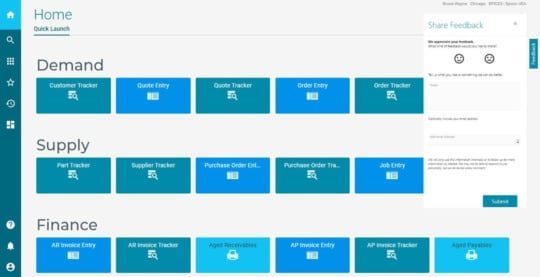
Epicor ERP Kinetic Dashboards and Trackers
Epicor ERP Kinetic Application Studio
Kinetic Help and Support Panel
Epicor Collaborate Phase 2
EVA Skills
Kinetic Highlights For Epicor ERP 10.2.600
184 reports and processes
20 Trackers (Located on a new Trackers – Kinetic menu)
Ability to deploy dashboards to Kinetic UI
Ability to create BAQ Reports in Kinetic UI
Ability to personalize and customize Kinetic forms
Epicor Application Studio (version 1)*
Enhancements to Kinetic Home Page
Kinetic App Maintenance*
Kinetic version alert banner*
*coming in 10.2.600.2
Refer to Release Notes for a cumulative list of Kinetic forms.
Kinetic Help and Support Panel
One-click access to videos, articles, and guided learning
Context-sensitive results
Easy access to Epicor Learning Center, EpicCare, and EpicWeb
Display field help
New In-App Feedback
Give Epicor your direct feedback
Not a replacement for Support calls
Epicor Collaborate
Cloud-based, collaboration solution within Epicor ERP
Simple, intuitive experience
New in 10.2.600:
• Editing, sharing, flagging and tagging messages
• Creating groups to make communication easier, including private groups
• Creating custom notification rules
• Designing BPM workflows to post notifications to Collaborate
• Integrations with EVA, EDD, IoT, and Microsoft Teams
• Support for 11 additional languages
Epicor Virtual Agent (EVA)
Conversational digital agent
EVA is enhanced with new skills each release:
• Collaborate API – @EVA user posts message to a Collaborate group or individual
• Return Material Authorization (RMA) Skill – “Create RMA for X pieces of [part] to [Customer]”
Available for iOS and Android
Epicor ERP 10.2.600 Industry Updates
Epicor Financials Enhancements
Epicor Quick Ship
Epicor Cash Collect
DocStar ECM 2020.1
Epicor AMM PCID Transfers
Epicor ERP Core Financial Enhancements
Centralized AR collections
AR/AP netting settlement
AP invoice cancellation
AR/AP invoices-WHT timing option through interim accounts
Epicor Quick Ship (Manifest)
Cloud enablement on Microsoft Azure
Data mapping tool
New carrier integrations with:
• CH Robinson’s freightquote.com
• Canadian carriers Loomis and Canada Post
Epicor Cash Collect
User-friendly Customer Portal empowers businesses to better serve their customers
New Communications Assistant enables collection representatives to record, transcribe and store calls
Document Creation gives users a PDF print driver that enables printing a batch of invoices
Advanced Workflow allows the ability to create custom workflows within Epicor Cash Collect
Epicor Data Analytics Financial Reporting
Replaces Advanced Financial Reporting with a modern, cloud-based BI and analytics solution
All-in-one easy-to-use solution
Robust financial reports such as financial statements, balance sheets, and cash flow reports in a pre-packaged format
Offers Financial Planning and Analysis (FP&A)
Device-agnostic
Epicor Advanced Project Management
Provides integrated project management for customers with modules for:
• Project Contracts
• Project Accounting
• Project Subcontracts
Simplifies and streamlines the contract management process and tracks at the sub-ledger level
DocStar Enterprise Content Management 2020.1
Provides automation to route and process business documents more efficiently, faster, and more accurately
Integrates to Epicor ERP for storage of documents and attachments, pre-built automated processing of documents for sales order entry and accounts payable
New features include AP Automation enhancements, integration with Epicor ERP identity, supporting multi-factor authentication, and new Kinetic screens
Package Control Identification Transfers
Reserve and allocate Advanced Materials Management PCIDs for sales orders
Enables customers to supply multiple sites with raw materials from a central location
Allow a customer to receive a single PO line or job info multiple PCIDs in a single transaction
Epicor ERP Public Cloud Multi-region Multi-company Transactions
Run Epicor ERP in multiple company locations from any geography, in the cloud or on-premises
Enable intercompany transactions such as purchasing, sales orders, and reporting across multiple databases
Roll out a cloud strategy in phases, meet local requirements, and gain global visibility and alignment
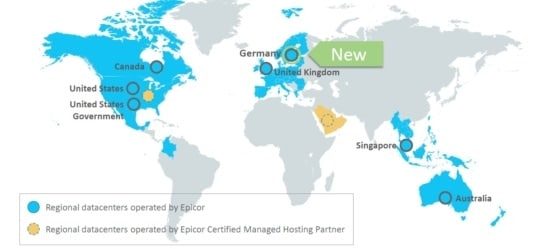
Epicor ERP Cloud Regions
Epicor Cloud Communication
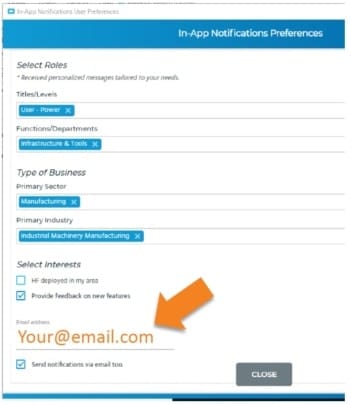
The email address on the In-app user profile is now where you enter your preferred communication email address
Need to update your notification preferences?
Access your profile from the System Monitor -> Action Menu
Epicor ERP 10.2.600 Global Updates
Country-Specific Functionality updates
Epicor Electronic Reports
Epicor Country Specific Functionality
Countries providing updates for:
China
Colombia
France
Germany
India
Indonesia
Malaysia
Mexico
Netherlands
Norway
Poland
Portugal
Sweden
Taiwan
Thailand
UAE
UK
and all countries in the European Union (EU) with support for the EORI (Economic Operators Registration and Identification) number.
Epicor Electronic Reports
Prepare electronic reports for third-party organizations
Work efficiently with advisory companies and auditors
Leverage simple e-invoicing
Strengthen your global business management with legally required electronic reports
Timeline for 10.2.600
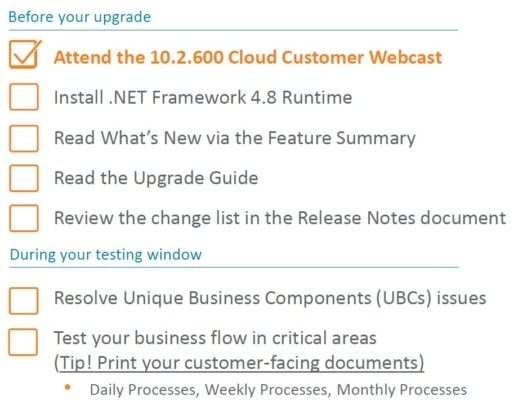
Preparation Checklist
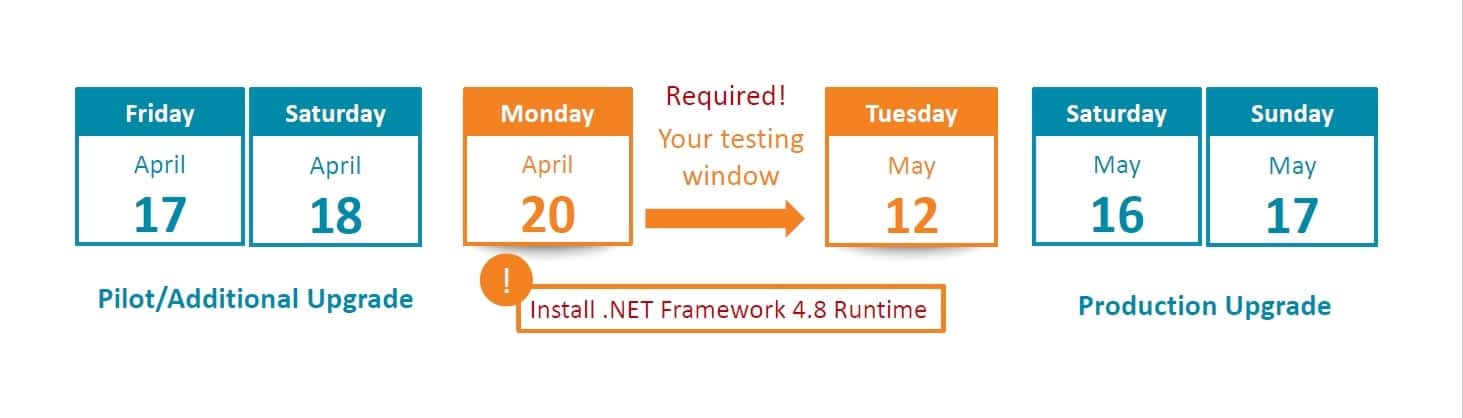
Pilot/Additional Env Upgrade Weekend
Pilot/Additional Systems offline Friday 12:01 AM local data center time
Not able to log in during upgrade process
Timeline
For live Public Cloud customers: We start copying your Production data to Pilot on Wed April 15 at 8:00 PM CDT and through Thurs
For MT, Express: We start copying your Production data to Pilot on Thurs at 8:00 PM CDT
Additional environments are not auto refreshed
When upgrades are complete, your users can login
Download happens automatically
No changes to Users \ menu \ permissions
10.2.600 in the Pilot system available for testing on Sunday, April 19
Production Upgrade Weekend
Production System offline Saturday 12:01 AM local data center time
Not able to log in during upgrade process
Approximate time for an upgrade 4-10 hours once your upgrade has started
During this time the Epicor Cloud Ops team will…
Upgrade your Production
Install UBCs solution from Pilot if requested by Tuesday, May 12
Send “all clear” messages
▪ First to administrators, second to all users
When complete, your users can login
Download happens automatically
No changes to Users \ menu \ permissions
Local system admin import UBCs previously saved to local drive and not included in the solution
Pilot changes will be retained on a backup copy until May 29 if needed
Data Refreshes for Customers in Public Cloud
All live customers staying on cadence—your pilot database will be automatically refreshed Wed, Apr 15 and upgraded Fri, Apr 17
Additional environments are NOT automatically refreshed. But if you would like a refresh prior (so you test the latest data) please raise a ticket in EpicCare – this must be completed ASAP, to be ready for 12:01 Friday AM local data center time.
All implementing customers –your pilot database will not be automatically refreshed. You will be upgraded on Fri, Apr 17 with the data in place.
But if you would like a refresh prior (so you test the latest data) please raise a ticket in EpicCare – this must be completed ASAP and ready for 12:01 Friday am local data center time.
Implementing customers will not be able to have the database refreshed from Production to Pilot during the upgrade testing month – so if you want this done it must be done by Thurs, April 16.
Customers with Option to Flex Their .600 Upgrade
The deadline was Wed, April 8 to submit your Flex request
Updates:
Note: if you choose to defer your upgrade, you will NOT receive any scheduled 500.x updates after 10.2.500.10.
However, Kinetic forms (User interface refresh) will continue to be turned on during this Flex period, regularly, with no downtime required
Option 1
Week of June 22 – your pilot system will be refreshed from live and upgraded
Additional will be upgraded and not refreshed. But if you would like a refresh prior
(so you test the latest data) please raise a ticket in EpicCare – this must be completed ASAP and ready for 12:01 Friday AM local data center time.
Saturday, July 25 at 12:01 AM – your live system upgrade will start
Option 2
Week of July 20 – your pilot system will be refreshed from live and upgraded
Additional will be upgraded and not refreshed. But if you would like a refresh prior
(so you test the latest data) please raise a ticket in EpicCare – this must be completed ASAP and ready for 12:01 Friday AM local data center time.
Saturday, Aug 22 at 12:01 AM – your live system upgrade will start
Testing in Pilot
Use this time to test end-to-end
A sample test plan is available for download on EpicWeb
Personalize the test plan and distribute it to your power users
Monitor for any failed Unique Business Components
(UBCs)
Tues, May 12 is your last day to fix any UBCs and “opt-in” by requesting via EpicCare that the Epicor Cloud Ops team moves your UBCs to Production
If you need changes later, that’s ok. You’ll just have to update your Production after go-live.
Export all UBC changes to a known local location (Don’t take the default location)
Pilot/Additional will be upgraded to 10.2.600.2 May 12 just before the Live upgrade May 16-17
If you need help, please submit an EpicCare ticket
Testing Your SSRS Reports in Pilot
Open both your Production and Pilot applications from the same computer
Print the report in Production
Download your Production report from Production
Upload the report into the Pilot
Print the report in the Pilot
Compare the two documents
If you need to make modifications, make them in Pilot, and take notes so that you can move them post-upgrade
If you need help, please submit an EpicCare ticket
Unique Business Components (UBCs)
Vendor/Partner-side Teams Will: Upgrade your UBC items to 10.2.600
You need to:
Use the UBC Tracker to prioritize what needs your attention: clean up old data and fix issues
Use the sample test plans to walk through your business processes end-to-end (including reports)
Work to resolve items by Tuesday, May 12
Create an EpicCare Ticket IF YOU WANT* Epicor Cloud Ops to move your UBCs from Pilot to Production for you
Note: *In 10.2.400 and earlier, Epicor moved your modified UBCs files automatically, unless you opted out by requesting that they not be moved. Like the 10.2.500 process, with 10.2.600 Epicor will only move your modified UBC files if you choose to opt-in by submitting an EpicCare ticket.
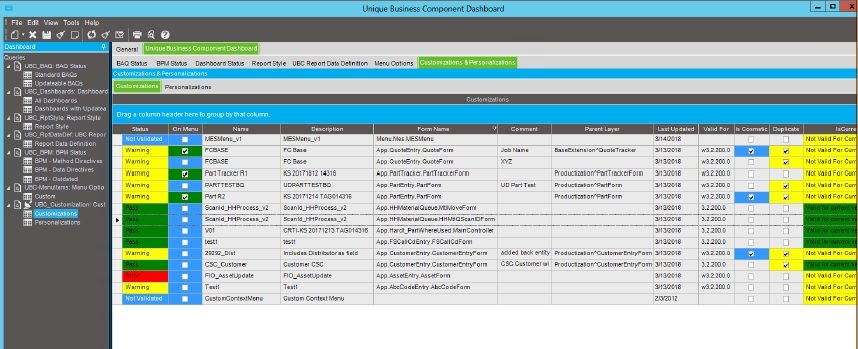
Unique Business Components Tracker
Provides a read-only overview of your UBCs in one spot
Tabs organize your items so you can see what is good to go
Use it to identify obsolete or prototype items for cleanup
Dynamically reads your data
Customization panel refreshed every 4 hours
UBC Customization Tab
Three fields help you identify and prioritize customizations needing resolution
On the menu – Any customization used on a menu that has a problem is your highest priority
Is Cosmetic – These customizations have fields that may need attention
Duplicate – Review and delete
These fields are updated in Customization Maint by the verification process
Access a “how-to” video on the EpicWeb Cloud Documentation site
Training Courses
Epicor ERP Cloud 10.2.600 features over 60 new and updated titles in our Training on Demand library
Epicor ERP Cloud Embedded Education has over 100 courses with several updates
Remember to leverage the cloud upgrade training:
Getting Started with Epicor ERP in the Cloud
Epicor Support and Cloud Operational Excellence
Leveraging the Unique Business Component Tracker to Manage Your Customizations During an Upgrade
Encompass Solutions is a business and software consulting firm that specializes in ERP systems, EDI, and Managed Services support for Manufacturers and Distributors. Serving small and medium-sized businesses since 2001, Encompass modernizes operations and automates processes for hundreds of customers across the globe. Whether undertaking full-scale implementation, integration, and renovation of existing systems, Encompass provides a specialized approach to every client’s needs. By identifying customer requirements and addressing them with the right solutions, we ensure our clients are equipped to match the pace of the Industry.