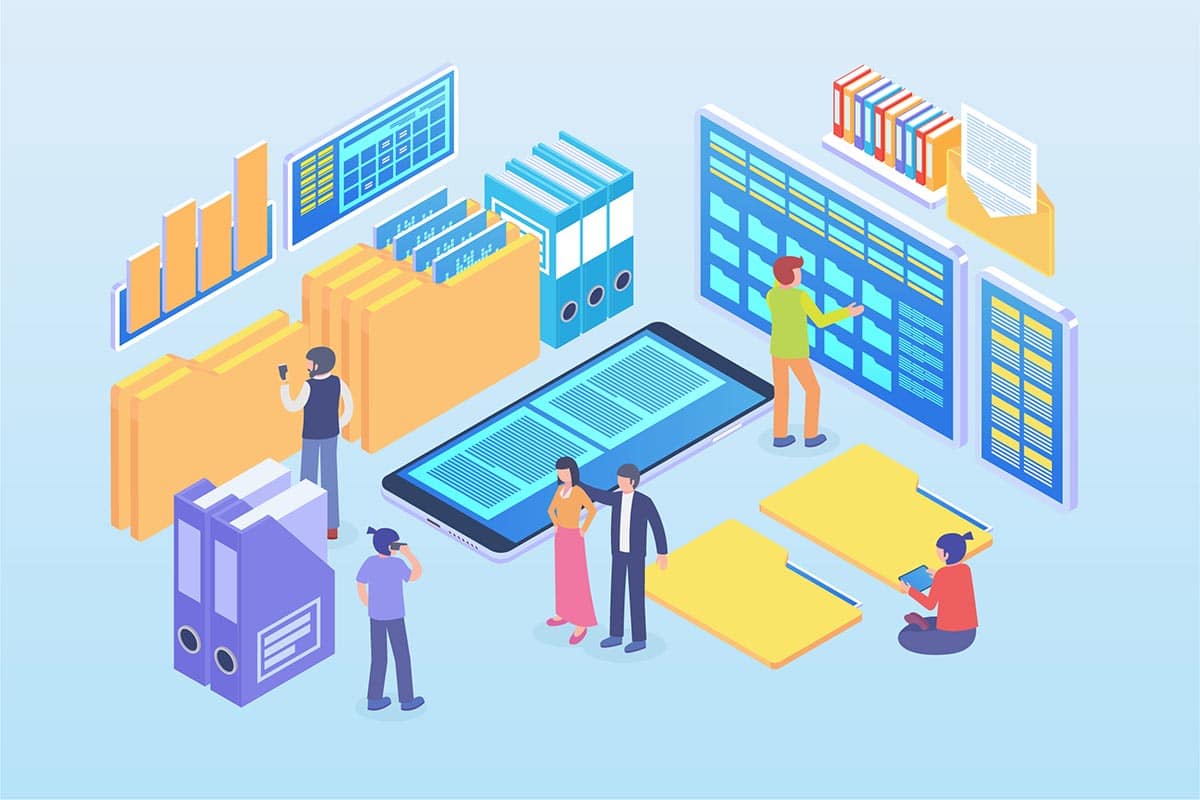
Change management is a term that is broadly used in the Information Technology realm. It’s also a concept that often drives an organization, a group of people or a process from one stage to the next. In order to comprehend the complexities of change management, the concept of change must first be understood.  Change is a period of inconsistency that reflects on the realm of evolution.

Change is human nature, it occurs in all environments-professional, personal, political, and emotional. Change is an inevitable part of life. Therefore, there is a need for a structure that will organize and categorize the vital processes of change that must take place.

In the business world, project managers are often tasked with the implementation of change management. Answering the questions- How will the change be implemented? Who should be involved with the change? What critical changes are taking place? When will this change occur? Lastly, who will be directly impacted by the change?

an image of business managers discussing change management

Change Management From A Theoretical Perspective

From a psychological perspective, change can be perceived as a positive or negative mode of thinking, a mandatory adoption from a business perspective or the determining factor in the completion of an engineering methodology. Despite the varying perspectives for the concept of change, in order for it to take place in any environment, it must be managed; henceforth the term ‘change -management’.

Change Management From A Project Perspective

At the start of most project environments, a project manager is designated to oversee the totality of the project from start to finish. The beginning stages of the project are at times outlined with milestones, deadlines, needed accomplishments, number of staff members assigned, and other information vital to reaching the project’s success. Although this occurs in many organizations, there are some cases in which the finite details are not outlined. The Complexity Theory defines the methodology of how a structure is implemented when change management is not clearly defined (Flum, & Grohe, 2006).

The Complexity Theory is described as a conceptual study of how order and structure are achieved after the occurrence of chaotic phenomena (Flum, & Grohe, 2006). The Complexity Theory was utilized and enhanced by the leaders involved in the task management of the horrific events of 9-11 (Curlee & Gordon, 2011). On a day of mass chaos, various leaders were called to order when the first airplane collided into the Twin Towers of New York City, NY. In a collaborative effort, all in-flight airplanes were forced to land at their nearest hub, due to the uncertainties of this terror attack. As various organizations scrambled to derive what was going on and how to effectively and efficiently handle the situation at hand, a theory evolved in order to bring structure and allegiance to this chaotic series of events nationwide (Curlee & Gordon, 2011).

Just as the leaders of the 9-11 attacks responded to their individual tragedies, bringing stability and direction to the many teams of firemen, police officers, air traffic controllers, and other personnel – as project managers, team leaders, consultants, and IT team members – we have a responsibility to one another to direct, structure and embrace the change that we face daily in our professional and personal lives. The blueprint to our ever-changing lives and projects may not always be mapped out for us- with the right perception and attitude, managing change can be a gift, rather than a challenge.

Curlee, W. & Gordon, R.L. (2011). Complexity theory and project management. Hoboken, NJ: Jon Wiley & Sons.

Flum, J. & Grohe, M. (2006). Parameterized complexity theory. Editors: W. Brauer, G. Rozenberg, and A. Salomaa. Heidelberg, Germany: Springer.

About Encompass Solutions

Encompass Solutions is a business and software consulting firm that specializes in ERP systems, EDI, and Managed Services support for Manufacturers and Distributors. Serving small and medium-sized businesses since 2001, Encompass modernizes operations and automates processes for hundreds of customers across the globe. Whether undertaking full-scale implementation, integration, and renovation of existing systems, Encompass provides a specialized approach to every client’s needs. By identifying customer requirements and addressing them with the right solutions, we ensure our clients are equipped to match the pace of Industry.


Does It Make Sense For IT To Own Your ERP Project?

Would you let your IT team lead your company’s next marketing campaign?  Would you let your IT team lead the installation and setup of your newest production machinery?  The answer is no. That’s because IT has little responsibility for increased sales or increased production. If that’s the case, then why are IT teams often placed in charge of leading the implementation of a business application that needs to be integrated into the processes of your company? An important question to ask yourself is: does it make sense for It to own my ERP project?

Why is it that most companies immediately assume it’s IT’s responsibility? Is it because it is software and IT is responsible for all software?  Is it because the application must be installed on a server or must be hosted at a remote location?  Is it because the application must be installed on user’s desktops or configured to connect to the internet?  Is it because they have the most available time to lead the implementation?  Even if all that is true, the fact remains that ERP is a business application and not an IT application.

Too often a company purchases an ERP application, expecting big returns and then place the success of the implementation in the hands of the IT team.  Too often, this assignment leaves the company ultimately frustrated with the results of the implementation.

an image of an IT professional frustrated with an ERP project

Why IT Shouldn’t Own Your ERP Project

There is a reason you are implementing new software and it is likely because your current software is not capable of doing the business processes your company currently performs.  Do not make the mistake of believing that the software will be installed and set up to work as your current ERP application.  The most successful ERP implementations are the result of hard work by a strong team of company leaders that span all of the company’s departments and have responsibility for the final results of the implementation.   That team-first must understand the current business processes and current company needs.  Next, the team learns how the new application performs business processes.  The team must then determine the gaps between existing processes and the functionality of the application to design a plan to overcome the gaps.  Afterward, they construct the new business processes and the manner in which they are accomplished in the new application.  Lastly, only after all business units have properly validated the application performance with company data is the application deployed.

In order to achieve a successful implementation of your ERP application, IT will be heavily involved in the rollout of the application and today many IT professionals have a very a strong understanding of the processes their company is seeking to achieve.  But the responsibility of the success of the implementation should be placed with a company leader that has the best project management skills, the greatest understanding of the company’s processes, and has a significant stake in the results of the implementation.

About Encompass Solutions

Encompass Solutions is a business and software consulting firm that specializes in ERP systems, EDI, and Managed Services support for Manufacturers and Distributors. Serving small and medium-sized businesses since 2001, Encompass modernizes operations and automates processes for hundreds of customers across the globe. Whether undertaking full-scale implementation, integration, and renovation of existing systems, Encompass provides a specialized approach to every client’s needs. By identifying customer requirements and addressing them with the right solutions, we ensure our clients are equipped to match the pace of Industry.


ERP has been around for almost as long as the internet, pagers and bag phones helping businesses standardize processes, increase efficiency and sales through access to data. Epicor ERP has been able to keep pace with the changing needs of businesses (that bag phone was a little clunky) and has incorporated social business functionality reflecting the way employees are incorporating technology into their personal lives. According to Nick Castellina of Aberdeen Group “organizations that have implemented this approach to ERP saw over twice the improvement in profit margins over the past two years of organizations that have not implemented social ERP.”

The key benefit of Social ERP is collaboration. This goes for organizations that are housed in one building or across the globe. As we all know, Al Gore single-handedly invented the internet but in most cases, collaboration is extremely beneficial to a business. Allowing employees access to data with the necessary tools and infrastructure is the first step to this collaboration. Once employees have the data the next step is to analyze the data (independently and collaboratively) and create a pathway to turn this robust information into a plan that can benefit your business.

Social ERP in Epicor can take many forms including the ability to tag conversations, products, projects, customers, equipment, etc. This collaboration creates a central location where all stakeholders can easily access current information and over time you create a database allowing you to avoid previous mistakes and learn and continuously improve with more efficient processes, higher quality products, and services, better profit margins.

Get-Collaborative-Image

The Benefits Of Social ERP

Here are a few stats compiled by Aberdeen Group regarding businesses that have incorporated Social ERP:

  • A decrease in decision-making time of 28% versus 21% for those without social ERP.
  • A decreasein business processes time of 11% versus 9% for those without social ERP.
  • Met internal schedules 95% of the time versus 90% for those without social ERP.
  • Had employees that exceeded performance metrics 58% versus only 36% for those without social ERP.
  • Over the 2 years these statistics have been gathered, Businesses improved profit margins 19% versus 9% for those without social ERP.

The stats are clear (bag phones were good but smartphones are better). Social ERP increases collaboration, efficiency, and profits. Contact us today about implementing a social ERP solution for your business.

About Encompass Solutions

Encompass Solutions is a business and software consulting firm that specializes in ERP systems, EDI, and Managed Services support for Manufacturers and Distributors. Serving small and medium-sized businesses since 2001, Encompass modernizes operations and automates processes for hundreds of customers across the globe. Whether undertaking full-scale implementation, integration, and renovation of existing systems, Encompass provides a specialized approach to every client’s needs. By identifying customer requirements and addressing them with the right solutions, we ensure our clients are equipped to match the pace of Industry.