About Sean Balogh

A marketing professional working hard to deliver relevant and engaging content to audiences in education, technology, and manufacturing.


This press release regarding Epicor’s acquisition of Majure Data was previously published by the Epicor Newsroom

Acquisition of Majure Data will expand Epicor solution’s portfolio for lumber and building materials dealers and distributors

Epicor Software Corporation, a global provider of industry-specific enterprise software to promote business growth, announced today that it has acquired Majure Data, a leading provider of warehouse management solutions for the lumber and building materials (LBM) industry. The transaction closed on July 1. The financial terms of the agreement were not disclosed.

Based in Milton, GA, Majure Data is a leading provider of warehouse management solutions to the building products industry in the U.S. and Canada. Majure Data has over 35 years of experience in warehouse management and has developed its solutions with a focus on the lumber and building materials industry for more than 18 years.
an image of the majure data logo

“Both companies offer deep industry expertise and are committed to building long-term relationships with customers, providing increased efficiency, accuracy, and operational improvements in warehouse operations,” said Bill Wilson, senior vice president, of retail and building materials industry solutions, Epicor. “Majure Data offers full integration tools for leading industry ERP platforms, allowing a broad range of LBM dealers and distributors to transform their warehouse operations.”

Before completion of this acquisition, Epicor acted as a reseller for the Majure Data products “RF Navigator” and “RF Navigator Foundations”. Bringing Majure Data into the Epicor family continues to demonstrate Epicor’s commitment, focus, and investment in the LBM industry. The acquisition allows Epicor to offer a powerful solution for LBM customers striving to improve their On Time In Full (OTIF) performance by increasing inventory accuracy and productivity, reducing shipping errors, and providing direct insight into the daily operations of the warehouse, enabling them to better serve their customers.

“This acquisition strengthens our ability to deliver innovative technology that accelerates sales growth, improves productivity, and enhances customer loyalty. With the combination of Majure Data’s deep industry functionality and Epicor’s scale of technology, we look forward to providing a premier business growth platform for lumber and building materials businesses,” concluded Wilson.

About Majure Data

Majure Data is a leading supplier of Warehouse Management Systems for the building products industry. With over 35 years of experience, we have the technology and expertise to transform your current warehouse and yard operations. We partner with the leading ERP providers in the industry to offer you a tightly integrated solution for millwork, roofing & siding, hardwood, pro dealer, cabinet, lumberyard, and wholesale distribution.

About Epicor Software Corporation

Epicor Software Corporation drives business growth. We provide flexible, industry-specific software designed to fit the precise needs of our manufacturing, distribution, retail, and service industry customers. More than 45 years of experience with our customers’ unique business processes and operational requirements are built into every solution―in the cloud or on-premises. With this deep understanding of your industry, Epicor solutions dramatically improve performance and profitability while easing complexity so you can focus on growth.

About Encompass Solutions

Encompass Solutions, Inc. is an ERP consulting firm, NetSuite Solution Provider, and Epicor Gold Partner that offers professional services in business consulting, project management, and software implementation. Whether undertaking full-scale implementation, integration, and renovation of existing systems or addressing emerging challenges in corporate and operational growth, Encompass provides a specialized approach to every client’s needs. As experts in identifying customer requirements and addressing them with the right solutions, we ensure our clients are equipped to match the pace of the Industry.


When it comes to medical device manufacturing, the FDA has maintained rigorous standards for manufacturers to satisfy. Traceability, quality management, and reporting are among the many areas in that manufacturers need superior performance to meet those standards. The FDA’s push for digital means of achieving and providing a record of how standards are met has many businesses looking to ERP software for medical device manufacturing.

Fortunately, ERP systems have been delivering on these demands and more for decades and are suited to meet the changes in regulatory environments. Such powerful systems help to increase the reliability of processes and reduce instances of failures, recalls, and corrective actions. Not only this, but the benefits of ERP make maintaining compliance and records easier and more cost-effective.

The Benefits Of ERP Software For Medical Device Manufacturing

When it comes to the requirements placed on manufacturers by the FDA, it’s easy to see why ERP is increasingly being leveraged to reduce the difficulty in meeting those obligations.

Data is available at every turn in the manufacturing process and ERP systems can help medical device manufacturers leverage that data in the validation process. This data enables management regulatory obligations, optimization of manufacturing processes, and the resulting increase in customer satisfaction. ERP systems capture this vital information to lessen the risks associated with compliance standards and turn efficiency concepts into real-world results with ease.

How Medical Device Manufacturers Use ERP

Compliance is the top motivator for adopting ERP software for medical device manufacturers. FDA regulations, as well as those for international regulatory bodies, are constantly evolving alongside new technologies, products, and research. ERP provides a means of establishing protocols and processes to satisfy the latest regulations at every stage in the manufacturing life cycle.

Accessibility is another important factor driving the adoption of modern ERP systems. Whether in the board room or on the shop floor, teams need the latest data and documentation to make informed decisions, in real-time. Legacy ERP systems lack the connectivity to this data that modern, cloud-based ERP systems provide. Even sales teams on the road require such access when a customer wants to know how a manufacturer’s products conform to the latest regulations, as well as the proof to back it up.

Auditing is a process required both internally and externally for medical device manufacturers. Audits may be scheduled or conducted at random. In any case, a manufacturer wants to know if they can retrieve and report data on every process in the manufacturing life-cycle. ERP software provides all that in a centralized and secure location.

The tracking and traceability ERP software provides will ensure that each stage of the manufacturing process comes with oversight. Easy-to-follow audit trails streamline the process and identify where, when, and how problems emerge. Recalls, while never an easy process, are swift and efficient thanks to ERP software that leverages automated lot and serial tracking to keep customers safe and businesses insulated from risk.

Through automation, manufacturers can remove the manual tasks associated with logging data, such as billing and manufacturing execution. This cuts down on human error that causes most delays and downtime in manufacturing and sales cycles. While not necessarily a matter of regulatory compliance, the efficiency ERP software provides in this regard only strengthens the case for its adoption.

FDA Requirements Of ERP Software For Medical Device Manufacturing

The electronic records and signatures requirements set by the FDA are stringent and any system of manufacturing must comply with the regulations to receive approval. The full body and outline of these regulations as they relate to ERP software for medical device manufacturing can be found in 21 CFR part 11 – ELECTRONIC RECORDS; ELECTRONIC SIGNATURES:

Subpart A-General Provisions 
§ 11.1 – Scope.
§ 11.2 – Implementation.
§ 11.3 – Definitions.

Subpart B–Electronic Records 
§ 11.10 – Controls for closed systems.
§ 11.30 – Controls for open systems.
§ 11.50 – Signature manifestations.
§ 11.70 – Signature/record linking.

Subpart C–Electronic Signatures 
§ 11.100 – General requirements.
§ 11.200 – Electronic signature components and controls.
§ 11.300 – Controls for identification codes/passwords.

and 21 CFR §820 regarding quality:

PART 820—QUALITY SYSTEM REGULATION

About Encompass Solutions

Encompass Solutions, Inc. is an ERP consulting firm, NetSuite Solution Provider, and Epicor Gold Partner that offers professional services in business consulting, project management, and software implementation. Whether undertaking full-scale implementation, integration, and renovation of existing systems or addressing emerging challenges in corporate and operational growth, Encompass provides a specialized approach to every client’s needs. As experts in identifying customer requirements and addressing them with the right solutions, we ensure our clients are equipped to match the pace of the Industry.


When it comes to EDI, small businesses are often compelled to implement it by their larger trading partners and suppliers. While a business may think it’s too small to warrant such a change, it’s easier to get started with EDI for small businesses than one might think.

EDI For Small Businesses: Burdens And Benefits

There are, as with many transformative technologies, initial barriers to be overcome. However, this is true for entities of every size when implementing EDI. Smaller businesses have an easier time with some of these barriers than their larger counterparts. For many, the biggest barrier is costs associated with infrastructure and staff, for others, it’s the transition from paper-based systems to digital and automated ones. Whatever the hurdle to overcome may be, the benefits of integrated EDI for small businesses far outweigh the benefits that may be holding a business back from making the change.

Satisfaction, Loyalty, And Growth With EDI For Small Businesses

When it comes to the many arguments for a small business to begin leveraging EDI, nothing trumps growth. EDI enables growth in a big way, especially for smaller businesses. Two significant avenues through which EDI facilitates this are customer satisfaction and brand loyalty. When the experience of purchasing goes smoothly, and communication is fluid, customers appreciate the experience. Consistent performance in this regard delivers repeatable experiences that drive customer satisfaction. Positive word-of-mouth and online recommendations increase, which earns more business and retain loyal customers.

an image of a small business owner growing his business with edi for small businesses

Accuracy, Automation, And Accountability

It’s not unusual for small business staff to wear many hats and assume several responsibilities from day to day. Even specialists make mistakes, but staff tasked with multiple duties at a business are provided more opportunities to make simple errors. These errors can have far-reaching consequences. With EDI many of the repetitive and manual tasks associated with purchasing, invoicing, and shipping can be automated, accurately enacted, and provide transparent records for superior accountability. The result is fewer botched orders, better follow-through on commitments to customers, and another opportunity to prove their loyalty is earned and valued.

An image of a shop floor production improvements thanks to edi for small businesses

Reducing Overhead With An EDI Partner

For many small businesses, envisioning the added burden of managing EDI infrastructure and maintaining knowledgeable staff can sink the idea before it’s put into action. Fortunately, some options don’t place these anxieties squarely on the shoulders of businesses. After the initial set-up of EDI, an EDP partner can maintain the system apart from a business’ day-to-day operation and IT structure. These systems are repeatable and scale with growth and can be easily integrated into existing ERP systems or to those added further down the line as time goes on.

an image of a business owner and edi partner agreeing on an edi for small businesses contract

By passing off the cost of an EDI project to an external partner, small businesses can enjoy the benefits of EDI without the additional staff, software, and hardware to maintain. This leaves in-house talent free to take on value-added activities that drive business growth and focus on customer care.

About Encompass Solutions

Encompass Solutions, Inc. is an ERP consulting firm, NetSuite Solution Provider, and Epicor Gold Partner that offers professional services in EDI,  business consulting, project management, and software implementation. Whether undertaking full-scale implementation, integration, and renovation of existing systems or addressing emerging challenges in corporate and operational growth, Encompass provides a specialized approach to every client’s needs. As experts in identifying customer requirements and addressing them with the right solutions, we ensure our clients are equipped to match the pace of the Industry.


Summer has arrived and we’re providing the best opportunities and strategies to help you keep cool and improve operations when the temperature rises. Better tools and improved operational efficiency mean you have more time to relax. Here are a few July 2019 News and Updates with opportunities for you to take advantage of this summer.

Get to know what Lean means in our brief overview of the manufacturing philosophy and how ERP helps eliminate waste in the workplace.

Not familiar with Industrial automation? Kicking around the idea of automating in-house processes this year? Here’s a rundown of the most often utilized forms of Industrial Automation on the factory floor. We also included a few ways ERP and EDI add to the equation.

Want a better view of corporate performance? How about a better handle on internal budgeting processes? Join us for a live webinar on Mastering the Art of Innovative Budgeting and Planning on July 18th, 2019 @ 1 PM EST.

EDI is an essential part of any company’s digital transformation. For many, it’s an industry standard that cannot be ignored. We put together an easy read on the subject of the Barriers and Benefits of EDI Implementation.

Mark your calendars for a joint webinar with Encompass Solutions and Bezlio on how you can mobilize your teams to work with your ERP data securely from anywhere, any time, online and offline. The event takes place on August 7th at 2 pm EST. Register today.

Now that Tax Season is over, how has your business been impacted by sales tax and nexus rules in the wake of Wayfair v. South Dakota? Need a more robust tax solution or just want to know more about these sweeping tax changes? Download the latest Sales & Use Tax Compliance resource from our partner, Avalara.

7 Ways ERP Improves Lean Manufacturing

an image depicting how ERP combats the 7 wastes of manufacturing, improves operations, and leverages the tools you have more effectively

A primer on Lean for the uninitiated and how ERP combats the 7 wastes of manufacturing, improves operations and leverages the tools you have more effectively.

Industrial Automation

A topic of conversation that manufacturers all over the globe are discussing on the shop floors of production facilities and in the board rooms of corporate offices.

Upcoming Webinar: Master the Art of Innovative Budgeting And Planning

an image of busgeting process improvement software from prophix, an encompass solutions partner

Join us for the live webinar on July 18th, 2019 @ 1 PM EST.

Overcome EDI Barriers

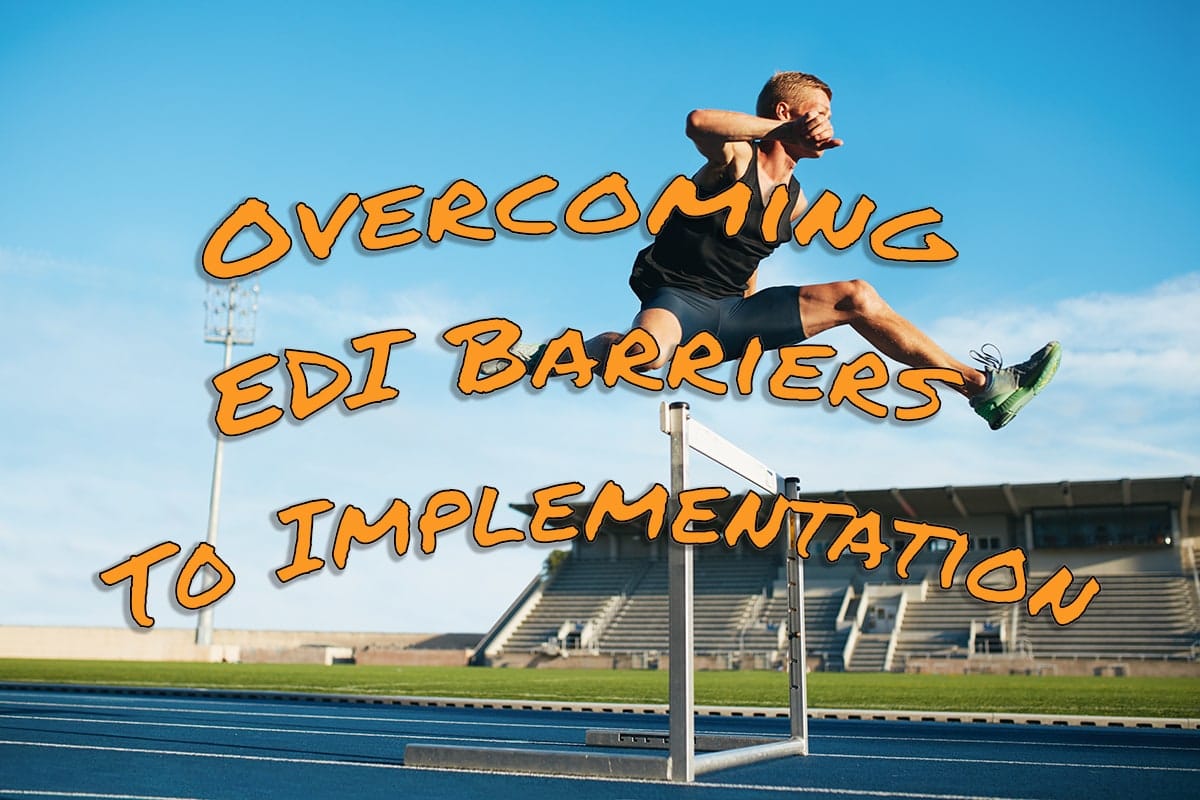
an image of a hurdler jumping over a hurdle symbolizing overcoming edi barriers to implementation

EDI is essential for fast and fluid information exchange. Get rid of the paper and manual entry by going digital with EDI built for manufacturers.

Webinar – Mobility With Epicor ERP

an image of the bezlio mobility with epicor webinar registration as part of the june 2019 news and updates from encompass solutions

Mobilize your workforce and sales force by accessing your secure, on-premises data sources in real-time, on any mobile device, from anywhere. Join us on August 7th at 2 pm EST.

Getting Your Taxes In Order with Avalara

an image of the sales tax and compliance resources from Avalara as part of the june 2019 nes and updates from encompass

Over the last year, some sweeping changes to sales tax laws have affected businesses conducting sales across state lines. Make sure you comply with the latest regulations.

Encompass July 2019 News And Updates

Encompass Solutions is happy to announce it will be helping Tensator and Process Solutions improve trading network efficiency, security, and transparency with the Encompass EnTrust EDI solution

an image of the encpomass logo

Epicor July 2019 News And Updates

Haven’t read up on the latest Epicor ERP update? Get to know more about the latest features and updates of Epicor ERP 10.2.400.

an image of the epicor logo for the epicor consultants at encompass solutions

Oracle NetSuite July 2019 News And Updates

NetSuite continues to develop new eCommerce extensions that carry the online retail capabilities of the platform even further.

an image of the Oracle + NetSuite logo

About Encompass Solutions

Encompass Solutions, Inc. is an ERP consulting firm, NetSuite Solution Provider, and Epicor Gold Partner that offers professional services in business consulting, project management, and software implementation. Whether undertaking full-scale implementation, integration, and renovation of existing systems or addressing emerging challenges in corporate and operational growth, Encompass provides a specialized approach to every client’s needs. As experts in identifying customer requirements and addressing them with the right solutions, we ensure our clients are equipped to match the pace of the Industry.

When it comes to running a business, everyone has a business management system. Such a system can be as simple as a whiteboard on a breakroom wall but more often will take the form of spreadsheets and emails. These systems may even fall into the category of Enterprise Resource Planning software, even if users don’t know it by that name.

Businesses need to know the point at which they’re outgrowing a homegrown or siloed business management system. Here, we’ll detail What an ERP system is, the benefits derived from those systems, and how to evaluate an ERP system for your business.

What Is Enterprise Resource Planning Software?

ERP software is a means of communicating processes and resources to a business’ personnel. This information is then used by personnel to complete tasks such as how many parts to build for a purchase order or how many orders to fulfill by specified deadlines. The level of depth ERP software provides is virtually limitless.

Why Do Businesses Use ERP Software?

Unfortunately, businesses relying on spreadsheets miss out on putting a lot of their valuable data to use. Not only this, but they divide their teams into siloed departments that leave them working less efficiently. ERP software bridges gaps in communicating processes and resources with personnel. The result is accurate and relevant data delivered to those who need it, in real-time and across departments. Businesses will find ERP applications that enable better communication, increased efficiency, increased order accuracy and fulfillment, reduced inventory and labor costs, and happier customers.

The most modern examples of enterprise resource planning software deliver automation capabilities. Today, ERP software offers virtual assistants, workflow automation capabilities, automated data capture and entry, intelligent robot interfaces, predictive maintenance tools, and systems to connect manufacturing businesses from the shop floor to the top floor.

What Is The best ERP software?

The best ERP software is the one that checks all the boxes, or the most, when it comes to meeting the needs of your business now and into the future. That said, evaluating and selecting the ERP software that’s right for your business is not an overnight decision. Once you’ve decided that a more robust enterprise resource planning system is what you need, begin evaluating options.

The typical ERP evaluation process from the buyer’s end begins with research, then engaging those vendors or their certified resellers, discovery follows to ensure the ERP software is the right fit for a business, then demonstrations, agreements, implementation, and finally training. Some vendors and VARs will stop there, only reaching out to continue selling add-on services and upgrades. However, you will want to find a partnership with experts in the ERP software of your choosing. That’s because these systems will potentially help run your business for decades as you grow and expand. Finding the right fit for both ERP software and partnership among providers is important.

How To Select ERP Software

In short, every business is different and has different needs for ERP software. Though, there are core functionalities that all ERP systems will include, like financials and operations. Beyond that, there are systems geared towards retailers, manufacturers, healthcare, and just about every other industry vertical one can name. That said, no matter what ERP software you may need, there are reliable ways to evaluate ERP software that apply to the evaluation process regardless of industry and purpose.

Don’t get hamstrung by inaccurate data, lost information, and poor response time when unforeseen events take place. When the time is right to choose an ERP system that’s right for your business, big or small, talk to the experts at Encompass Solutions. We’ll connect you with a system that fits your build.

About Encompass Solutions

Encompass Solutions is a business and software consulting firm that specializes in ERP systems, EDI, and Managed Services support for Manufacturers. Serving small and medium-sized businesses since 2001, Encompass modernizes operations and automates processes for hundreds of customers across the globe. Whether undertaking full-scale implementation, integration, or renovation of existing systems, Encompass provides a specialized approach to every client’s needs. By identifying customer requirements and addressing them with the right solutions, we ensure our clients are equipped to match the pace of the Industry.


When it comes to EDI, just like any other transformative technology, some factors may present barriers before implementation can begin. Many barriers can present themselves when it comes to working with EDI for the first time and each may be unique to a business or industry. In this case, the most common EDI barriers to implementation are:

  • Understanding
  • Change Management, Education, And Effort
  • Time
  • Money
  • Willingness Of Customers Or Suppliers

1. Understanding EDI

Understanding EDI is often one of the first EDI barriers to implementation to overcome, but also the easiest. Once a business has a clear picture of the structure, mechanics, and benefits of EDI, the choice to implement or not becomes obvious. What follows is an evaluation of peripheral factors that make EDI implementation feasible or not for that business.

2. EDI Change Management, Education, And Effort

Second on the list of EDI barriers to implementation generally follows understanding EDI. The internal struggle to get management on board, vital staff trained, and reinforce a culture of continual process improvement is no small endeavor. For most businesses, change management is one of the most significant barriers to overcome in projects of just about any size and scope. For businesses taking on the responsibility to administer EDI in-house, this challenge is a pivotal one. Managing software and hardware installation, updates, and maintenance is a full-time job on its own. Many businesses make the mistake of assigning one key resource to oversee EDI, as well. The problems that arise when they decide to take time off or fall ill can be major roadblocks. The problems multiply exponentially should they decide to leave their role entirely. For those who bring on a third party, it’s not as significant. This is because a third-party EDI services provider completes the labor associated with EDI administration, updates, security, and auditing.

3. EDI Implementation And Maintenance Time Requirements

Unlike substantial technological projects, like ERP implementation, EDI Implementation can compete in a relatively fast timeframe. Though, this will depend on the size and scope of a trading network. For businesses with no connection to EDI through their suppliers, it will generally take longer to implement EDI than those whose suppliers and trading partners are already aligned to adopt EDI technology.

Maintenance is an ongoing effort for your in-house team and needs to be met with the same care and attention to detail as any other IT operation to keep things running smoothly. Setting aside time for new mappings, changes required when it’s time to upgrade, and regular auditing is necessary. Hiring a third-party EDI services provider can allay the pressures associated with maintaining your EDI infrastructure.

4. EDI Implementation And Maintenance Costs

Like most process-improving technologies, EDI costs money to implement and maintain. Early iterations of the technology were rather costly. Over the last several years, efficiencies and advancements in EDI have driven costs down. Now, implementations and maintenance are far more affordable for small and medium-sized businesses. The price of that implementation and maintenance depends on the number of documents being mapped and the size of a customer’s or supplier’s trading network. Costs come down when in-house IT maintains the EDI infrastructure, but the additional workload does not always justify the savings on the front end.  Many businesses find it preferable to have a specialized third party administrate their EDI services, while in-house teams manage day-to-day operations.

5. The willingness Of Customers Or Suppliers

For suppliers, EDI is often already in place or easy to implement when requested by customers. Customers, on the other hand, may not be so keen on adding EDI infrastructure because one trading partner requires it. In this case, the trading relationship can be severed. Suppliers tend to be more open to EDI as a framework for optimizing how transactions and communications take place both in and outside of their organization. Still, suppliers may have particular requirements of an EDI solution that a customer or vendor may not agree with

How The Benefits Of EDI Outweigh The EDI Barriers To Implementation

While there are plenty of potential obstacles to overcome when implementing a transformative technology like EDI, the benefits are well worth the process. Successful implementation yields tremendous benefits for businesses, including:

  1. Reduced administrative/transaction costs
  2. Decreased inventory levels/inventory costs
  3. Improved information accuracy
  4. Improved cash flows
  5. Better customer service
  6. Enhanced competitiveness in the marketplace
  7. Efficient communication
  8. More valuable trading partner relationships
  9. More free time for valuable in-house resources
  10. Improved security

To learn more about EDI and how it can benefit your business, contact the EnTrust EDI experts at Encompass Solutions using the link below.

About Encompass Solutions

Encompass Solutions, Inc. is an ERP consulting firm, NetSuite Solution Provider, and Epicor Gold Partner that offers professional services in business consulting, project management, and software implementation. Whether undertaking full-scale implementation, integration, and renovation of existing systems or addressing emerging challenges in corporate and operational growth, Encompass provides a specialized approach to every client’s needs. As experts in identifying customer requirements and addressing them with the right solutions, we ensure our clients are equipped to match the pace of the Industry.

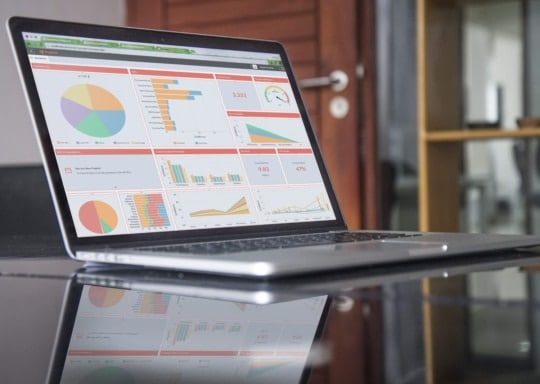
Budgeting is the lifeblood of any company and there are instances whereby the time the budget is complete, it’s already stale. Spreadsheets may be the go-to choice for budgeting and planning, but they quickly become error-prone, insecure, disconnected, time-consuming, and non-collaborative. Many companies treat cash as an afterthought, neglecting to forecast the Balance Sheet because it’s simply too difficult. Instead, they rely on spreadsheets to organize data from a General Ledger.

Corporate Performance Management (or CPM) is an umbrella term for software applications that automate your business’s non-transactional processes – specifically picking up where your ERP system leaves off. We’re partnering with the CPM experts at Prophix to deliver a live webinar on Innovative Budgeting and Planning practices.

Budgeting And Planning Webinar

In this webinar, we discuss how to automate your financial processes to focus on analyzing trends in your data, promote collaboration and develop integrated financial planning across the organization.

After this webinar you will know how to:

  • Breakdown the budgeting process in 5 easy steps
  • Automate data entry and spend less time verifying calculations
  • Compare budgets to actuals while maintaining data accuracy
  • Influence process, people, and infrastructure through innovation

About Encompass Solutions

Encompass Solutions, Inc. is an ERP consulting firm and Epicor Gold Partner that offers professional services in business consulting, project management, and software implementation. Whether undertaking full-scale implementation, integration, and renovation of existing systems or addressing the emerging challenges in corporate and operational growth, Encompass provides a specialized approach to every client’s needs. As experts in identifying customer requirements and addressing them with the right solutions, we ensure our clients are equipped to match the pace of the Industry.

Now that spring cleaning is complete, it’s time to get your ship in shape for summer. We’ve got a wealth of useful resources for you to consider when improving internal processes, automating tasks, and reducing costly mistakes. Have a look at our June 2019 News And Updates for tools, techniques, and events to improve your organizational performance.

The supply chain is rife with opportunities for things to go wrong as a result of manual tasks, suppliers failing to follow through, and a host of other issues. Automating procurement processes can save you big on time, money, and headaches.

IoT is not a buzzword, it’s part of the lexicon. These connections are opening doors for manufacturers they never thought possible. Learn more about the biggest benefits of IoT for manufacturers.

Want a better view of corporate performance? How about a better handle on internal budgeting processes? We’ve got a few budgeting best practices you’ll want to implement.

EDI is an essential part of any company’s digital transformation; for many, it’s an industry standard that cannot be ignored. Get on board and implement EDI for manufacturers to reduce time, costs, and errors.

Mark your calendars for a joint webinar with Encompass Solutions and Bezlio on how you can mobilize your teams to work with your ERP data securely from anywhere, any time, online and offline. The event takes place on August 7th at 2 pm EST. Register today.

Now that Tax Season is over, how has your business been impacted by sales tax and nexus rules in the wake of Wayfair v. South Dakota? Need a more robust tax solution or just want to know more about these sweeping tax changes? Download the latest Sales & Use Tax Compliance resource from our partner, Avalara.

Procurement Automation

an image of the supply chain of goods and impovements made via procurement automation software

 Start automating the procurement process in your organization to realize the benefits of increased supplier accountability, improved collaboration, and automation of manual tasks.

IoT For Manufacturers

an image of iot for manufacturers and the tools predictive maintenance delivers to manufacturers

Chances are you have come across the terms Internet of Things (IoT) or the Industrial Internet of Things (IIoT). Get to know more about how these technologies benefit manufacturing operations.

Budgeting Process Improvement

an image of busgeting process improvement software from prophix, an encompass solutions partner

Getting a handle on your company’s performance can be a daunting task. Here are a few ways you can improve your budgeting processes to reflect your overall corporate performance.

EDI For Manufacturers

an image of transferring and connections of edi documents for manufacturing

EDI is essential for fast and fluid information exchange between trading partners. Get rid of the paper and manual modes of communication by going digital with EDI built for manufacturers.

Webinar – Mobility With Epicor ERP

an image of the bezlio mobility with epicor webinar registration as part of the june 2019 news and updates from encompass solutions

Mobilize your workforce and sales force by accessing your secure, on-premises data sources in real-time, on any mobile device, from anywhere. Join us on August 7th at 2 pm EST.

Getting Your Taxes In Order with Avalara

an image of the sales tax and compliance resources from Avalara as part of the june 2019 nes and updates from encompass

Over the last year, some sweeping changes to sales tax laws have affected businesses conducting sales across state lines. Make sure you comply with the latest regulations.

Encompass June 2019 News And Updates

Encompass Solutions is happy to announce it will be helping Moments, a manufacturing start-up of modular homes and commercial buildings, to bring construction into the 22nd century with Epicor ERP. Stay tuned for our case study on this exciting development.

an image of the encpomass logo

Epicor June 2019 News And Updates

Haven’t read up on the latest Epicor ERP update? Get to know more about the latest features and updates of Epicor ERP 10.2.400.

an image of the epicor logo for the epicor consultants at encompass solutions

Oracle NetSuite June 2019 News And Updates

NetSuite’s Scott Derksen delivered a 25-minute interview on the Tearsheet podcast on why he believes ERP sits at the center of banking as a service. This comes following NetSuite’s heavy investment in resources earlier this year to target banking as a service on its robust cloud platform.

an image of the Oracle + NetSuite logo

About Encompass Solutions

Encompass Solutions, Inc. is an ERP consulting firm, NetSuite Solution Provider, and Epicor Gold Partner that offers professional services in business consulting, project management, and software implementation. Whether undertaking full-scale implementation, integration, and renovation of existing systems or addressing emerging challenges in corporate and operational growth, Encompass provides a specialized approach to every client’s needs. As experts in identifying customer requirements and addressing them with the right solutions, we ensure our clients are equipped to match the pace of the Industry.

Industrial automation is a topic of conversation that manufacturers all over the globe are discussing on the shop floors of production facilities and in board rooms. Industrial automation is no longer an optional component of manufacturing industries. To remain competitive, industrial automation must be considered to maintain a level of competitiveness in modern manufacturing scenarios.

What Is Industrial Automation?

As far as an Industrial automation definition is concerned, the concept can be defined as completing an operation or procedure without human assistance by utilizing control systems, such as computers or robots, and information technologies, like ERP platforms and EDI, for handling different processes and machinery.

Types of Industrial Automation

There are several types of industrial automation in use today. They can be broken down into four main categories:

  1. Fixed (Hard) Automation

  2. Programmable Automation

  3. Flexible (Soft) Automation

  4. Integrated Automation (TIA)

These types of automation are leveraged in different scenarios, some data-driven and some production-driven. We’ll go into that a little later.

For now, it’s important to understand that industrial automation technologies and concepts can be applied most readily to data collection, data processing, and predictable physical work, such as welding, soldering, painting, food prep, packaging, and materials handling.

Fixed (Hard) Automation

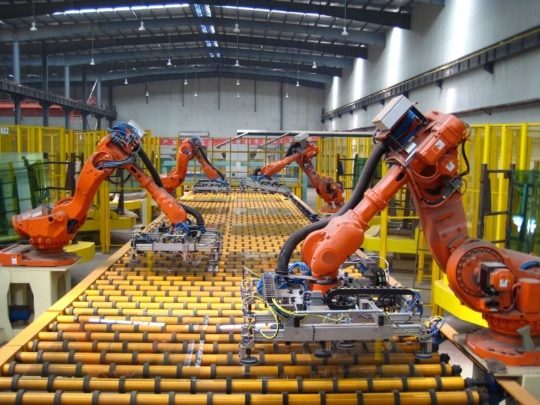
Fixed automation refers to the use of special purpose equipment to automate a fixed sequence of processing or assembly operations.

an image of fixed (hard) automation in industrial automation

In this example, the application is usually simple and will involve a process or assembly that is dictated by programmed commands. It is relatively difficult to accommodate changes in the product design in a fixed automation process, which is set up with one purpose or process per application in mind.

Fixed (Hard) Automation Examples include:

  • Mechanized assembly
  • Machining transfer lines
  • Automated material handling

Fixed (Hard) Automation Advantages:

  • High production rates
  • Low unit cost

Fixed (Hard) Automation Disadvantages:

  • Relatively inflexible in accommodating product variety
  • The high initial investment for custom-engineered equipment
  • High vulnerability to failure
  • Obsolescence

Programmable Automation

In programmable automation, the production equipment is designed with the capability to change the sequence of operations to accommodate different product configurations.

an image of programmable automation in industrial automation

Programmable automation is used most often when manufacturing products in batches. It allows for customization and frequent changes throughout the manufacturing process.

In this case, the operation is controlled by a program of instructions that are read and interpreted by the system. New programs can be prepared and entered into the hardware to produce new products at any time.

Programmable Automation Examples include:

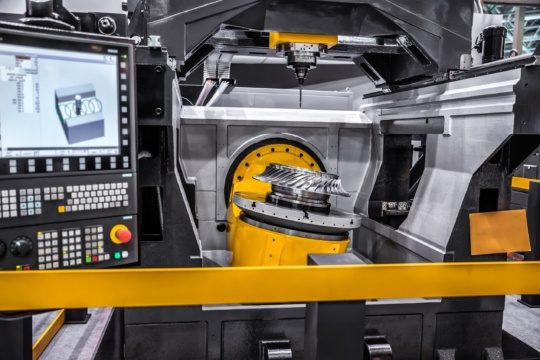
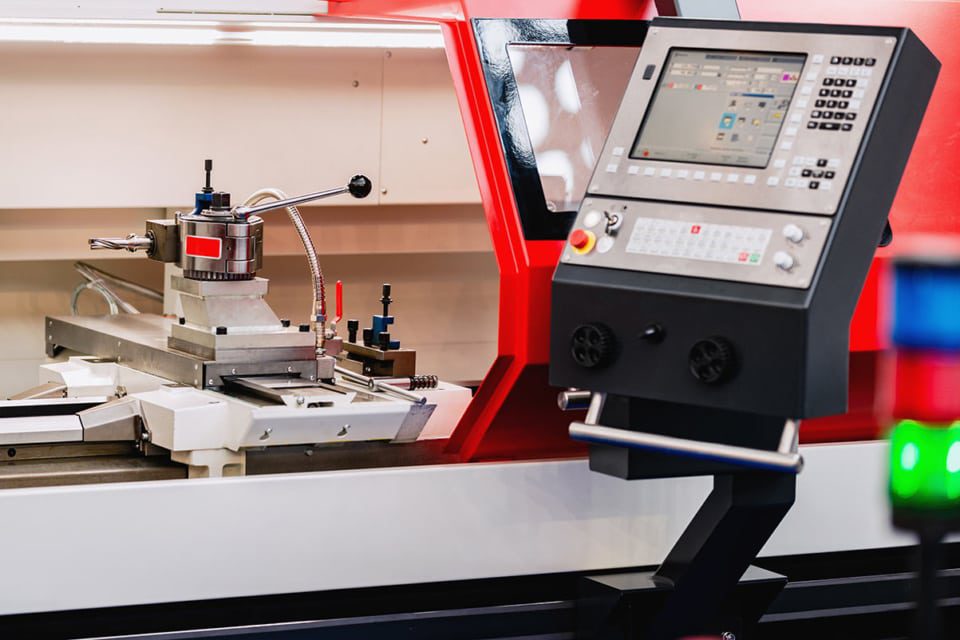
  • Computer Numerical controlled (CNC) machine tools
  • Industrial robots
  • Programmable logic controllers (PLC)

Programmable Automation Advantages:

  • Flexible and able to deal with design variations
  • Suitable for batch production

Programmable Automation Disadvantages:

  • High investment in general purpose equipment
  • Lower production rate than fixed automation

Flexible (Soft) Automation

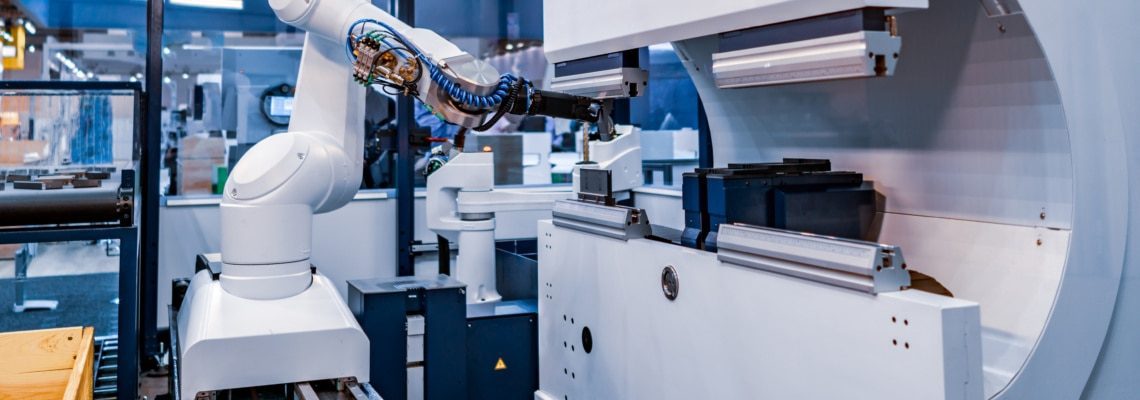
With flexible automation, several machine tools are linked together by a material-handling system, and all components of the system are controlled by a central computer. This configuration offers rapid and smooth changes to products and processes.

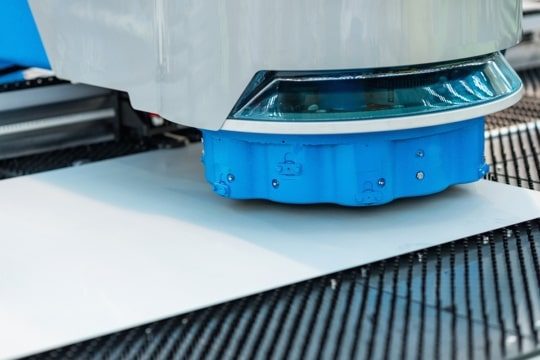
an example of soft (flexible) automation

Utilizing multiple tools that are linked by a material handling system, like this rotary indexer, a flexible approach to automation is capable of producing a variety of parts with virtually no time lost for changes in the configuration. The same is true when reprogramming the system or altering the physical setup.

Flexible (Soft) Automation Examples Include:

Robot arms can be programmed to assume multiple tasks, such as insert screws, drill holes, sand, weld, insert rivets, and spray paint objects on an assembly line.

Flexible (Soft) Automation Advantages:

  • Continuous production of variable mixtures of products
  • Flexible to deal with product design variation
  • Offers Medium production rate

Flexible (Soft) Automation Disadvantages:

  • Requires a High amount of investment
  • High unit cost relative to fixed automation

Integrated Automation (TIA)

More of a philosophy pioneered by Siemens Automation and Drives than a tangible system, TIA includes several core concepts:

  • A common software environment
  • A common data management system
  • A common communication method

 TIA implementation is ideal for many industries, including:

  • Automotive
  • General machine construction
  • Special-purpose machine manufacturing
  • Standard mechanical equipment manufacturers, OEMs
  • Plastics processing
  • The packaging industry
  • Food, beverages, and tobacco industries

Totally-Integrated Automation (TIA) Defining Characteristics:

  • Facilitates shorter time-to-market
  • Higher productivity
  • Lower life-cycle costs
  • Reduced complexity
  • Greater security of investment

Industrial Automation With ERP And EDI

In the past, ERP software has served, in large part, to automate traditional business functions and record-keeping activities. Today, IIoT technologies extend those automation capabilities to the production floor. Taking into account the vast amounts of data production processes, robotics, and edge devices provide to centralized ERP systems, maintenance schedules, demand planning, and reporting can all be completed without the need for human intervention. By setting conditions and responses within the ERP system, users can monitor facility operations to expend energy or resources only when conditions warrant. The results are a more connected, streamlined business from the shop floor to the top floor with less waste at every level.

EDI further optimizes operations by eliminating manual communications between trading partners that used to take the form of faxes, phone calls, and emails. Electronic Data Interchange is an ERP agnostic technology that communicates critical order and shipping details instantaneously between digital devices. Standardized document formats, ensure that your logistics are in sync. Data exchanged through EDI is kept secure end-to-end and remains easy to interpret for both active orders and historical records.

About Encompass Solutions

Encompass Solutions, Inc. is an ERP consulting firm and Epicor Gold Partner that offers professional services in business consulting, project management, and software implementation. Whether undertaking full-scale implementation, integration, and renovation of existing systems or addressing emerging challenges in corporate and operational growth, Encompass provides a specialized approach to every client’s needs. As experts in identifying customer requirements and addressing them with the right solutions, we ensure our clients are equipped to match the pace of the Industry.

How ERP Improves Lean Manufacturing

We should start with a quick definition of lean manufacturing for the uninitiated. Lean manufacturing, also referred to as “lean”, is a commitment to minimizing waste of any kind during the manufacturing process. This includes wasted time, materials, and capital. in total, there are seven sources of waste in lean manufacturing, referred to as the “7 Mudas”. ERP improves lean manufacturing by providing visibility and tools to identify wasteful processes and how your organization can continually improve processes to ensure that waste is eliminated wherever possible. Here are a few examples of how ERP improves lean manufacturing operations.

1. Reduced Transport Waste

This form of waste occurs when goods and materials are moved from one location to another, be it to a staging area, warehouse racks, or shipping docks. These activities utilize machinery, operators, and time to complete operations, all of which cost money. Bringing no added value to the manufacturer or customer, this is a non-revenue generating activity. As such, fewer hours spent in the material handling phases of operation means fewer resources wasted. ERP improves lean manufacturing in this case by providing tools that enable more intelligent means of production and efficient logistics activities. Scheduling and monitoring capabilities, as well as equipment utilization visibility and inventory tracking, give teams the insight they need to see where resources are being committed and which steps in a process can be expedited or cut out of the equation entirely.

2. Reduced Inventory Waste

If you’re a Make-to-Stock (MTS) or Mixed-Mode manufacturing business, chances are you expect to have a certain level of raw materials and products maintained in inventory. Make-to-order (MTO) operations, not so much. However, at any level, having raw materials and semi-finished/finished products tied up in inventory means capital is tied up in inventory. Unless you’re stockpiling for a doomsday scenario, too much inventory is a bad sign. ERP systems provide the framework for achieving maximum efficiency, such as with Just-in-Time (JIT) manufacturing. Just as supermarkets have refined the optimal replenishment cycles for produce, so too can manufacturers remove these sub-par production planning and distribution practices to keep production constantly moving. ERP improves lean manufacturing in this case by providing tools for forecasting accuracy, historical data for sales and products, setting min/max stock levels, and even allowing for automated reordering directives.

3. Less Motion Waste

Motion waste applies to equipment and personnel and occurs in cases where any type of motion or effort occurs in a process that does not add value. Plant layout is the biggest culprit in contributing to motion waste. This is especially so if it impacts material handling activities due to traffic bottlenecks or excessive wear on machinery like forklifts. While it’s not generally feasible to redesign a production floor without halting production, ERP improves lean manufacturing in this case by providing data on machinery utilization and job planning and scheduling on the production floor. With visibility into what processes are taking more time or what machines are working at less-than-optimum efficiency, manufacturers can collaborate with engineers and suppliers to ensure their facilities are achieving maximum efficiency.

 4. Less Time Wasted Waiting

If nothing is happening, time is wasted. This can be the result of production bottlenecks, machine downtime, production teams not being in sync, or waiting on decision-critical data. Fortunately, ERP improves lean manufacturing in this case by providing teams with one source of data that everyone can rely on and retrieve when necessary. It helps to identify bottlenecks, plan jobs and schedules more efficiently, as well as facilitate decision-making with the data needed to execute mission-critical strategies.

how erp improves lean manufacturing scheduling

5. Avoiding Over-production

The Big One When it comes to the 7 wastes, is overproduction contributes to all other forms of waste in lean manufacturing. In short, it means you are making more of a product than consumers require, or goods are produced before they are needed, leaving them to sit in inventory. Supply chain management, procurement, and demand planning are both the causes and solutions of overproduction. Fortunately, ERP improves lean manufacturing in this case by delivering purpose-built tools to enable better supply chain management, automating the procurement process, and accurately forecasting demand based on historical data and industry trends.

how erp improves lean manufacturing production

6. Avoiding Over-processing

In the case of over-processing, you are putting in work that has no value. For example, on the production floor, you’re painting the inside of a car fender that will never be seen by anyone by a mechanic. This activity adds no value for the customer and serves only to take more valuable time away from your production team. Not to mention, paint ain’t free. Over-processing carries over to your field service and sales teams, too. Time wasted with manual entry can cost you valuable time. It can even cost you a customer if that manual entry results in order errors. Fortunately, ERP improves lean manufacturing in this case by automating such processes. You can click a single button and have a quote automatically turned into a Bill of Materials (BOM). Further insights deliver critical information on your production goals and sales KPIs.

7. Avoiding Defects

Defects don’t just waste time and materials, they waste your customers’ time and patience. Going even further, defective products that make it off the shop floor and into those customers’ homes or facilities reduce your industry reputation. For these reasons, defects are a high-priority waste that needs to be tackled. Unfortunately, it’s not always an easy task. ERP improves lean manufacturing in this case by completing checks and aligning production against standards you’ve set in the system. Products and processes that don’t conform raise flags so that your teams can address these instances before they become issues.

About Encompass Solutions

Encompass Solutions, Inc. is an ERP consulting firm, NetSuite Solution Provider, and Epicor Platinum Partner that offers professional services in business consulting, project management, and software implementation. Whether undertaking full-scale implementation, integration, and renovation of existing systems or addressing emerging challenges in corporate and operational growth, Encompass provides a specialized approach to every client’s needs. As experts in identifying customer requirements and addressing them with the right solutions, we ensure our clients are equipped to match the pace of the Industry.

1 46 47 48 49 50 61